

Updated December 2025
Choking occurs when a foreign object blocks the airway. A child’s airway may be the size of your pinkie and an infant airway is the size of a drinking straw.
In first aid terms, those who have not yet reached puberty are considered to be children and infants are between 0 and 12 months old.
What to do if a child or infant is choking:
Cough – Backslaps – Abdominal Thrusts – Repeat…CPR if required.
- Cough – Encourage the child to cough. You can coach them by demonstrating some exaggerated coughs yourself.
- Backslaps – If they cannot cough, try a firm backslap; leaning the child over your knee, with their head below their chest. Infant backslaps – For infants, lay the baby face down over your thigh to perform backslaps in a head down, feet up position. Slaps should be much lighter and using your wrist as a pivot. Support their head whilst holding their chin and opening the mouth. Followed by 4 more backslaps if the object is not dislodged. Continually check to see if the casualty can breath or speak (or cry).
- Abdominal thrusts on a child – Attempt an abdominal thrust. This can be achieved by kneeling behind the child, wrap your arm around them from behind, placing your fist just above their belly button and pushing in-and-up in a scooping movement upwards. Try a further 4 thrusts, continually checking if the casualty can breath or speak (or cry). Do not attempt Abdominal Thrusts on an Infant. Instead use chest thrusts: lay them face up across your thigh, with head down and feet up. Perform chest thrusts using two fingers. (You may consider phoning 999/112 at this stage if there is no movement of the blockage).
- Repeat – 5 back slaps followed by 5 abdominal thrusts / chest thrusts until the object is dislodged.
- If they collapse – If the casualty collapses and stops breathing, call 999/112 and start CPR.
Any child or infant who has had abdominal thrusts performed on them should get checked out by a medical professional. Our large hands are much bigger than their small organs and other damage could be done during this process.
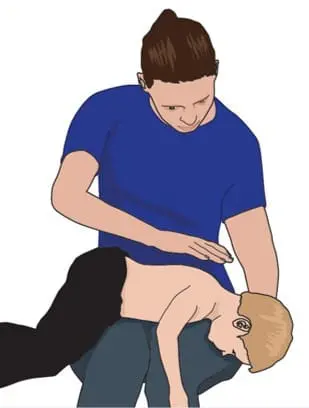
Watch how to perform first aid for choking or CPR first aid on our videos below:
How to treat a choking child or infant
How to perform CPR on an infant (under 12 months)
Get confident – get trained!
The best way to feel confident about dealing with any first aid incident is to take a specialist first aid course. To find out which first aid course is best for you check our paediatric courses here.
Everyone on our courses receives a FREE digital first aid manual. We have a range of manuals relevant to the courses we teach – Outdoor, Equestrian, First Aid at Work, Paediatric and Sports. They are a great resource that you can download onto your phone or other device and have all that first aid knowledge at your fingertips. You can view them and buy them for less than £5 here.