
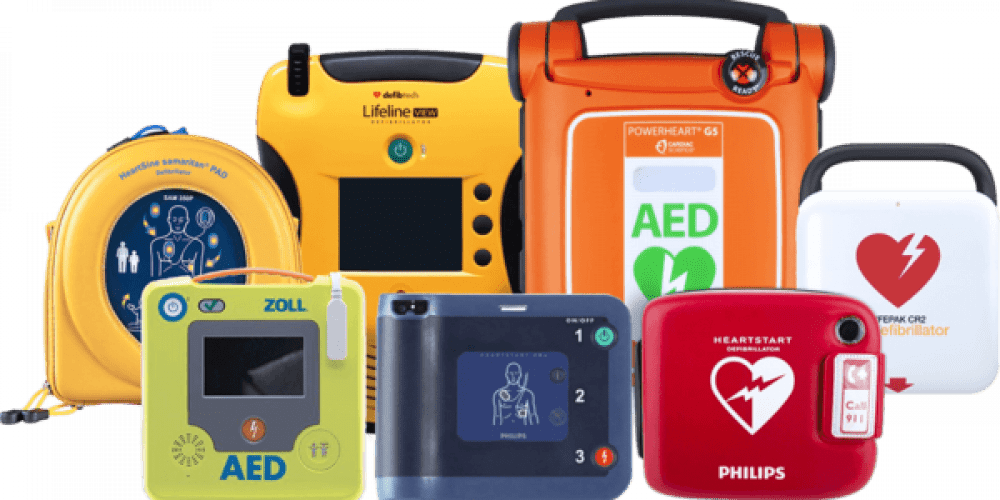
Defibrillators or AEDs are life saving devices that are now commonplace in our communities and workplaces. We use AED trainer devices on all of our courses and often get similar questions from our course participants. We’ve therefore put together this list of 20 of the most common questions to help explain and understand these life saving devices better.
A jargon buster to start with:
AED = Automated External Defibrillator – the machine.
PAD = Publicly Accessible Defibrillator – the machine in a public space.
CPR = Cardio Pulmonary Resuscitation – life saving first aid treatment for someone who has suffered a Cardiac Arrest. CPR involves chest compressions and rescue breaths.
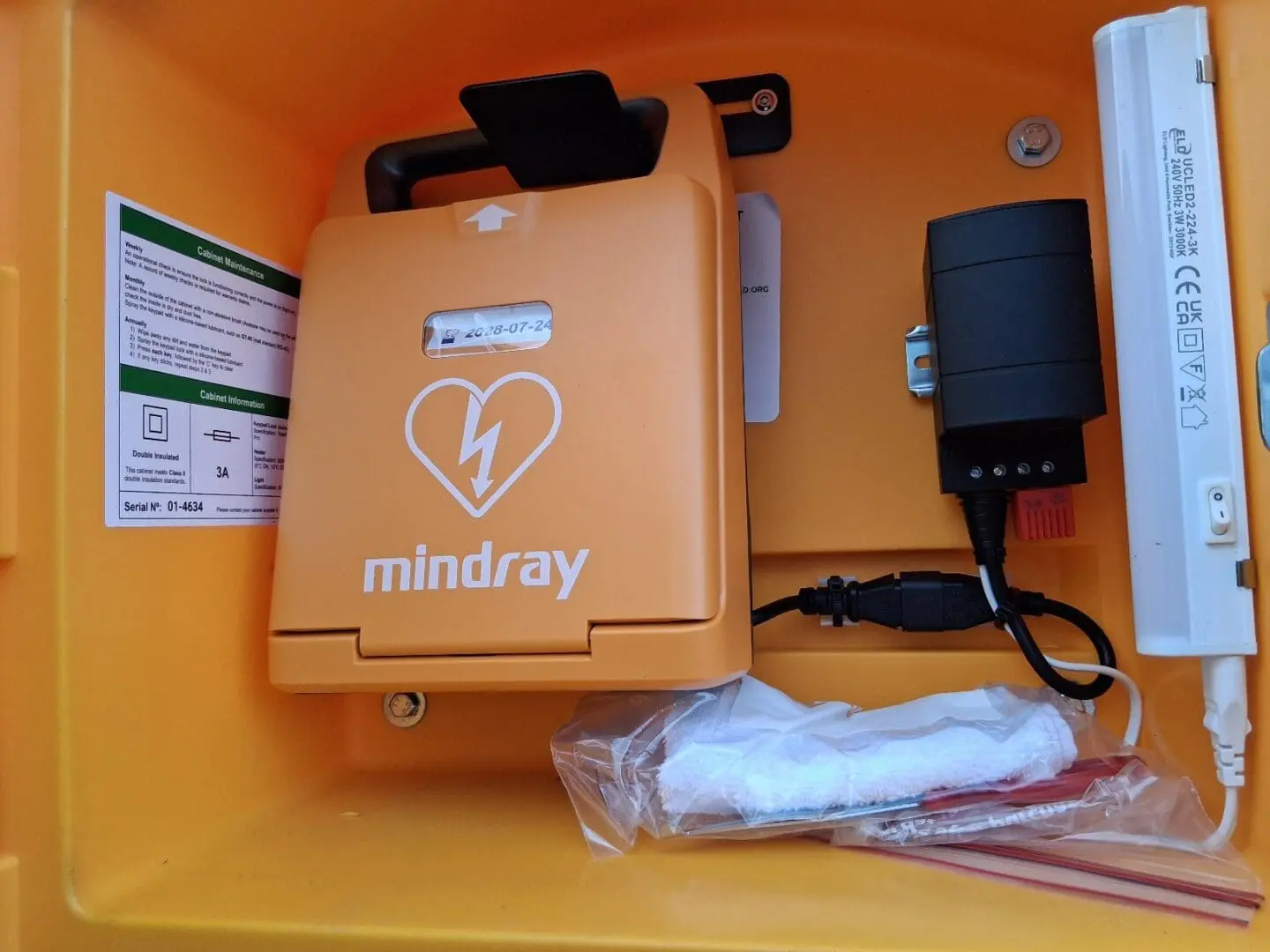
1. What is inside a defibrillator box?
- An instruction leaflet or card, possibly with your location noted;
- A defibrillator unit (essentially a large battery pack) with a green button to turn the defibrillator on or off, a yellow triangular button (for shocking the casualty) and possibly a slider for adult or child use;
- 2 sticky backed pads with illustrations on them to show where they go on the body;
- A consumables pack with scissors (to cut clothing), towel (to dry the skin where the pads are to go), a razor (to shave the pad area if necessary) and possibly a face shield (for providing rescue breaths during CPR).
- There should also be a label on the defib with cabinet location and guardians contact details so it can be returned effectively if deployed.
2. How does a defibrillator work?
When a heart is struggling to operate correctly, during a cardiac arrest, it will most commonly go into fibrillation which means the pump action of blood through the vessels struggles and it becomes weaker and less coherent. A defibrillator shocks the heart though an electrical charge that effectively ‘re-boots’ or re-sets the heart. Every 2 minutes, the defibrillator will re-analyse the heart and shock again if necessary.
3. Will the defibrillator always shock the casualty?
No, there are different types of cardiac arrest, and each displays a different rhythm. The defibrillator will assess these rhythms, and it will only recommend a shock where the rhythm displayed will benefit from a shock.
4. Can you harm someone if you use a defibrillator on them?
No, because the device will not put a charge through them unless their heart requires a shock.
5. Can I use adult Defib pads on a child?
You can use adult pads if that’s all you have. If the child is under 25kg, place the pads in the child pad position. (One on front middle of the chest, one in the middle of the shoulder blades on the back)
6. Can I use child Defib pads on an adult?
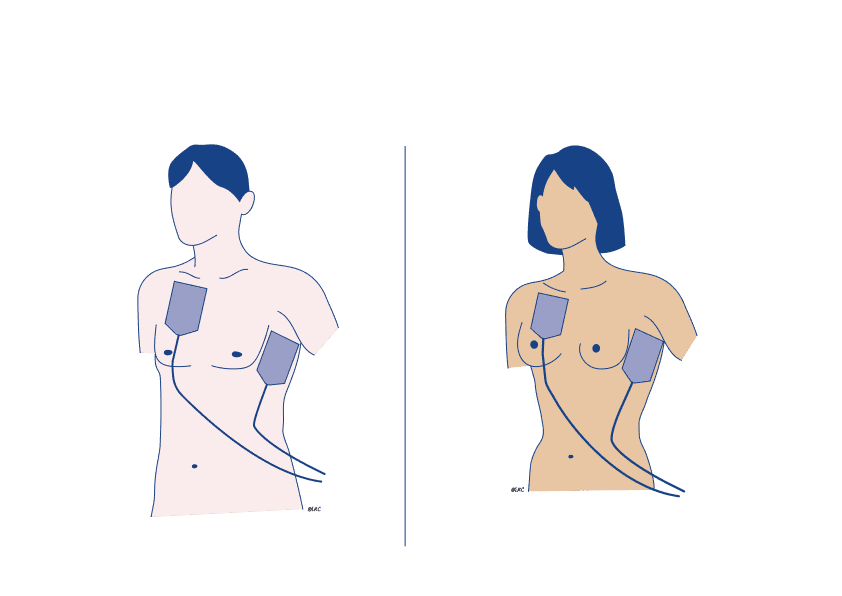
Yes, if you have nothing else. Use them in the adult position. (One top right and one bottom left of the casualty’s chest)
7. Is there an age limit for using child pads?
Generally 8 years and younger, we would use child pads.
8. Can a Defib be used on an infant?
Yes. Ensure the pads are placed correctly and securely in position and front and back. Some Defibs have a button or switch to slide between adult or child settings.
9. What if I put Defib pads on the wrong way around or if the pads are rotated but in the correct place?
It doesn’t matter which way round the individual pads go as long as they are both in the correct position on the chest. The charge goes between the pads so correct positioning on the casualty is important. If you put the ‘top left’ pad in the bottom right position and vice versa, the charge will still go through the casualty between the pads.
10. If we only have out of date pads, can we use them?
Yes, but order some more! It’s usually the glue that makes them out of date so ensure they stick well on the casualty.
11. The defibrillator says ‘No shock advised’ – does that mean they’re getting better and I’ve done excellent CPR?
No, the defibrillator has analysed the rhythm of the heart and that particular rhythm won’t benefit from a shock. Continue to do your excellent CPR.
12. What if the casualty has a pacemaker or internal defibrillator fitted, can I still use a Defib?
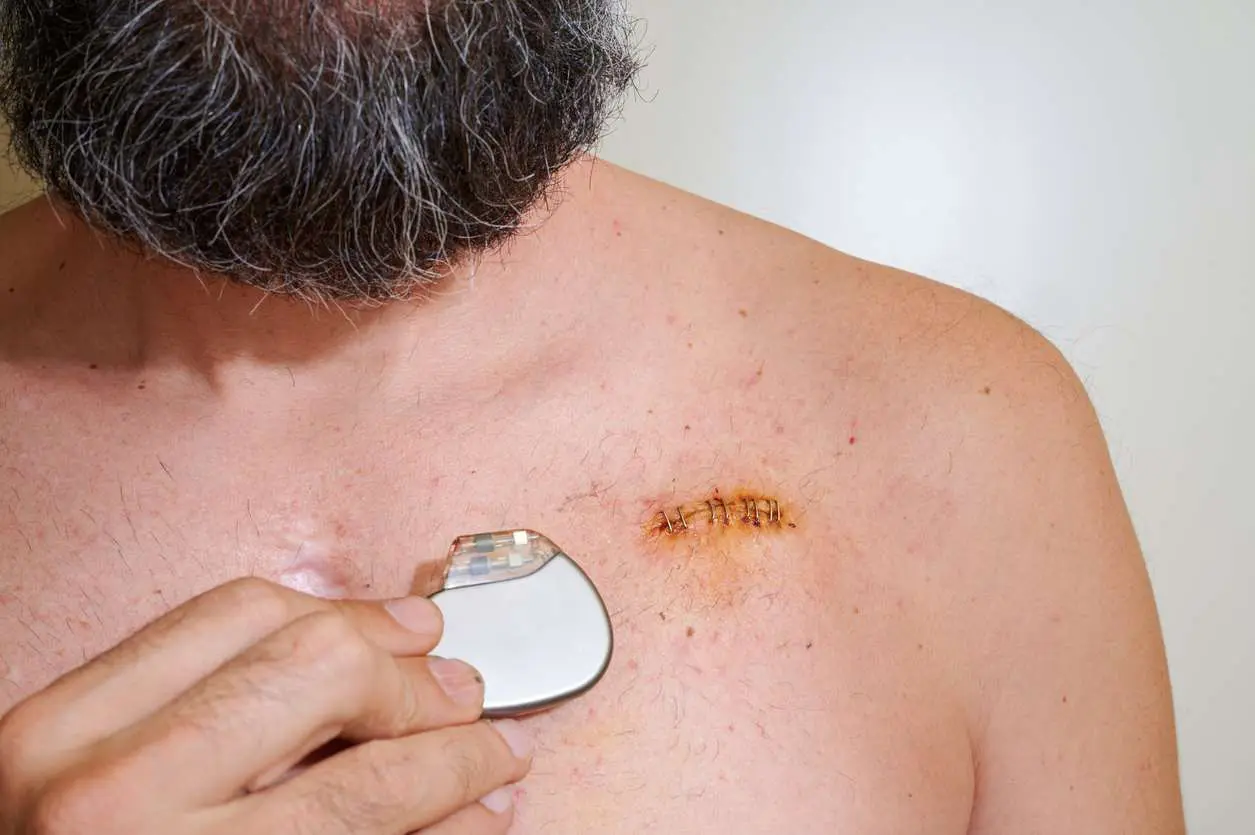
Yes. If the casualty is unresponsive and not breathing, follow the CPR protocol. If they have a pacemaker to maintain their heart rhythm and their heart has stopped, the pacemaker is not working, and you need to use an AED. The same applies to an ‘internal defibrillator’ that some people now have fitted. If the internal devices are not working, you need to intervene with an external device such as an AED. Generally, these devices are fitted in the top left of the chest and you can feel them just under the skin.
13. What about bras or jewellery? Do they have to be removed to use an Defib?
Not necessarily. The pads need to go onto skin so don’t trap anything underneath the pads. If you need to move the bra, do so but don’t waste time trying to remove anything that you don’t need to.
14. What about a woman’s or man’s breasts – will large breasts obstruct a defibrillator?
Highly unlikely. The pads need to go into the correct position per the diagram on the pads. Should you need to move breasts out of the way, use the back of the hand to do so and get the pads in the correct position.
15. Can you use a defibrillator in the rain?
Yes. If they’re lying in a puddle, move them out of it. Ensure the area where the pads are to go are dried before you apply them. Also make sure there is no direct contact between the user and the casualty when the shock is delivered.
16. How many shocks can a defibrillator give? Will it run out?
If fully charged and working properly, defibrillators will continue to analyse and shock, if required, until the battery runs out which can be many, many hours – long after emergency services have arrived.
18. What should you do if the defibrillator fails to work, has no battery power or pads?
Phone 999 and continue to do CPR until professional help arrives and takes over.
19. What’s the difference between a semi-automatic and automatic defibrillator?
They both do the same job but the semi-automatic one prompts you to press the button to deliver the shock. Automatic defibrillators deliver the shock themselves and don’t require the user to press the button. With both types, you need to ensure you are not in contact with the casualty when the shock is delivered.
20. What do we need to consider when placing a defibrillator in our community or business premises?
The location, building or structure it is attached to and the cost of the box, defibrillator and pads. Once installed, the cost of replacement battery and pads is often the main financial challenge for communities and businesses. Also consider who is going to check it regularly and be the contact for the defibrillator. Once installed, get some training on a regular basis for your community to ensure they are confident in its use.
Register your defibrillator on The Circuit https://www.thecircuit.uk. It will then automatically appear on www.defibfinder.uk. This allows people to enter their location and the site will show them a map with orange or green defibs on it. Orange ones are within buildings that are not open 24hrs, green ones are publicly accessible defibs that you can access 24hrs per day.
It is recommended that defibrillators are checked weekly, including the consumables. It is advised to keep records of the checks and update The Circuit website regularly too so that the 999 control can see that the unit has been checked recently and is fully operational.
Funding is available for defibrillators from various sources and charities. Some funders now require the unit to be unlocked and in a heated box. Read our blog on AED funding.