
Updated May, 2026
What is Cold Water Shock?
Immersing yourself in cold water is an increasingly popular activity and being touted to provide many health benefits, but sudden immersion in cold water can be very dangerous. ‘Seasoned’ cold water swimmers enjoy repeated visits and as a result their body acclimatises to cold more readily. For others, though, it is a shockingly cold experience that can – and has – lead to deaths.
Average sea water temperatures around the UK are just 12ºC, with rivers and lochs usually colder than that. Remember too that when the water temperature warms a little during the summer, the air temperature has probably risen much more – leading to a greater difference between the two than other times of year. Also consider that deep lochs don’t warm very much at all even in the summer months.
Sudden immersion in cold water can happen for a number of reasons through simply falling in or voluntarily entering cold water suddenly – jumping in! Young men and the elderly are cited as the most ‘at risk’ groups, but anyone who enters cold water is potentially at risk.
The ‘Cold Shock Response’ in your body:
The sudden change of temperature from immersion in cold water have a profound and varied effect on the human body. The largest organ in the body – your skin – is suddenly immersed in cold water more than 20 degrees lower than your core temperature! Cold Shock Response is the bodies reaction to the sudden drop in skin temperature and greatly increases your risk of drowning.
Cold Shock Response causes a sudden gasp for air, followed by uncontrollable rapid breathing. On top of this, your uncontrolled reaction is to flail about in panic. This can cause further problems due to inhalation of water into the lungs. Just half a pint of water is enough to overwhelm the lungs and cause an adult to start drowning.
The lungs will be overwhelmed completely with 1.5 litres of sea water. 1.5 litres sounds like a lot of water to drink for example, but when hyperventilating, an adult will inhale that volume or air in a single respiration very easily. It’s easy to imagine how a panicking, hyperventilating person in the water could inhale that volume of water.
The impact on blood flow and heart rate:
The sudden cooling of the skin also causes blood vessels to shrink, which in turn makes it harder for blood to flow. As a result, the heart rate increases, which combined with the reduced blood vessel size, leads to an increase in blood pressure. This means is that the heart has to suddenly work much harder. The rapid rise in work rate, increase in blood pressure can thus lead to serious cardiovascular problems and sudden cardiac arrest in some cases.
Muscles will cool due to the cold blood going around the body and struggle to work, hence the inability to swim or even paddle to safety. This reduces the ability to use your hands, arms and legs which may limit any attempts at self-rescue.
The ‘diving response’ is experienced by some people. This is initiated by immersing of the face in cold water and causes you to hold your breath and initiates abnormal heart rhythms designed to conserve oxygen in diving mammals. In humans, this response conflicts enormously with the cold shock response, again causing cardiac problems and sudden death in many cases.

What to do if you are suddenly immersed in cold water:
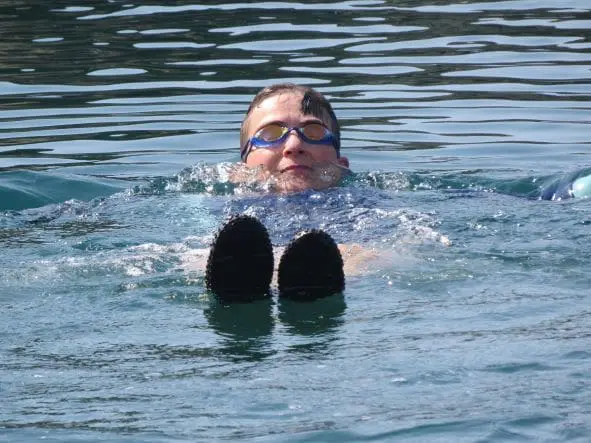
The advice from the RNLI, is to try your best to relax and ‘Float to Live’.
- Fight the natural urge to thrash about to get out of the situation.
- Concentrate on trying to float on your back to keep your face clear of the water to stop you from panicking and inhaling water.
- Lean back, extend your arms and legs. Tilt your head back a little to keep your airway clear.
- Floating doesn’t work if you struggle, so trying to float encourages you to stay still.
- The initial cold shock response will normally pass in less than a minute, so trying to stay calm and controlling your breathing is the best course of action.
- Once you have regained control, then seek help or self-rescue – gently swim or paddle on your back to the shore, board or vessel if possible.
Find out more about the RNLI’s ‘Float to Live’ advice and watch a video demonstration here.
First aid for a casualty with Cold Water Shock:
Once a casualty is removed from the water, they will probably be shivering violently and possibly struggling to use their fingers or hands. Their body will have concentrated all the blood into their core so their fine motor skills will be reduced. The core is the heart, lungs, brain and vital organs in their body and is the body’s priority in times of trauma at the expense of blood supply to the limbs. They are going in to shock as a result of the cold water immersion.
If they have been in the water for a longer period of time, their core temperature will drop dangerously. The impact between casualties of the length of time in the water will vary between casualties, depending on their age and current state of health. Core cooling in most people will occur only after several minutes – that’s not a long time -so swift action and care for the casualty is imperative.
What to do with someone with Cold Water Shock:
- Help them get to shelter, ideally out of the wind.
- Remove wet clothing and give them warm dry clothes to wear.
- Give them warm fluids to drink and food to eat. Food is fuel and helps because their body will generate heat if it has fuel to burn.
- Reassure and monitor them and get medical help if they do not warm up or improve.
- Be alert to signs of drowning or the effects of water inhalation. More on this below.
- If in doubt, get medical help.
First Aid for Drowning
Combined with the potential of cold water response, it is crucial to identify and immediately deal with a drowning person.
A few points to remember about drowning:
Drowning is when your lungs are overwhelmed by water and the heart and brain are deprived of life giving oxygen. Drowning does not always lead to death but can lead to life changing illness or injury due to having limited oxygen over a period of time.
Read our detailed blog on dealing with a drowned casualty here.
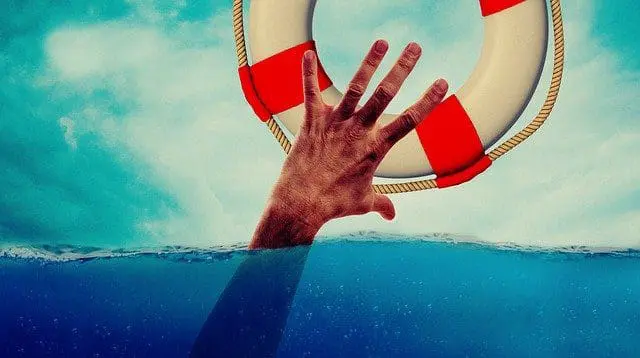
Drowning is not like in the movies – someone who is drowning will not be able to shout, wave or splash about. They will be still and quiet and struggling to use their limbs. However, if someone IS shouting or waving, they WILL probably need help before things get worse for them.
A drowned person will not be breathing effectively.
First aid for a person who has drowned:
- Get them out of the water, onto their back and give them FIVE rescue breaths
- Do 1 minute of CPR with 30 chest compressions to 2 rescue breaths
- Phone 999/112 and tell them where you are
- Continue to do CPR until the ambulance arrives
- If they do come around, reassure and monitor them for 24hrs. If they have any difficulty breathing, are extremely tired or have a change in behaviour, get them to hospital as this may be a sign of ‘secondary drowning’.
Watch our video on how to perform CPR on a Drowning Casualty here.

What is “secondary drowning”?
Secondary drowning is not a medical term but refers to your body’s response to a near drowning episode and can occur up to 48 hours after the incident. It is rare but should be considered when dealing with a casualty who has had an episode involving water.
It can be caused by any near drowning incident if someone has had water get into their lungs. Swallowing even small amount of water into your lungs is serious. Children have been known to have died up to 24 hours after getting water into their system.
Monitoring a casualty for a few days after an episode in the water is important and they should be taken to hospital if any of the symptoms appear.
There are important signs that you should look out for over time are:
- Difficulty breathing,
- Extreme tiredness
- Changes in behaviour.
- Persistent cough
- Chest pains
- Vomiting
- Difficulty speaking
Get confident – get some first aid training
We cover hypothermia and other medical conditions in a range of our First Aid courses. Our systematic approach to teaching first aid helps your learning and understanding of many illnesses and injuries. Practicing first aid techniques reinforces your learning too. Find our more about our full range of First Aid Courses here.
Our ‘Immersion Hypothermia’ short course (a 4hr practical course)

Immersion hypothermia happens when someone has been in the water for some time and their body is starting to shut down. They have not drowned but their motor functions and ability to communicate will be greatly diminished. Immediate and careful first aid is required. Our Immersion Hypothermia course is designed to give participants with existing first aid qualifications additional information and practical experience of the stages of Cold Water Shock and Hypothermia.
If you want to really find out more about how cold water affects you, and how to properly rescue and reheat a casualty, you should consider our Immersion Hypothermia short course. This experiential course is ideal for anyone who spends time in, on, or near water and is extremely valuable first aid CPD. We run these courses privately for open water swimming, triathlon, and other watersports clubs.
A Deeper Understanding of Hypothermia – online 1 hr course
If you’re interested in understanding the mechanics of hypothermia on our bodies, try our short online course on Undersanding Hypothermia.
This hour long course takes your background understanding of Hypothermia a step further. Remaining non-technical, it covers:
- The body’s physiological responses to being cold, and what happens as the core temperature drops
- The stages of Hypothermia and Cold Stress
- How to properly assess a cold casualty, and how to decipher the signs and symptoms to allow you to define their an accurate understanding of their situation and likely risk of worsening
- How to use a Hypothermia Assessment Card
- Hypothermia treatment, what to do, how and when to do it, and what not to do.
- How to properly construct a Hypothermia ‘Burrito’ Wrap, and ideas for improvising if necessary.
- The four stages of Immersion Hypothermia
- How Immersion Hypothermia differs from land based hypothermia
- What to do for the immersed hypothermic casualty
The course also includes a free download of our Hypothermia Assessment Card for you to add to your kit.
Find out more and register for the Deeper Understanding of Hypothermia course via this link.
Our digital First Aid Manuals and first aid video channel:
Every client on our courses receives a FREE Digital First Aid Manual relevant to the course they come on. You can also view and buy our manuals in our online shop. In addition, we have our own YouTube channel with over 40 practical first aid videos.