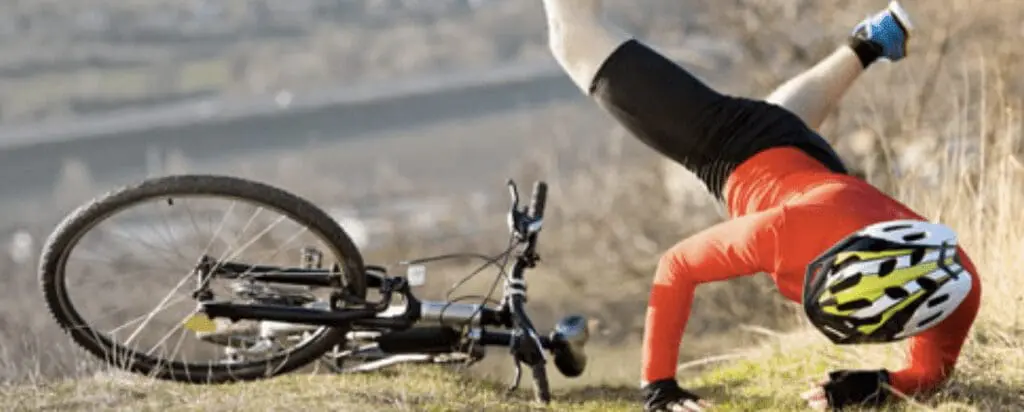
Mountain biking and cycling are inherently risky sports – trail & road surfaces, other riders and vehicles, trees, branches and protruding roots, boulders, mechanical failures all present significant hazards no matter how prepared you are or how skilfully you ride.
First things first – does your bike fit you?
One of the most common causes of chronic (long term) bike injuries is not as a result of accidents but by bad bike choice and set up. Often, discomforts, pins and needles and pain can be rectified by having a bike fitting by a professional fitter. They will assess your body size, riding style and position and adjust the different settings on your bike including height of the saddle, front stem height and length, crank length and more. The also will ensure you’re riding a bike the right size in the first place!
However, prior knowledge about some of the most common injuries and how to prevent them will help you enjoy your sport for longer without injury.

5 common cycling injuries – treatment and prevention:
1. Musculoskeletal Injuries in cyclists – Lower Back Pain, IT Band Syndrome (thigh pain):
A static, forward bending position that cycling requires, coupled with the repeated nature of the exercise lends itself to musculoskeletal problems such as back pain and Iliotibial Band Syndrome (IBT). Your iliotibial band is a thickened band of tissue that runs all the way down the length of the outside of your thigh. It works with your knee ligaments to help stabilise your knee joint and is one of the most common injuries in cyclists.
Both of these can often be avoided by simply having your bike set up correctly. This should be done by a qualified bike fitter who considers your personal physiology and mobility, the type of riding you do, and the type of bike you ride. The main problems are often associated with reach, saddle height, and even the inclination and position of the saddle and bars.
Treatment – rest – or stop the ride and then ice to reduce pain and inflammation in acute cases. Seek the help of a physiotherapist who understands cycling. Apply ice to the area as this will help reduce swelling as well as pain. Apply ice for a few minutes on then a few minutes off as you need some blood flow to repair any damage.
Prevention – 1. Get the right sized bike properly fitted for you. 2. Warm up and stretch before you increase your effort on the bike. 3. Stretch – lower back pain is often associated with overly tight quad muscles, while the IT Band attaches your knee to your glutes (in simple terms!) so make sure you stretch them out at the end of every ride, plus your calves, shoulders and neck.
2. Causes of Hand and Foot Numbness in Cycling
Numbness is a loss of feeling in the hands or feet, often presented by a feeling of pins and needles in the area. It is common among cyclists and can ruin a ride. It is a circulation issue, not necessarily a temperature issue so you can’t blame the weather!
Foot numbness is often caused by ill-fitting cycling shoes, cleats being placed too far forward can also lead to numbness problems. Consider – and learn about – ‘float’. Float refers to the small amount of lateral rotation available once the cleat is clipped into the pedal. Without a few degrees of float, your feet will be fixed into place, which if misaligned can lead to knee injuries as well as feet discomfort.
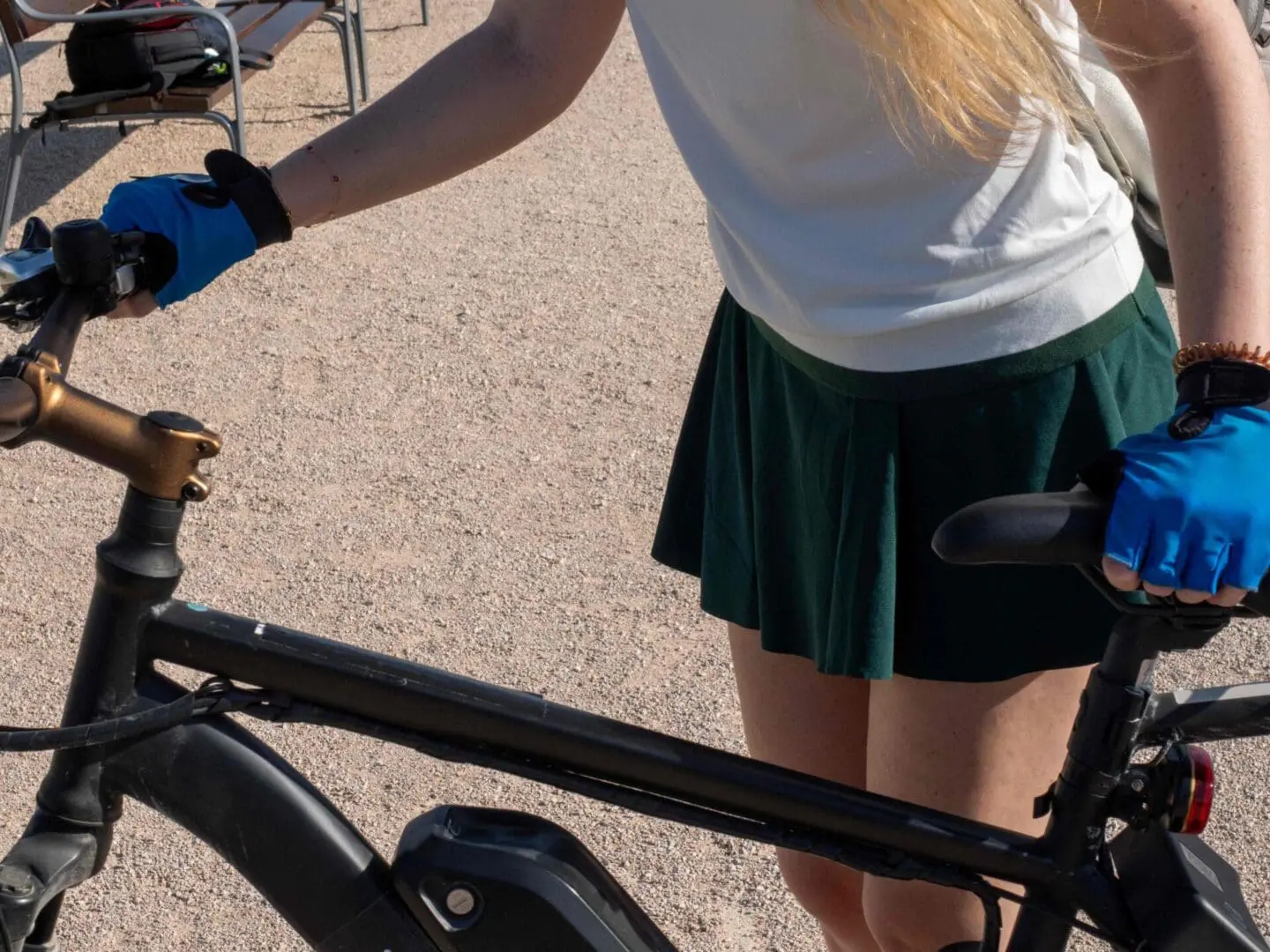
Hand numbness is usually caused by pressure on the ulnar nerve (near your wrist) and is exaggerated by the vibrations from the road or trail. Padded cycling gloves can help reduce the pressure, as can different grips or extra padded (or double layered) bar tape, but more commonly this too is a case of bike fit. Subtle differences to handlebar inclination, arm reach, gear shifter positions etc all have an effect and can help bring the pressure off your hands. Changing the tyre pressure can also give you an easier ride. Moving your hands to different parts of the handlebars might also help – moving between the hoods, tops and drops.
Top Tip when descending – think ‘Heavy feet, light hands’ to encourage yourself not to lean on your hands too much, or grip the bars too tight, as this is usually when hands quickly become numb.
Treatment – Consider your riding position whilst riding. If you’re in discomfort, have a coffee stop – have a rest and let your circulation and nerves recover. Try to work out what might be causing the issue and rectify it.
Prevention – Check your shoes, change your tyre pressure and tweak your riding style. Get a bike fitting with a professional.
2. First aid for Head Injuries
Head Injuries are unfortunately relatively common in cycling due to the momentum that causes us to continue travelling forwards when our bike stops suddenly. This pitches us usually head first towards the ground, or trees or other road users and our heads can take a big knock.
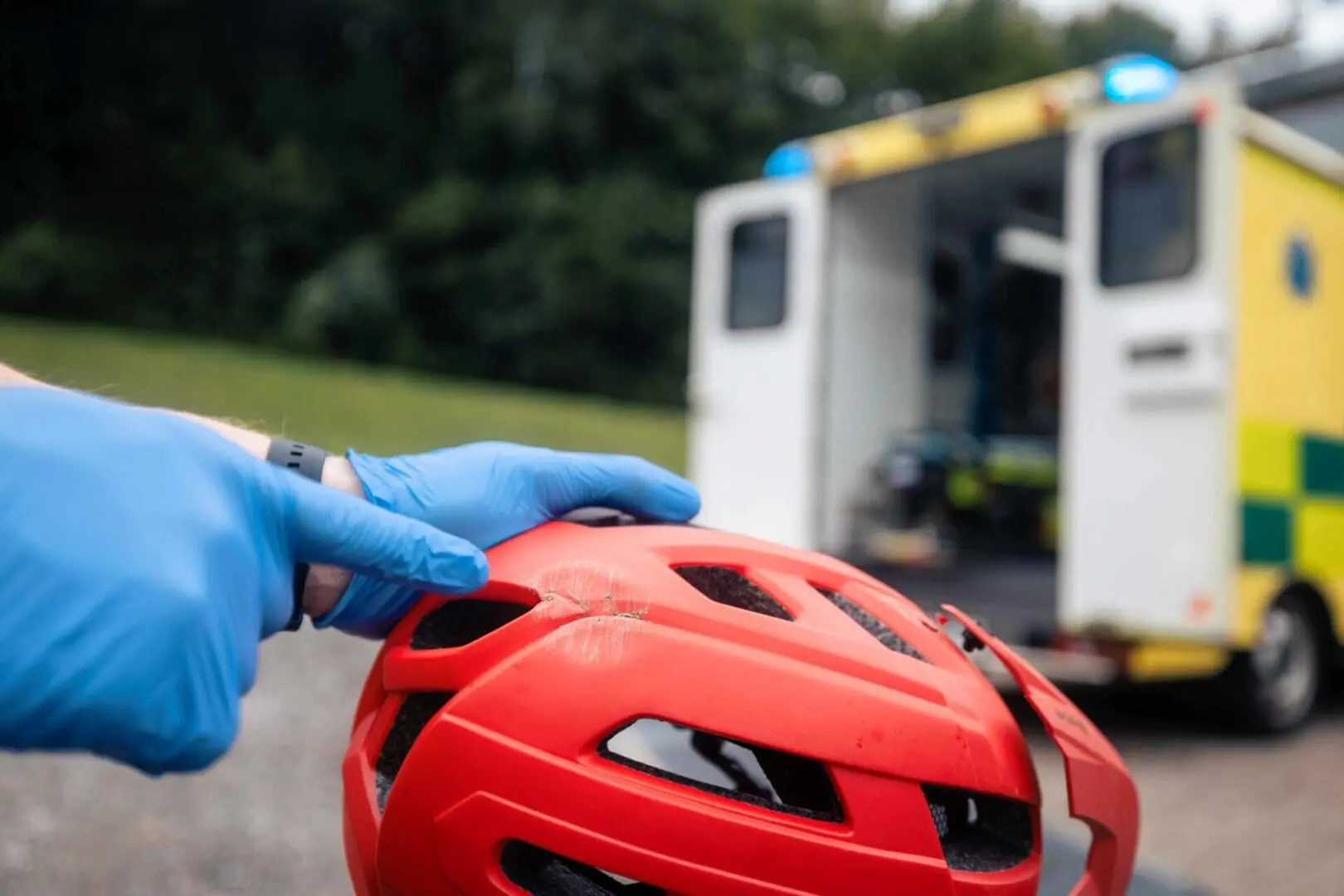
It is essential that any suspected head injury is properly checked out at the scene before the rider is allowed to continue, to be sure that they are not showing signs of concussion. Be sure to also check their helmet for signs of damage, and remember that any suspected head injury should also lead us to assume an associated neck injury.
Treatment – Perform a head injury assessment and rule out any signs or symptoms of concussion or worse, prior to continuing the ride. Check out this post on Recognising and Treating Concussion for more on this. If a concussion is suspected, arrange for a pick up from the nearest accessible place that you can walk to, and seek emergency help if required. When taking someone to hospital with a head injury from cycling, always take their helmet with them as it will help the doctors assess the impact zone and force.
Check the casualty regularly and ask them questions to ascertain how their brain is functioning. For example, questions such as ‘what day is it?; when did we leave today? where were you on this day last week?’ will all hint at any confusion or injury that may be as a result of concussion. Head injuries can get worse over time so it’s important to continually assess your casualty.
Prevention – Correctly fitted and good quality helmets are a must. You only have one brain – look after it! Look out for MIPS system tag on a helmet as it really helps to mitigate the effects of rotational impact often associated with cycling crashes. MIPS (Multi-directional Impact Protection System) helmets are designed to reduce rotational forces on the brain that can result from impacts. They were developed by brain surgeons concerned about brain injuries in cyclists.
4. First aid for Cuts, Grazes and Rashes
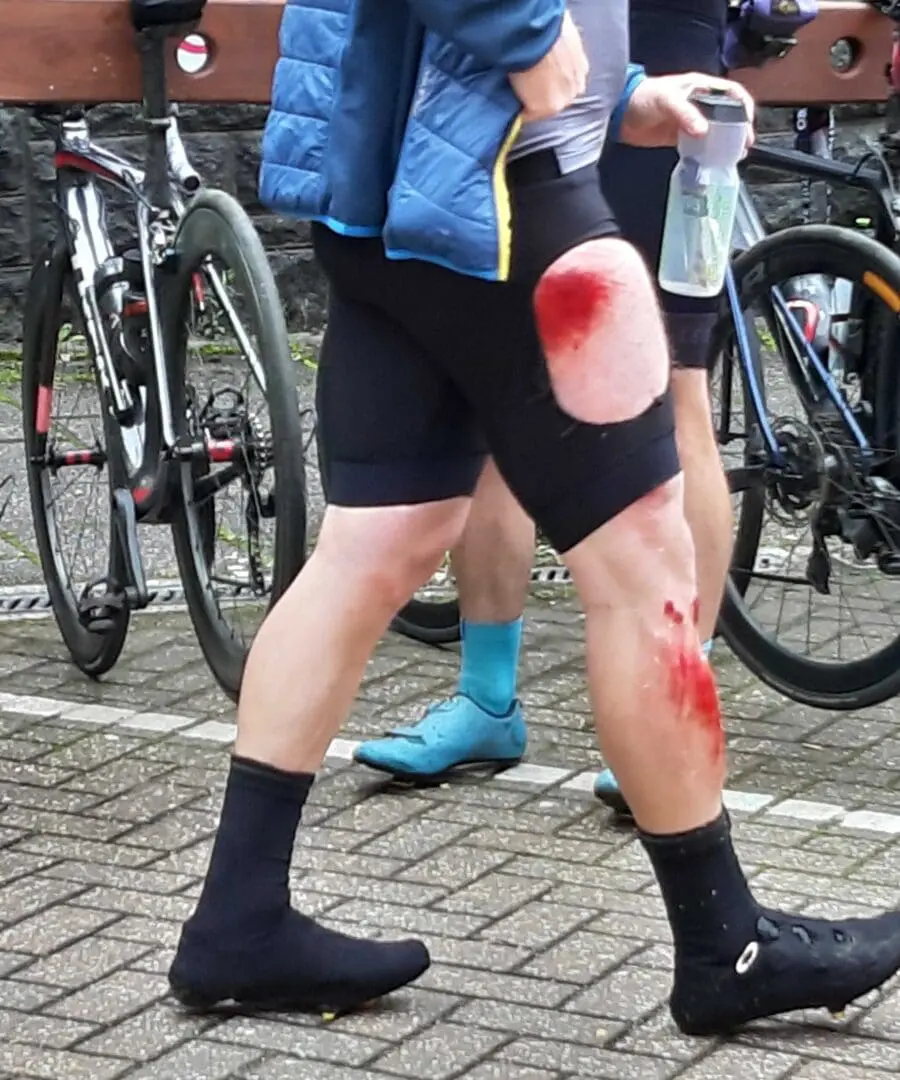
Cuts & Grazes, ‘road-rash’ or ‘gravel-rash’ are painful and messy injuries that occur usually as a result of a fall onto and then sliding over rough surfaces causing an abrasion. Cuts and grazes can be avoided by wearing appropriate clothing and / or protective equipment such as knee and elbow pads. It is important to remove all the gravel from a graze injury as any left in could cause infection and ongoing joint problems.
Treatment – Always clean cuts sustained in the outdoors thoroughly as there is always an increased risk of infection and material being embedded in the wound. Remember any clean drinking water is fine to rinse a cut or graze, so really squeeze your bottle and squirt a jet of water to wash away the grit. (We recommend against doing this if you have some electrolyte or juice mixed into your bottle though – it can be a bit sticky!)
Prevention – Don’t fall off! Wear protective clothing and possibly body armour if appropriate. Ride to your ability level.
5. First aid for Upper Arm and Shoulder Injuries
Upper arm and shoulder injuries are common in cyclists, especially after a fall! This complex area is also connected to the rib cage so chest pain may result as well as an injured shoulder or collar bone.
Collar bone (clavicle) fractures make up a large percentage of mountain bike injuries. They can happen by landing on your shoulder, or when you instinctively put your hand out to break your fall, the impact travels up your arm and break your collar bone. Depending on the severity and type of break, immobilisation in a sling or surgery may be required.
Immediate first aid will involve observing the way the casualty is presenting their arm or shoulder. People will very quickly position their arm in the most pain free and comfortable position. This is your clue to which immobilisation technique to use. ‘Bind what you find’ or ‘sling what they bring’ are our catch phrases for immobilising arms, let the casualty guide you as to how they’d like to be supported.
The Acromioclavicular (AC) joint is part of the shoulder complex and it is where the collar bone joins to the front of the shoulder blade. These are all held together by strong ligaments and can be very painful if torn whilst fallen off under speed! When these ligaments are torn (and made ineffective), the weight of the arm forces the shoulder blade up and creates a deformity in the shoulder. AC injuries are usually the result of a direct fall onto the shoulder.
Treatment – usually a sling to support. Casualties will normally present with their arm in the least painful and most comfortable position. Immobilise them in that position. Improvise using clothing / spare tube or use scissors to create a sling from clothing. Watch our video on how to support an injured arm or shoulder with a sling.
Prevention – concentrate when riding and watch your speed and the road surface.

Be prepared – with some basic first aid kit on your bike.
No-one wants to carry a mass of stuff on their ride but some basic kit components will really help if the worst happens. It’s useful to think about what you would do and what you would need – before it happens.
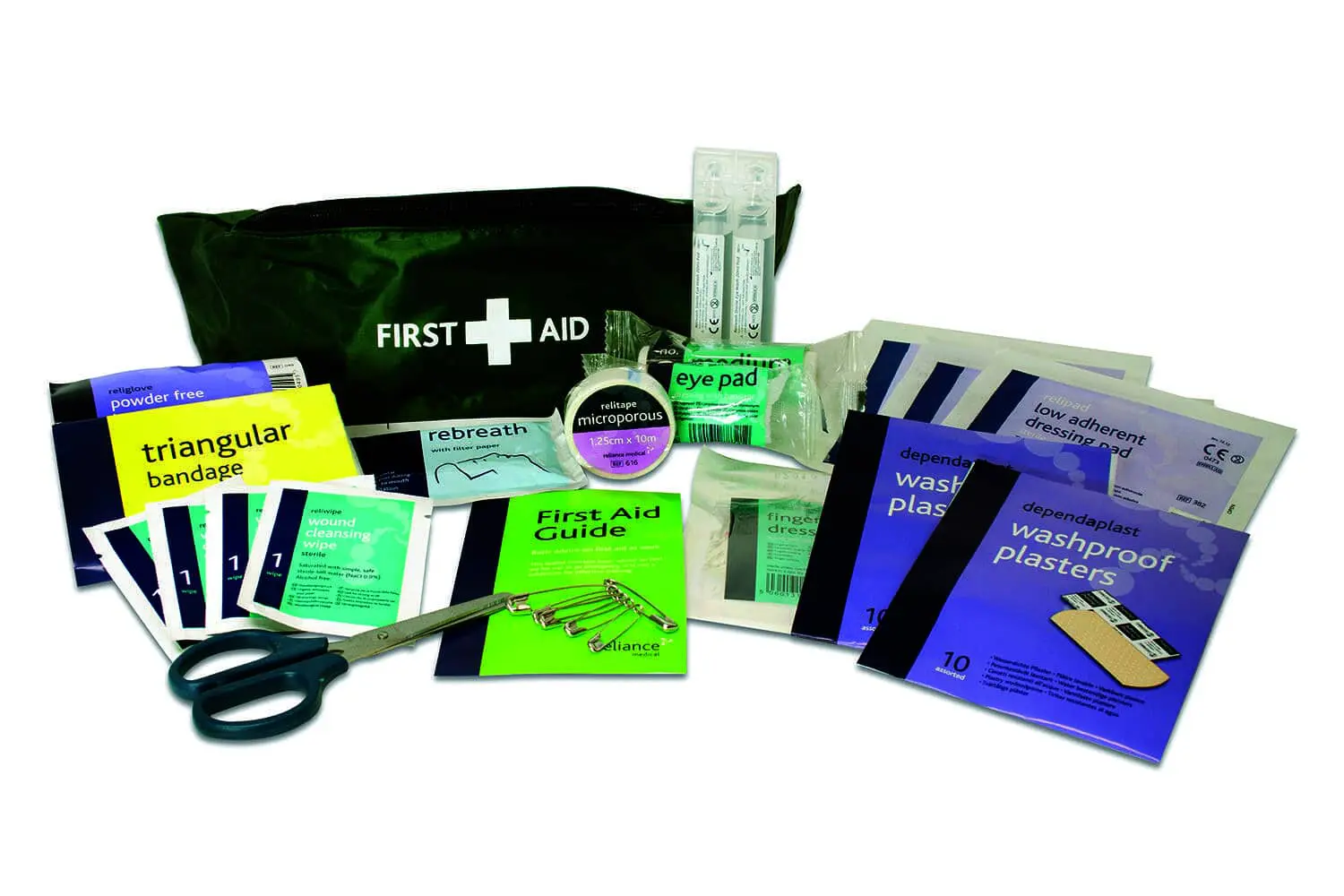
Basic first aid items for cycling:
- Water for cleaning wounds – possibly already in your bottle.
- A sterile dressing to cover any wounds. These can be the simple flat dressings, not necessarily the whole bandage with dressing attached. Minimal size and weight to carry and will fit easily into your back pocket.
- Scissors to cut through clothing or to improvise a bandage.
- Bandage or tape – something to restrain an injured arm or wrist – a triangular bandage, some tape already wound around your drink bottle? Some things can be improvised to support an injured limb such as inner tubes, buffs or folding your shirt up to hold the arm in place.
- A foil blanket. This is especially relevant if you are a road cyclist who doesn’t carry a pack with spare layers in it – casualties get cold very quickly even on a hot day if they’ve been injured and are possibly going in to shock. They need to keep warm.
Of course, if you’re bike-packing or on tour for a number of days or weeks, you might like to include even more components in your first aid kit. Read our blog about contents of different first aid kits here.
First aid courses for cycling clubs or outdoor activities groups.
Would you like to know more about how to treat injuries or accidents when you are out enjoying your activities? Founded by experienced outdoor practitioners, First Aid Training Co-operative specialises in outdoor first aid and can provide a one or two day course specific to your needs as a club or group.
We are the biggest provider of publicly available Outdoor First Aid courses in Scotland so it will come as no surprise that our 2 Day Outdoor First Aid Course covers all the requirements of National Governing Body (NGB) cycling Coach or Leader Awards.
Get confident – get trained!
Knowing what to do BEFORE it happens is essential and attending a first aid course will give you the knowledge and the confidence to deal with many cycling related first aid incidents. We are the largest provider of public Outdoor First Aid courses in the UK and our courses comply with the requirements of Sports Governing Bodies so you know they are relevant as well as useful. Find out more about our Outdoor First Aid courses here.
Our digital First Aid Manuals and first aid video channel:
Every client on our courses receives a FREE Digital First Aid Manual relevant to the course they come on. You can also view and buy our manuals in our online shop. In addition, we have our own YouTube channel with over 40 practical first aid videos.