

Leptospirosis is a bacterial infection contracted from leptospires that exist in the urine of mammals such as rats, cattle, sheep and dogs. Rats are considered the main agent of infection as they urinate as they run, marking their territories as they go.
The leptospires from the urine can then be picked up by humans if we come into contact with contaminated ground or waterbodies. In a recent study, around 14 percent of rats in the United Kingdom were found to harbour the infection.
Although relatively uncommon, Leptospirosis is a condition that those active in the countryside should be aware of. There are under 100 cases reported each year in the UK, compared to over 2000 for Lyme disease. These numbers are not insignificant though as the symptoms are very wide ranging. This makes them difficult to diagnose, and many cases may go unrecorded.
The more severe form of the infection, known as Weil’s Disease, can have a serious impact on your health and in some cases can result in death. Less than 10% of reported cases are diagnosed as Weil’s disease.
How do I contract Leptospirosis or Weil’s Disease?
The leptospires enter your body mainly through any open cuts or wounds or by swallowing infected water. They can also be transmitted when you place a urine contaminated hand into your nose, mouth or other orifice.
The condition is mainly recorded in the summer months when we are all out and about more. The warmer weather also favours the survival of leptospires in the environment. There has been an increase in the number of watersports participants getting leptospirosis in recent years.
Walkers, mountain bikers and others in the countryside, commonly have to cross a cattle or sheep field, maybe climbing over the gate where the animals obviously congregate. Subsequently eating a picnic, or using a telephone later on provides an easy route from field gate to mouth.
What signs and symptoms should I look out for?
Symptoms are wide ranging and often indicate the extent of the infection. It is estimated that around 90% of people who get infected will get Leptospirosis and 10% will get Weil’s Disease.
Symptoms of Leptospirosis may only appear up to a month after the initial infection and may include:
- a very high temperature, or feel hot and shivery
- a headache
- feeling and being sick
- aching muscles and joints
- red eyes
- loss of appetite
After apparent recovery, symptoms may change and become more like those of Weil’s disease. Leptospires may also appear in your own urine and you may become part of an infection cycle.
Awareness of the potential for infection plus the appearance of these symptoms should alert you to go to your GP. Explain your concerns and knowledge of Leptospirosis as well as your symptoms. Treatment is usually antibiotics although hospital treatment is required in more severe infections. There is no vaccination for humans although dogs can be vaccinated against the disease.
If you are if unsure it is worth getting in touch with your local GP, you can called NHS 111 for more advice. The NHS website also has advice.
Symptoms of Weil’s Disease will (usually but not always) appear within 3 days and include:
- yellow skin and eyes (jaundice)
- swollen ankles, feet or hands
- chest pain
- shortness of breath
- coughing up blood
Seek urgent medical attention if you have these symptoms and tell the Doctor where you have been.
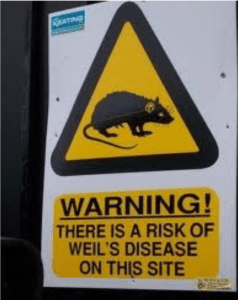
How can I avoid Leptospirosis or Weil’s Disease?
As always awareness is the first step towards avoiding this infection. Taking measures such as wearing appropriate protective clothing (and cleaning it regularly), covering wounds and cuts and maintaining good personal hygiene will reduce the risk of infection. Thorough cleansing of wounds and clothing plus showering after activities are important barriers to infection.
When in an area with signage such as the one above or where you suspect a higher level of rat activity, ensure you and your group are aware and diligent with their personal hygiene or avoid the area completely.
If you are crossing areas used by sheep or cattle, or indeed work with them, consider how you can clean your hands prior to eating, smoking, or using a telephone.
Land managers should ensure proper storage of feedstuffs and that your site is kept clean of debris and food waste. Staff and volunteers should be made aware of the risks and how to best avoid infection. Some employers issue wallet cards and letters to GPs for those working in higher risk areas.
As with all environmental risks, the benefits of outdoor recreation far outweigh the risks. A healthy outdoor lifestyle boosts your immune system and makes you a harder target for infection. Be aware and alert though to what lurks out there – and enjoy the countryside for all it offers.
Thanks to Mark D. Walker for permission to share some of his findings.
Get confident – get trained!
Knowing what to do BEFORE it happens is essential and attending a first aid course will give you the knowledge and the confidence to deal with many outdoor related first aid incidents. We are the largest provider of public Outdoor First Aid courses in the UK and our courses comply with the requirements of Sports Governing Bodies so you know they are relevant as well as useful. Find out more about our Outdoor First Aid courses here.
Our digital First Aid Manuals and First Aid Video Channel:
Every client on our courses receives a FREE Digital First Aid Manual relevant to the course they come on. You can also view and buy our manuals in our online shop. In addition, we have our own YouTube channel with over 40 practical first aid videos.