What is it?
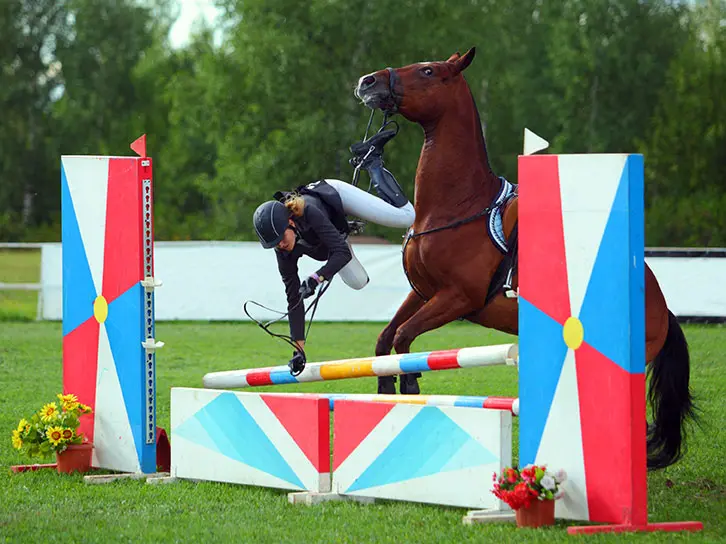
Mechanism of injury, (MOI), is the manner in which a physical injury has occurred. It describes how, with what force, and to which part of the body energy was applied.
In other words, what happened? How did it happen? What forces were involved & what were the results?
Now for the geeky bit!
The MOI is calculated using the standard kinetic energy formula:
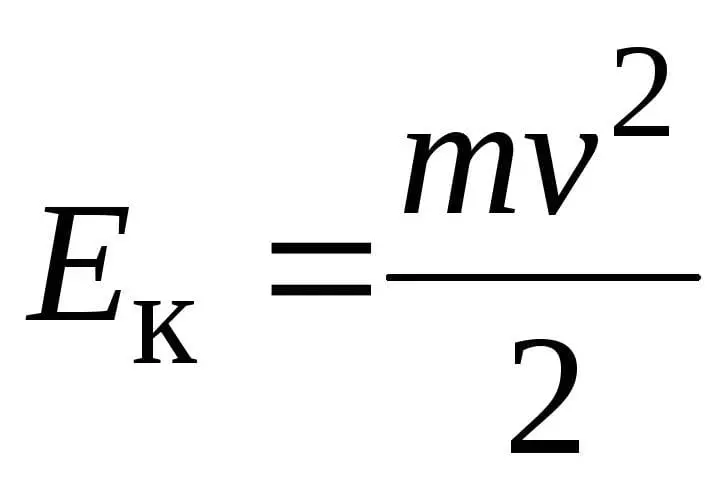
(Kinetic Energy = ½ mass x velocity²)
In trauma and pre-hospital care, this equation shows that velocity is the most significant factor determining the severity of tissue damage, as doubling your speed quadruples the transferred kinetic energy.
So I could go deeper into this but I’m not a scientist and I think it’s time to see how this relates to equestrian injuries and how the first aider responds.
Types of Injuries
Firstly let’s look at the types of injuries we might encounter and how the energy/forces are delivered to the body’s tissues.
Blunt Trauma
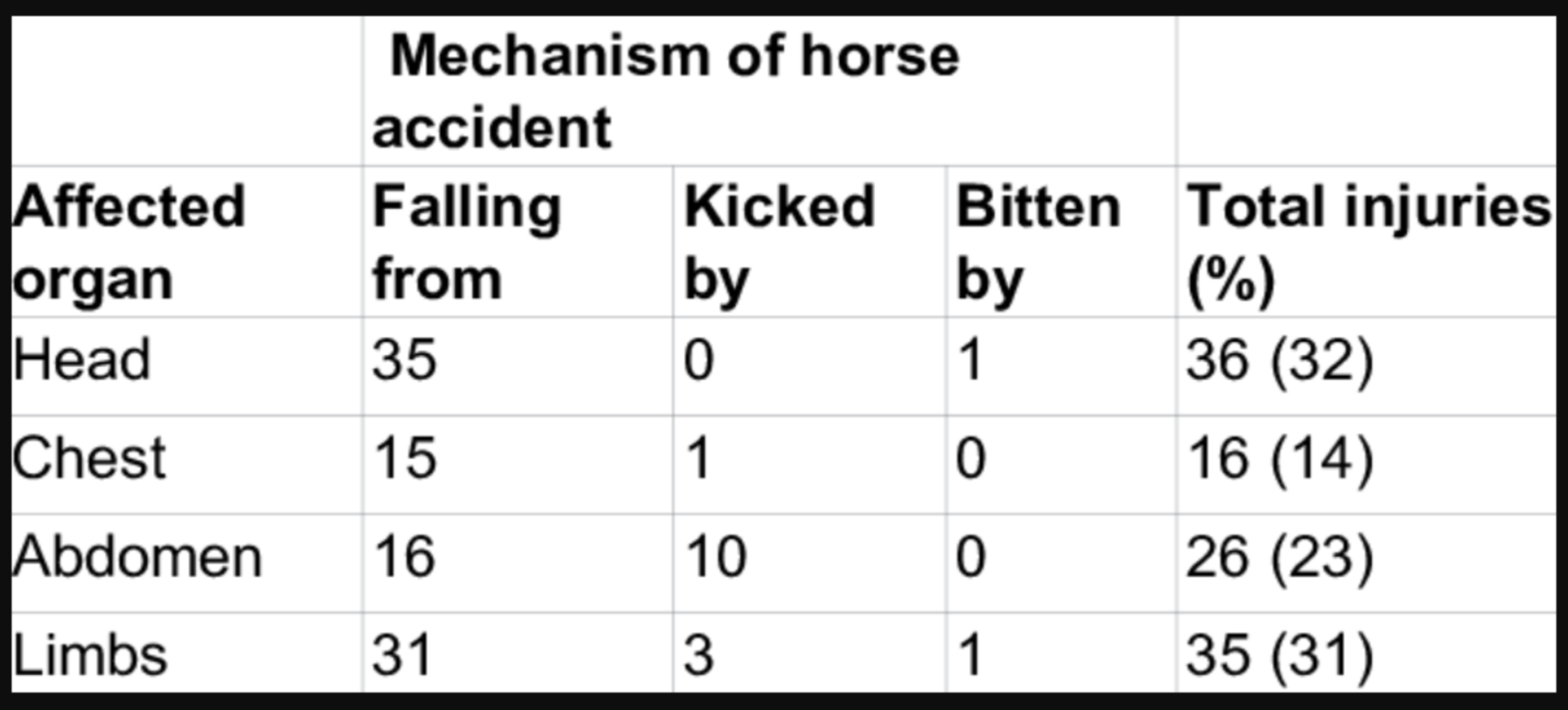
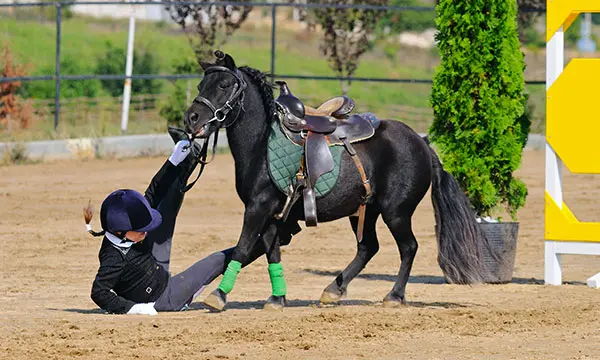
The force can impact a large surface area. Energy can spread through the body (think of a pebble thrown into a pond and the rippling effect), causing tissue deformation, shearing and organ compression. The most common causes in the equestrian setting can be falls, kicks and crush injuries.
With a fall from a horse, the MOI will be dictated by certain factors – what speed was the horse going? What height did the rider fall from? What surface did the rider land on? What part of the body hit the ground first?
Getting kicked by 500kg upset prey animal is painful and shocking. The height of the horse can be defining factor in which part of the casualty’s body is affected. An adult kicked by a 10hh Shetland might not be as serious as the same pony kicking out at a small child – think of roller bars on motor vehicles. It is rare that a horse will give you a soft warning tap…..in what the horse perceives as a dangerous situation (to them!), they will not hold back and the victim will experience a full force blow!
Crush injuries
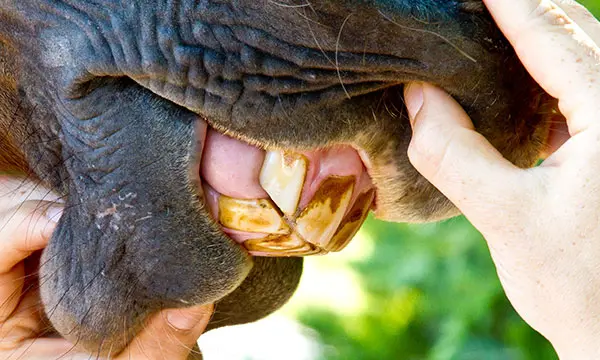
In the equestrian setting usually are the result of a fall of both rider and horse with the rider getting trapped underneath the horse. The most common of this type of fall is a rotational fall and injuries can be severe due to the MOI and forces involved. But there are risks of crush injuries off the horse and around the yard/stables. For example:- falling hay/straw bales in the barn; getting crushed in the stable by the horse (veterinary visits where needles or dental rasps are involved spring to mind!).
Penetrating Trauma
The force concentrates on a small point (e.g. stables tools – fork, pitchfork, farrier tools, knives for carrots and baler twine and even a hoof pick!). I’ve seen studs worn in the horses shoes mainly for cross country cause some pretty nasty puncture wounds if the rider gets trodden on as a result of a fall. The severity of injury depends on the depth of penetration and what underlying structures might be damaged. Bites can also come into this category – if you’re lucky you might get away with a nasty bruise but, as with kicks, a full on bite can break the skin with all the associated risks of penetrating trauma.
Deceleration Trauma
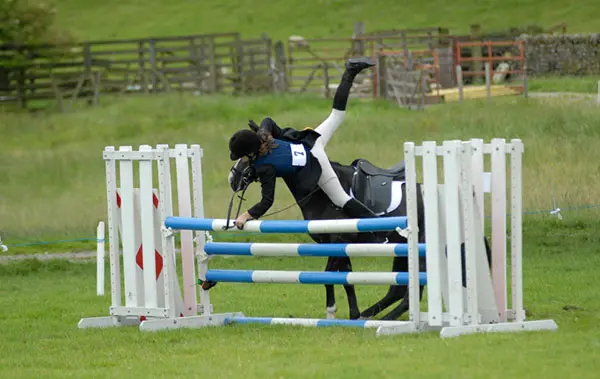
This occurs when the body stops rapidly and is usually associated with car crashes. But moving at speed on a horse and then coming to a sudden stop as in a fall or collision can result in a similar MOI and shearing and tearing injuries can occur as internal organs will continue moving at the initial velocity.
The role and actions of the first aider.
- First and foremost, personal safety is paramount. In these situations it is vital that the horse (or 500kg of killing machine!) is removed to a place of safety. Hopefully there will be another equestrian person around that can deal with a highly stressed and scared animal! Take note of the size and build of the horse as this will be relevant to the MOI.
- Look around the area of the scene (global assessment) – broken fences, skid marks and damage to tack can provide clues to the MOI.
- Whilst dealing with the casualty, finding out the history of the incident will give you clues as to the MOI involved. If the casualty can tell you what happened and how, in a lucid manner, that might indicate that a severe head injury has not been sustained. But keep monitoring and check that helmet for damage as head injuries (concussion) can develop over time.
- Ask bystanders and witnesses what they saw – they might have a broader picture of the whole event and the MOI involved.
- Call upon extra resources early or get bystanders to do it for you. These include an ambulance, police if traffic control is needed and possibly the fire service if extrication is required. The information on MOI relayed to the Ambulance Control Centre (ACC) will dictate which resources are needed, i.e. Air Ambulance, Trauma Team, BASICS doctor and whether the casualty’s condition is time critical or not.
- Part of the first aider’s secondary survey is gaining information about the casualty’s past medical history. Specifically medications and any disability will have a bearing on the MOI and how the casualty will respond to treatment.
Finally, a word about the horse.
As I mentioned in the opening, equines are prey animals (everything is out to get them!), so ‘reading the room’, aka the horse, is a very useful skill to have so as to avoid accidents in the first place. That is a whole other subject which I will address in a separate blog (no I’m not a horse whisperer but equine psychology and communication is a passion of mine).
Although the human casualty is our priority as first aiders, as horse lovers we also want to be mindful that the horse might be injured. Calling a vet or getting a bystander to do that for you will also be of great reassurance to your casualty. As with most equestrians, their priority will be their horse….always!