
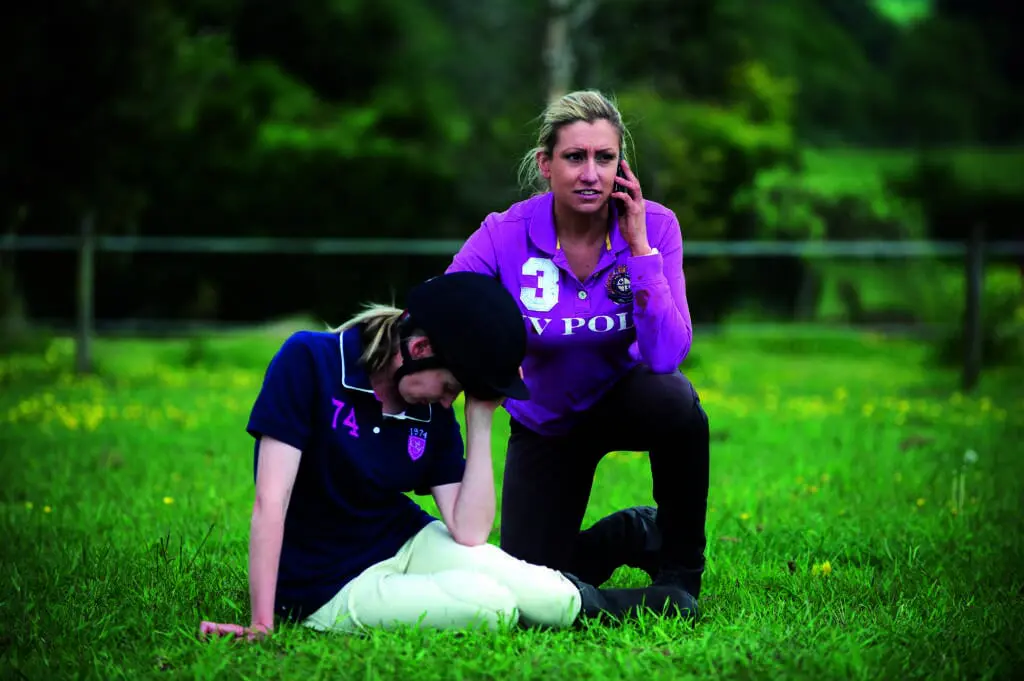
Top 10 things horse riders need to know about first aid for kick injuries to the abdomen
Horses can be unpredictable, kicks do happen from time to time. The kick is one of your horse’s most powerful forms of communication. Just as pinned ears or bared teeth send unmistakable messages, a kick–or even the threat of one—tell you about a horse’s state of mind or his physical well-being.
A kick to the arm or leg can cause a fracture, the bone will show deformity and the casualty will tell you where it hurts! A nasty kick to the chest or stomach could result in internal bleeding.
- What is internal bleeding? Internal bleeding is where the blow from a kick may have damaged an internal organ eg kidney or liver. If this internal organ is damaged it could be bleeding and leaking body into the body’s cavity. This is internal bleeding
- Signs of internal bleeding? Internal bleeding should be suspected if someone is in a lot of pain and goes into shock. There may be not external blood loss but there may be bruising and tenderness around the area which was kicked
- The casualty may have no external signs of injury
- Anticipate that the casualty may pass out, especially if they are showing signs of dizziness or disorientation. As with shock, lie them down and raise their legs
- If they do pass out, put them in the recovery position and place a blanket over them to keep them warm
- Do not press the person’s stomach to try and assess the extent of injury as this could cause more damage
- If you suspect internal bleeding, fear the worst and call an ambulance or get them to hospital as soon as possible, where an ultrasound examination can be carried out
- If you suspect internal bleeding at any point even a few hours after a kick, you should get advice from 111 or visit your nearest A&E
- Doctors have compared horse kick injuries to the impact of getting hit by a small car moving at 20 miles an hour. A kick to the chest can even cause a person to go into cardiac arrest
- How to avoid getting kicked –
- Do not enter the space with a horse (and particularly more than one horse) at feeding time
- Spend time with your horse reducing his tendency to kick by desensitizing him to having his feet and legs, tail, body, and belly handled
- Learn more about horse body language so that you can tell when a horse is moody or aggressive
- When you are forced to get close to a horse for grooming or saddling try to stay close to the animal with one hand on his body
- Don’t walk between tied horses (crossties, high-line, opposite wall ties, etc.) that might kick at each other
Find out more about dealing with horse kick injuries and internal bleeding by attending one of our first aid courses. To find out which first aid course is best for you check out our specific equestrian first aid webpage.
We have also produced an equestrian specific Accident Book for horse riding establishments. You can view and buy it here.

Medi-K and First Aid Training Co-operative have come together to run specialist equestrian specific first aid courses. For more information about our first aid courses please contact us.