
Updated December, 2022.
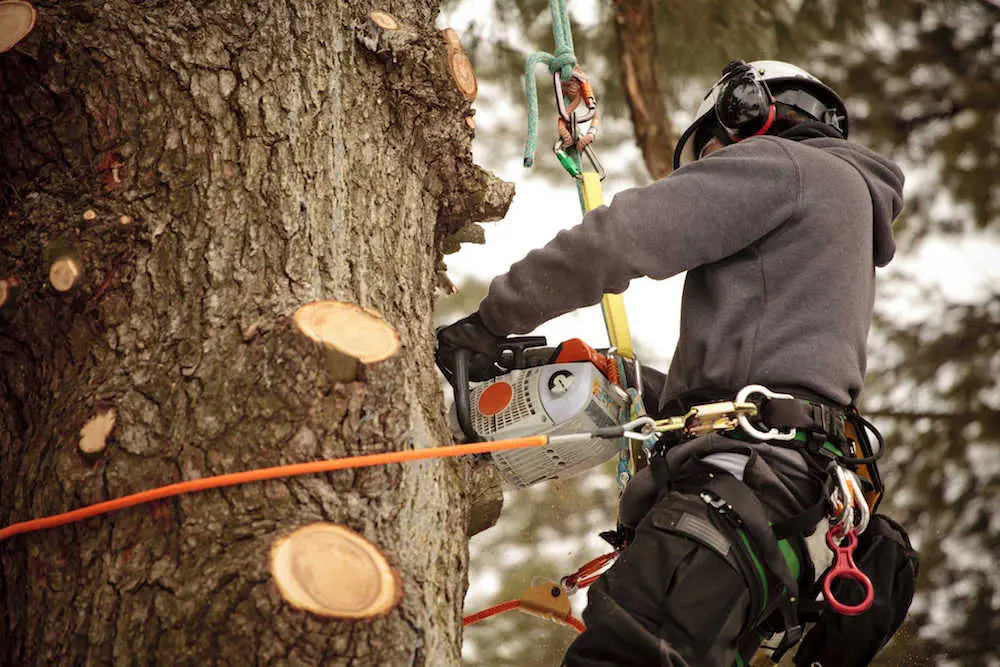
Chainsaws are potentially dangerous and a chainsaw injury can be fatal if not treated immediately. The vast majority of chainsaw users work responsibly and with care, but accidents do happen. It has been a long day and you’re tired, if the weather is wet and cold slips are more likely, the job needs to be finished today so cutting corners becomes very tempting…
Between 2002 and 2011 there were 19 fatalities in forestry (HSE Forestry Statistics), 5 of these were directly caused by contact with a chainsaw. These do not include the numbers of other types of non fatal injuries that occur during felling, pruning and other related work. In 2022, the fatal injury rate for agriculture and forestry was 8.61 per 100,000 workers – this is around 21 times the ‘all industry rate’. (Source: RIDDOR, 2017/18-2021/2)
Learn from other’s mistakes – and get some appropriate training:
Work done by HSE’s investigations shows that most fatal and major injuries are caused because chainsaw operators took shortcuts and the reason for this was to save time. The HSE has produced case studies of some of these incidents. They are grim, enlightening and a good example of what not to do. They also highlight the need for appropriate training in tree surgery. To prevent injury chainsaw operators must have received adequate training and are required to wear appropriate chainsaw protective clothing. The Arboricultural Association website has a list of training providers and lots of good information on tree work, careers and their own series of blogs.
Being prepared for chainsaw injury:
At work, you are also required to carry a personal first aid kit. It is also good practice to have a larger first aid kit at a central location such as workshop or vehicle.
What should you have in your personal first aid kit? The very basic contents would be good scissors or shears, large sterile bandages or haemostatic bandage/powder, some medi-wipes and some surgical gloves that fit you. A whistle or torch is also useful if you need to alert other workmates of your injury.
What should you have in your workplace / vehicle first aid kit? In this kit, you should add in more bandages, eyewash, a foam mat and foil blanket, some strong tape (such as electrical tape) and a casualty monitoring card.
Read more about first aid kits and what you should put in them in our extensive First Aid Kits blog here.
What to do if some has a major blood loss from a chainsaw wound –
If the worse should happen here are some important quick steps to take to stop the bleeding quickly.
- Place a large bandage directly over the wound and apply lots of pressure. Firmly tie the bandage around the limb using the full width of the bandage. Secure tightly. Apply a second bandage if blood comes through the first and apply even more pressure.
- If a large bandage is not available use something absorbent like a fleece jacket or t-shirt instead. This is why good shears are essential in a first aid kit!
- If direct pressure will not stop the bleeding, and it is in a limb, you can try using an improvised tourniquet by wrapping a belt or triangular bandage tightly around the limb to slow down the blood flow. If using a triangular bandage, you can place a stick inside the triangular bandage and wind it round like a windlass to further tighten the tourniquet.
- Raise the limb and phone 999/112 immediately.
- Reassure and monitor the casualty until help arrives.
Learn more about emergency bandages, haemostatic dressings and tourniquets.
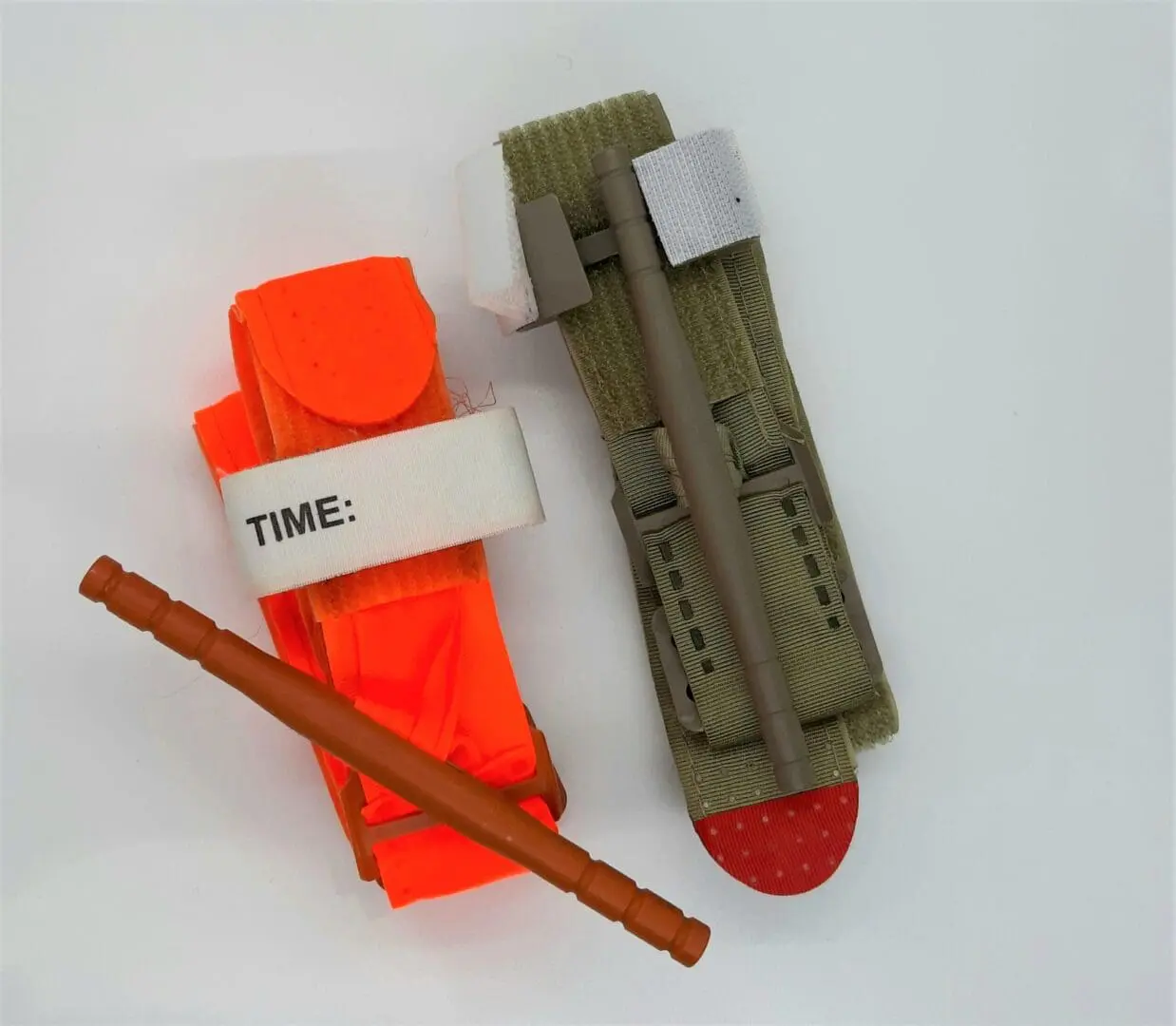
Having the right emergency equipment with you may save a life.
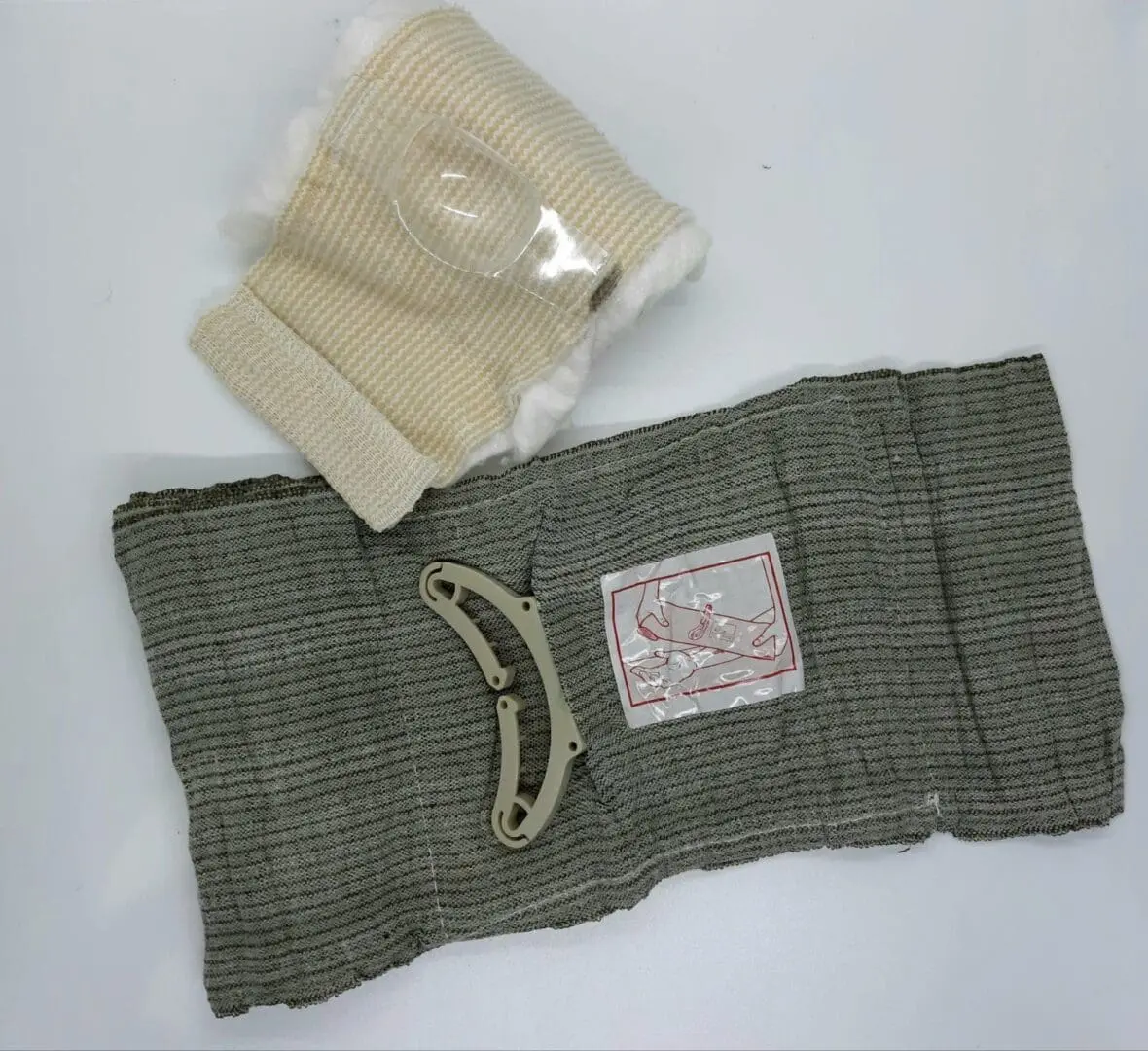
Emergency bandages, often known as Israeli bandages, are quick and easy to apply and can be tightened to stop the blood flow.
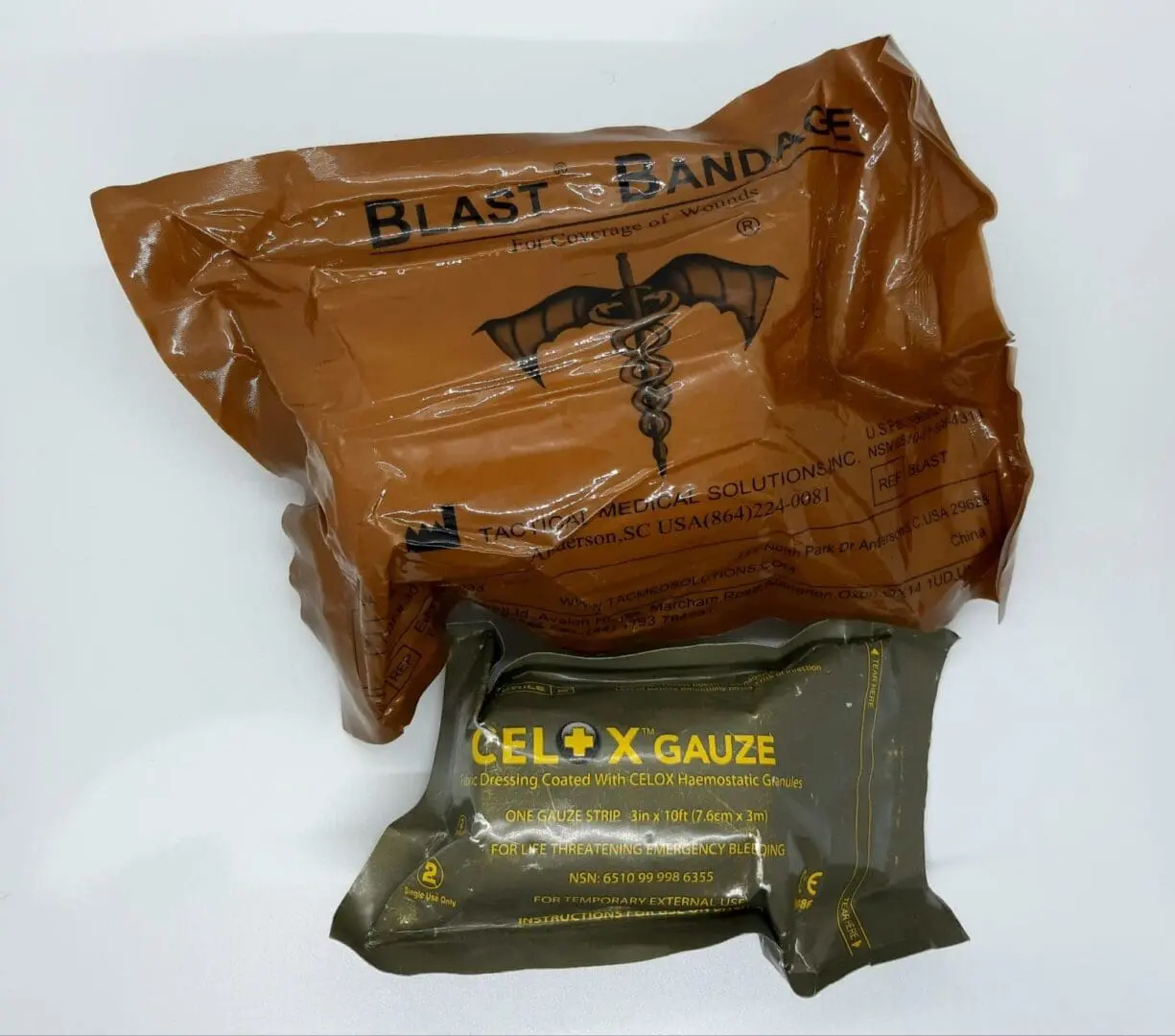
Haemostatic bandages come in different sizes and lengths and effective stop bleeding by helping the clotting agents in your blood. You still need to apply a lot of pressure to the wound area though. Haemostatic products are also available in gauze strips and in powder form.
Modern tourniquets are very effective in stopping catastrophic blood loss in a limb. They are placed around the limb and secured with the velcro strapping. Then a windlass is turned which further squeezes the limb to effectively stop all blood flow to that limb. Once on, they do not come off until the casualty is in hospital. The really are life saving pieces of kit and a lot easier to use than the older versions.
You can learn more about tourniquets and clotting bandages from our blog – Dealing with major blood loss – haemostatic agents & tourniquets. You can also watch our short video on how to apply haemostatic and emergency bandages here.
Get confident – get trained!
You can learn these techniques on first aid course. First Aid Training Co-operative can deliver EFAW+F or FAW+F courses for you at your chosen venue or if you are a smaller operator you can send staff on one of our public EFAW+F courses.
+F is a generic term mean ‘+ Forestry operations’. These courses are also relevant to many outdoor workers employed in the agriculture or horticulture sectors, landscaping and grounds maintenance, gillies and stalkers, plus fencing and machinery contractors.
Our First Aid +F courses build on the skills from Emergency First Aid at Work or First Aid at Work first aid training to provide scenario based, practical first aid skills and knowledge. These courses are some of the best in the industry and include dealing with catastrophic bleeding, crushing injury, Lyme disease, hypothermia and Emergency Action Planning. These courses have been developed to comply with Forestry Commission +F as per the “First Aid at Work – Forestry Commission Policy” and fit with FISA best practice.
A first aid manual in your pocket!
First Aid Training Co-operative has also developed a digital First Aid Manual, which can be downloaded to your phone or tablet so it is available to you wherever you are. This is a specialist first aid manual for those working in outdoor and remote environments and is included free as part of any of our first aid courses. If you operate in remote locations this means your first aid manual is always in your pocket.
Everyone on our courses receives a FREE digital first aid manual. We have a range of manuals relevant to the courses we teach – Outdoor, Equestrian, First Aid at Work, Paediatric and Sports. They are a great resource that you can download onto your phone or other device and have all that first aid knowledge at your fingertips. You can view them and buy them for less than £4 here.