

In the field of mental health, understanding the events and circumstances surrounding incidents is vital for providing appropriate support and ensuring the safety and recovery of people involved. Incident reports for mental health incidents are an essential tool for documenting the incident, helping communication and monitoring the frequency of incidents.
This blog will explore what mental health incident reports are, why they are important, what information should be recorded and provide an example of a mental health incident report.
What is a Mental Health Incident Report?
A mental health incident report is a formal document used to record mental health incidents. They are typically completed by Mental Health First Responders (MHFRs) or staff members who are involved in the incident. No one would think twice about writing up an accident report for a physical first aid incident. This is a very similar document recording that a mental health incident has occurred. In a workplace mental health incident forms are anonymised to prevent workplace stigma. (In professional medical settings they will name the person to help record a casualty’s journey).
In a workplace, Incident Reports should be covered by the confidentiality and procedural guidelines outlined in a Mental Health Policy.
The purpose of an incident report is to provide an accurate and detailed account of what happened, to help assess the situation, identify trends and develop strategies for preventing similar incidents in the future.
Why Are Mental Health Incident Reports Important?
Documentation and Accountability: They serve as a record of events and provide a reliable source of information for accountability.
Communication Tool: They enable communication among team members, ensuring that everyone involved is informed about the incident and the actions taken. This is especially crucial in multi-disciplinary teams where different professionals are involved in a casualty’s care.
Improving Safety: By documenting incidents, teams can analyse patterns and identify potential risks. This information can inform policy changes, training provision and strategies to enhance safety for staff in the workplace.
Enhancing Quality of Care: They can highlight areas for improvement in the delivery of mental health support. By reviewing these reports, organisations can develop specific support to address new issues and improve overall care for their employees or volunteers.
Legal Protection: In the event of legal proceedings, incident reports can serve as essential evidence. They provide a clear account of the situation, and the responses taken, which can be critical for defending against claims of negligence or malpractice.
What Information Should Be Collected?
When completing a mental health incident report, it is essential to include specific information to ensure accuracy and comprehensiveness. The following elements should be documented:
Date and Time: Record the date and time of the incident and a timeline of events.
Location: Specify where the incident occurred whether in a workplace setting, at home or in the community.
Individuals Involved: In the workplace incident forms are usually anonymised.
Description of the Incident: Provide a detailed account of what happened. Include the events leading up to the incident, the actions taken by others involved and any other interventions used.
Observations and Reactions: Note any observations regarding the person’s behaviour, emotional state and reactions during the incident. This information can provide valuable insights into dealing with future incidents.
Actions Taken: Document the steps taken in response to the incident, including any de-escalation techniques used, interventions applied and any follow-up support provided.
Follow-Up Recommendations: Include any recommendations for further follow-up support, assessments or changes to the casualty’s treatment or recovery plan based on the incident.
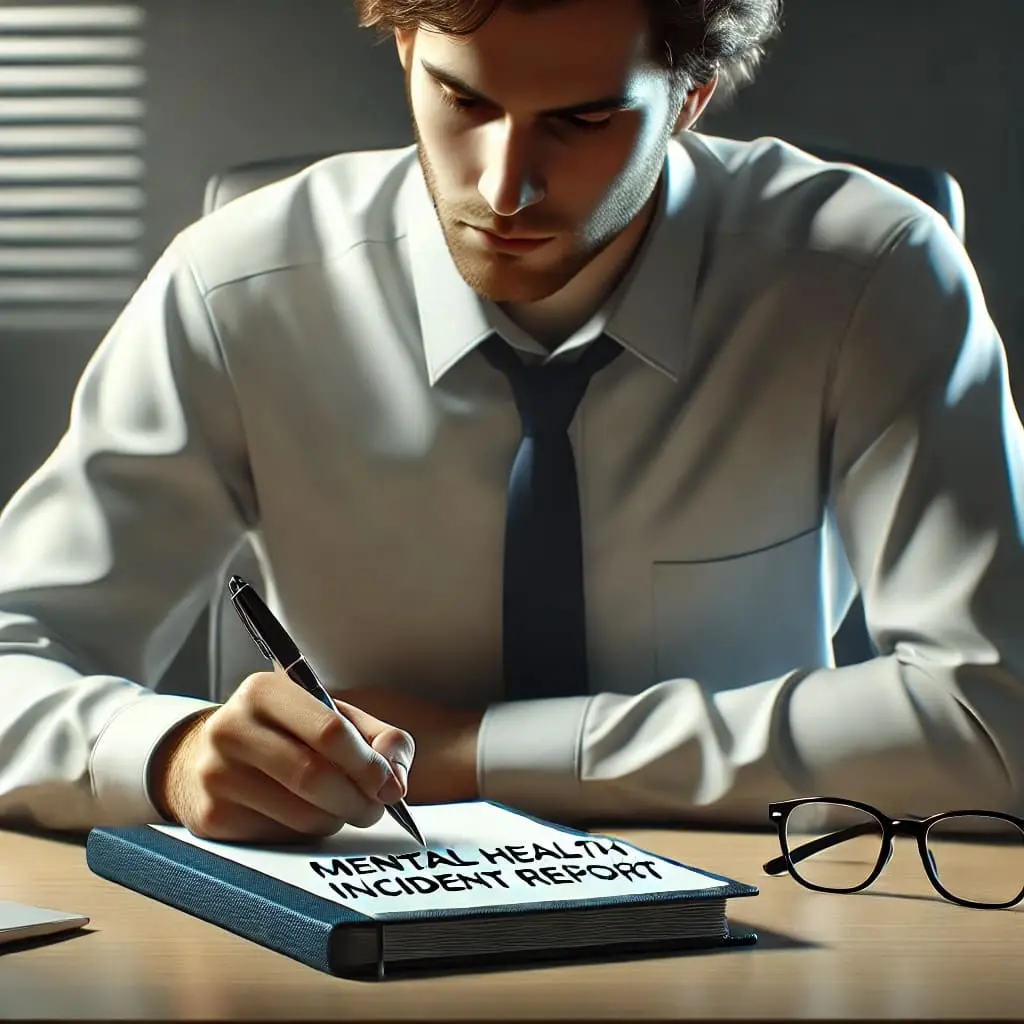
Example of a Incident Report
- Date of Incident: October 5, 2024
- Time: 2:30 PM
- Location: Meeting Room
- Individuals Involved:
- Casualty: Anonymous
- Staff: Sarah Smith (Mental Health First Responder)
- Witness: Mark Lee (Operations Manager)
Description of the Incident:
At approximately 2:30 PM during a team meeting, the casualty exhibited signs of distress, including rapid breathing and pacing. They expressed frustration with the meeting, stating, “I feel like this is pointless.” As the session progressed, they became increasingly agitated, raising their voice and interrupting other participants.
Observations and Reactions:
The casualty was visibly upset, clenching his fists and avoiding eye contact. Other group members appeared anxious, and some shifted away from them.
Actions Taken:
Sarah, the MHFR, intervened by calmly addressing them, saying, “I can see you’re feeling really overwhelmed right now. Let’s take a moment to breathe together.” She guided the group through a brief breathing exercise to help calm the atmosphere. After the exercise, Sarah invited them to share their feelings.
Follow-Up Recommendations:
It is recommended that the casualty has one-on-one sessions with Sarah (MHFR) to further explore their feelings of frustration.
Conclusion – Mental Health Incident Reports
Mental health incident reports are essential tools for ensuring effective communication, improving safety and enhancing the quality of support. By documenting incidents comprehensively and accurately, everyone can learn from experiences, adapt their approaches and provide better support for people in distress.
As Mental Health First Responders, being knowledgeable about the importance of these reports and the information they contain can significantly impact the quality of support provided.
Want to learn more about Mental Health First Aid?
The First Aid Training Co-operative runs a suite of private first aid courses that can be delivered at your choice of venue, at a time and date to suit you. We’ll come to you and tailor your course to suit your specific situation, based on one of the core course types that we have in our portfolio. We now have a range of courses available for those looking to become Mental Health First Responders in the workplace, raise awareness of mental health amongst their staff plus specialist mental health training for outdoor professionals. Check out our mental health first aid course suite.