
You may or may not be aware that the HSE have introduced some changes to the syllabus for workplace first aid courses, (Emergency First Aid at Work & First Aid at Work). These are in response to the European Resuscitation Council’s (ERC) guidelines on CPR in October last year.
In the main these changes are as follows:
- All workplace first aiders are to be trained in the use of an automated external defibrillator (AED) from 31st Dec 2016
- Workplace first aiders are trained by a competent provider in when to apply a tourniquet and haemostatic dressing, and the correct techniques to use for both.
AEDs
At the First Aid Training Co-operative, we have always included an AED demonstration as a minimum, on all of our courses. So for us, there is no large change to be made. You may experience some minor differences on our workplace courses, as these will require AED use to be assessed by our trainers, but this will be minimal.
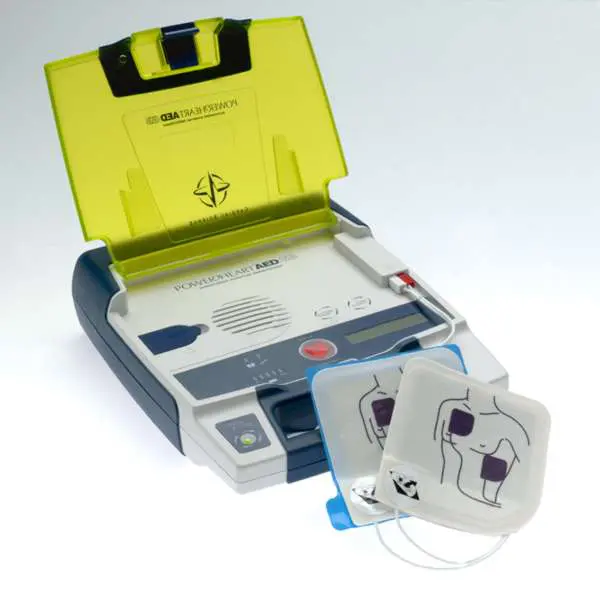
In any case, this is a positive step by the HSE, that we wholeheartedly support. As they say themselves: “It is sensible to ensure that EFAW and FAW first aiders are trained in AED use as they are now available within many workplaces and public spaces. There is good evidence that the early use of an AED has a far more beneficial outcome for the casualty than if that intervention is delayed.”
Please note that as an employer, these changes DO NOT mean that you must purchase an AED for your workplace unless your first aid needs assessment suggests that it would be sensible. However with the reduction in prices each year, and no reduction in cases of Cardiac Arrest, it is hard to argue that they aren’t a good idea.
Tourniquets and Haemostats

The other changes to the syllabus involve the use of tourniquets and haemostats, as we described in our last blog. This has been a controversial issue since the ERC guidelines came out. However, the HSE have decided to include their use in workplace first aid courses where there is a contextual reason for their inclusion.
Our take on this is that we will continue to make our students aware of the existence of these types of equipment where it is relevant. We are well aware of the data that suggests that the percentage of casualties who could have been saved by tourniquets in urban environments is extremely low. There are however some clear cases where there is a rationale for their inclusion – courses for forestry workers who are actively involved in chainsaw use being the obvious one.
We see a lot of forestry workers on our courses, and will ensure that these students are given the appropriate training for their situation. However for the vast majority of our students, there will be no change experienced.