

Can You Swallow Your Tongue?
The short answer is No! ‘Swallowing your tongue’ is an urban myth that describes a casualty’s airway being blocked by their tongue. However we regularly hear football commentators on the TV say that the physio, as they run on the pitch, will need to be careful. In case the unconscious injured player swallows their tongue.
Contrary to popular belief, it is not possible to swallow your tongue.
What does happen then?
A human being cannot swallow their tongue. It is attached inside your mouth and cannot ‘flip’ over for swallowing!
However, if you were knocked out, there is a real danger of your airway becoming blocked by your tongue. But you don’t actually swallow it, it just moves to the back of your throat and this potentially blocks your airway.
If a casualty becomes unconscious, all their muscles relax including the tongue which is essentially a muscle that prepares food for digestion. The tongue can fall back, and the structures of the soft palate relax, blocking the airway. This is especially likely if the casualty is on their back.
Case studies in the Media
Even in the modern era you regularly hear this myth perpetuated by the media.
This story about Togo international Francis Kone in 2017 who was “quick to grab the tongue” when he noticed Martin Berkovec had been knocked unconscious during a game in the Czech Republic is one example.
Another, very similar example in 2019 during the Euro 2020 match between Georgia and Switzerland. However, this article correctly states that although the Georgian player’s quick actions were potentially lifesaving, they were not advisable.
How should you clear an airway?
If a player is knocked unconscious how do we stop the tongue from obstructing the airway?
There are two manoeuvres recommended, a ‘head tilt chin lift’ or the ‘jaw thrust’. The jaw thrust should be used if there is a likelihood of spinal injury. Neither of these techniques involve placing your fingers inside the casualty’s mouth.
Note the airway must always take priority over care for a suspected spinal injury.
Head tilt -chin lift technique: You can see a Chin Lift in this video from the First Aid Training Co-operative about how to manage an unconscious casualty.
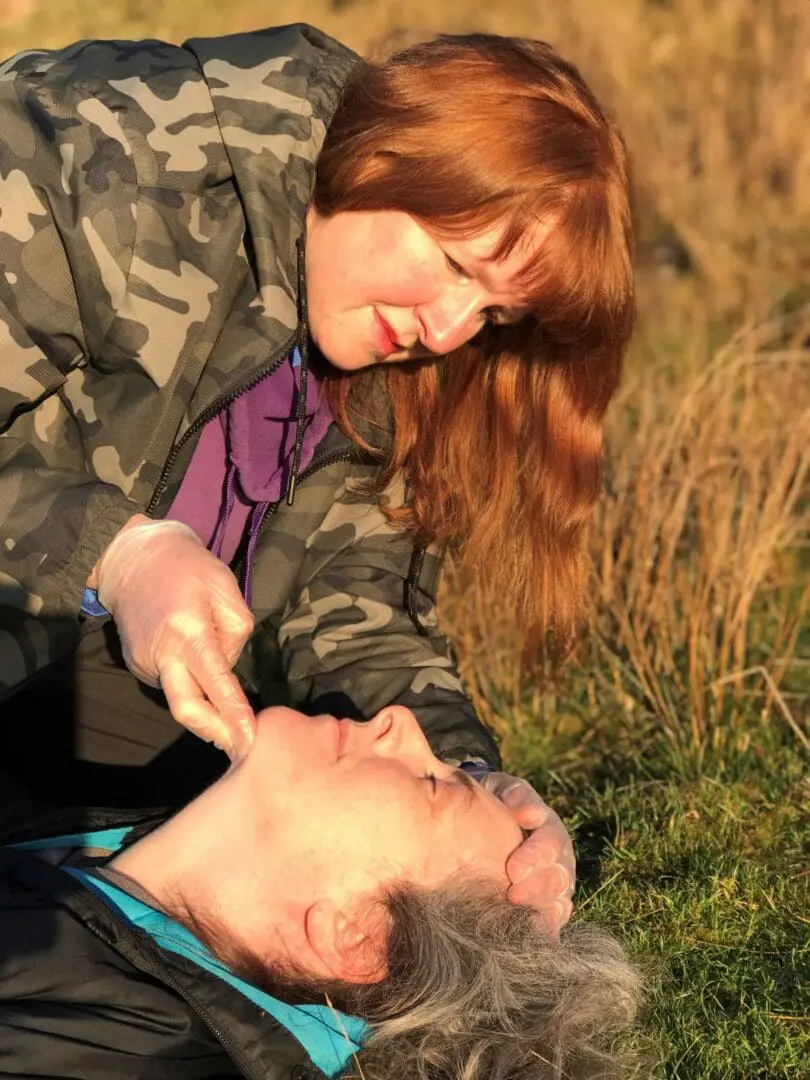
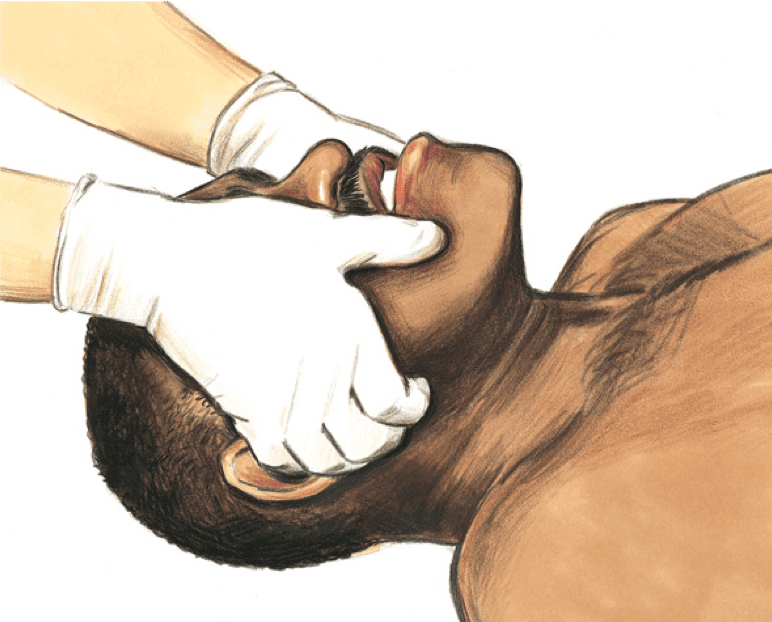
Jaw thrust technique: If you suspect a neck or spinal injury, a Jaw Thrust is advised to give the casualty an airway without bending their neck as you would in a Chin Lift.
Gum shields: If the casualty is wearing a gum shield, this should be removed by gripping the gum shield from either side of the jaw. Inside the casualty’s cheeks, but outside of their teeth.
Ensure the airway remains open – the Recovery Position:
The recovery position is also an airway opening manoeuvre. This should be considered if the casualty needs to be left at all, or if their breathing is obstructed by fluid. A casualty’s airway may become obstructed by fluid over time. There is also the risk of the casualty vomiting and blocking the airway as a result. The recovery position allows continued drainage of an airway.
Where can you learn more?
Get confident – get trained!
We cover airway management on all of our First Aid courses.
Sports and pitchside First Aiders are in a unique position in that they not only have to cover the needs of a large number of players or participants, who may suffer serious injuries, but they may also have to deal with a large number of supporters, who are likely to be family members.
Our sports courses cover the most common injuries and illnesses in a sports setting. They are ideally suited to pitchside staff and volunteers as well as Personal Trainers and Gym Instructors. We combine theoretical training and practical scenarios together to incrementally develop skills throughout the course.
You can find out more about our sports courses here.
Our Digital Sports Frist Aid Manual:
You may be interested in our Digital Sports First Aid manual. The manual is free for anyone who books on one of our first aid courses. This can be downloaded multiple times to your hand held tablet or phone and includes links to a large video library of videos demonstrating first aid techniques like CPR and injury management. The manual also contains links to a library of blogs and videos dealing with specific illnesses and injuries.
Everyone on our courses receives a FREE digital first aid manual. We have a range of manuals relevant to the courses we teach – Outdoor, Equestrian, First Aid at Work, Paediatric as well as Sports. They are a great resource that you can download onto your phone or other device and have all that first aid knowledge at your fingertips. You can view them and buy them for less than £4 here.