
Can I text 999?
Yes, you can send a text to 999 in an emergency. But why and when would you want to?
- In a remote environment – in the mountains for example – you may not be able to make a phone call sue to low signal or battery. You may be able to send a text as they need less bandwidth and battery.
- The problem with calls is that you need to ensure you’ll have proper reception during the whole length of the call. Sometimes signal quality is simply not good enough to allocate the necessary bandwidth for a voice call, but you can still send/receive texts because the bandwidth you need for that is really narrow.
- The emergency SMS service was originally set up to let deaf, hard of hearing and speech-impaired people in the UK send an SMS text message to the UK 999 service where it will be passed to the police, ambulance, fire rescue, or coastguard.
- In violent situations, a text to the Police is often safer than making a call.
So in an emergency situation being able to text 999 rather than phone them can save lives – potentially your own.
You need to register your mobile phone before using the emergency SMS service. Following registration, by simply sending an SMS message to 999 you can call for help and the emergency services will be able to reply to you.
How to register your phone for text SMS
Register your mobile phone with the service before an emergency happens. Simply text ‘Register’ to 999. Wait for the reply so you know you are registered, usually you are asked to confirm that you’d like to register and the original message wasn’t sent by mistake. It is that simple.
If an emergency happens we advise you only to use SMS to contact the emergency services if you have no other option. This is because it will take longer than other methods such as calling 999 uisng up valuable time of you and the call handler.
What information should an emergency text message contain?
Create an SMS message containing the details below:
Which service? Need Ambulance, Coastguard, Fire Rescue, or Police
What? Briefly what is the problem
Where? Be as accurate as possible when giving the location. The better your information is the faster the emergency services will be able to send help. Using the App What3Words is a very easy and useful way to give your location, particularly in rural areas. Alternatively, the OSLocate app provides an immediate grid reference and is another valuable resource. In urban situations an address is usually enough.
What to do when you’re waiting for an ambulance to arrive:
- stay with the person until help arrives
- if you’re in a dark house, turn on lights and open curtains
- if you’re in a car, turn on the hazard lights
- text 999 again if the person’s condition changes
- text 999 again if your location changes
- lock away family pets
- write down the person’s GP details and collect any medicine they’re taking, if you can
- tell the paramedics about any allergies or medical conditions the person has, if you know
Monitor and reassure the casualty. Ensure they’re warm and dry. Check their vital signs on a regular bases. Record this if you can – you can download a free casualty monitoring card here.
Get confident – get trained!
We cover calling the emergency services on land and sea on our First Aid courses. You can find out more about our courses here.
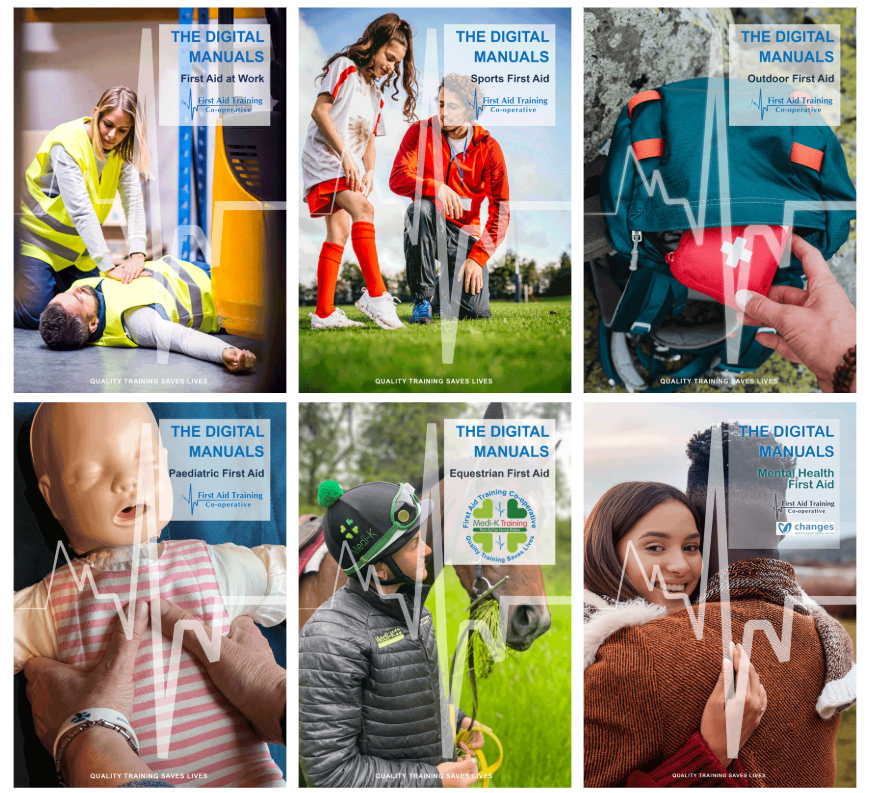
Everyone on our courses receives a FREE digital first aid manual. We have a range of manuals relevant to the courses we teach – Outdoor, Equestrian, First Aid at Work, Paediatric, Sports and Mental Health. They are a great resource that you can download onto your phone or other device and have all that first aid knowledge at your fingertips. You can view them or buy them via our shop.