
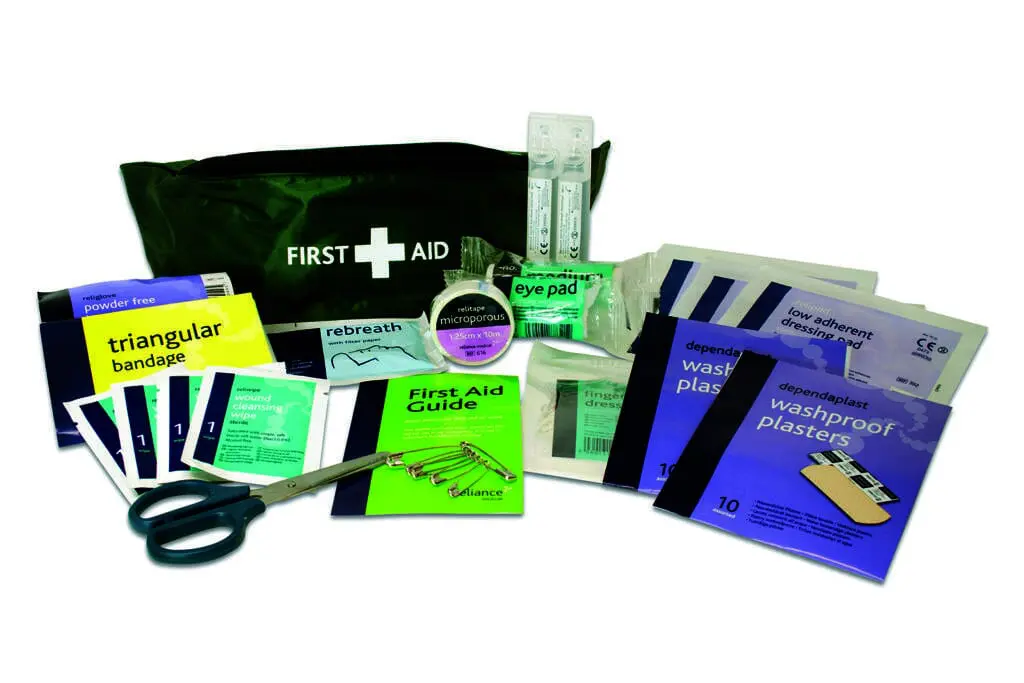
First Aid Kits can have a wide variation in the their contents. This is usually based on the knowledge and experience of those putting it together, the differing first aid requirements of the settings and variations in legislation or regulation in a given work or outdoor sector. In short, they need to be fit for purpose and up to date.
The Health and Safety Executive requires riding establishments to have a first aid kit available. Their website covers Everything about first aid legal compliance and what to have in your first aid kit.
At a basic level, it’s important to keep a well-stocked first-aid kit on the yard so you can deal with minor accidents. Outside of the yard or livery, there is some basic first aid advice in our blog ‘Top 10 things horse riders need to know about dealing with accidents in the road‘.
A basic Equestrian First Aid kit should contain:
- Assorted, wrapped sterile plasters for small cuts and grazes. Waterproof or showerproof ones might be more useful;
- Alcohol-free cleansing wipes to clean the skin around a wound;
- Two sterile eye pads;
- Four individually wrapped triangular bandages, preferably sterile. These are large triangular shaped pieces of cloth. You can fold a triangular bandage to use as
either a bandage or sling, or, if sterile, as a dressing for large wounds and burns; - Two large, individually wrapped, sterile, unmedicated wound dressings. These are for larger wounds to apply pressure to help stop bleeding and are quick and easy to apply;
- Disposable gloves in different sizes. Using disposable gloves reduces the risk of infection between you and the casualty you’re helping. We would recommend non-latex gloves in first aid kits as you, or the casualty, may be allergic to the latex material. Having different colours for different sizes helps you find the right glove more easily too;
- Face shields or pocket masks – These are designed to prevent infection when you give rescue breaths to a non-breathing casualty;
- Basic first aid manual or instruction booklet;
- ‘Tough cut’ style scissors – strong enough to cut through typical clothing worn by equestrians.
Additional useful contents:
- Instant ice pack – or you can use a bag of frozen peas – Ensure it is wrapped in a cloth as it can cause ice burns;
- Foil blankets to keep the casualty warm, crucially important in helping to prevent them going into shock;
- A contents list – it should be one individual’s responsibility to ensure that first aid kits are kept fully stocked, a contents list can help. Kits should be checked at least every 3 months;
- In the Covid era some facemasks would also be appropriate to put in your first aid kit. One for the first aider and one for the casualty, as a minimum.
What NOT to include in a first aid kit:
- No Painkillers. The ability to diagnose and issue painkillers is beyond the scope of a basic first aid course. Over the counter drugs can cause a number of side effects and a casualty could be allergic to them. Often these drugs can interfere with prescribed medicines;
- No creams, lotions or potions – No antiseptic cream, Iodine spray, tea tree oil or burns creams or gels – unless you have done a Risk Assessment and decided to include additional creams or potions – and done some training or guidance on their safe use.;
- No Alcohol – I am sure that we’ve all heard about the medicinal benefits associated with alcohol, but does it belong in a first aid kit? In addition to impairing judgement, alcohol can also lead to some casualties becoming hypothermic. Alcohol causes the blood vessels to dilate, moving heat away from the core. Couple this with alcohols diuretic qualities and you could end up with a dangerous situation;
- No ‘Sharps’ – I’ve bought many branded first aid kits which have included a wide variety of sharps including scalpels and even hypodermic needles! The use of both of these items is beyond the approved skills of a standard first aider.
Care of First Aid Kits in Equestrian Centres – our top tips!
Easy to find – First Aid kits are usually in a green box or bag that’s marked with a white cross, and should be easy to find and in an obvious place. It is most important that the kits contents are good quality. First aid kits can be assembled in almost any type of container, and this will depend on whether they are commercially produced or assembled by an individual. Standard First Aid Kits often come in durable plastic boxes, fabric pouches or in wall mounted cabinets. The type of container will vary depending on purpose and rider leaders and coaches often carry a small bum bag style first aid kit.
Easy to navigate – Organise your kit contents into sensible sections. Once you open the first aid kit, you should be able to see what is where. The first thing you need to access is probably gloves. Get everything you need out of the kit before you treat a bleeding casualty – this is to avoid contaminating the contents of the kit with bloody or dirty gloves.
Medication – The only medications you may have in a first aid kit is Aspirin (for use in heart attacks). These should be in separately marked bag or container in the first aid kit.
Cleanliness and storage – It is recommended that all kits are in a clean, waterproof container to keep the contents safe. The kit should be stored away from heat and humidity, within easy reach for adults but out of the reach of children. Since the supplies must be easily accessible, avoid locking or complicated closures.
Checked regularly – Kits should also be checked regularly and restocked if any items are damaged or are out of date. The most fully stocked kit will be of no use to you in time of need without basic knowledge of the care required for the given situation.
Get confident – get trained!
Having a kit on site is great, but you also need to know how to use the equipment in your first aid kit. A first-aid course is recommended, with a refresher every three years in order to keep your knowledge current.
Knowing what to look for and what to do BEFORE something happens is essential and attending a first aid course will give you the knowledge and the confidence to deal with many first aid incidents. Our courses are structured to give you confidence in dealing with an incident as well as the competence to do good quality first aid. Find out more about our courses on our specific equestrian first aid webpage.
Our digital First Aid Manual and Equestrian Specific Accident book:
Everyone on our courses receives a FREE digital first aid manual. We have a range of manuals relevant to the courses we teach – Outdoor, First Aid at Work, Paediatric, Equestrian and Sports. They are a great resource that you can download onto your phone or other device and have all that first aid knowledge at your fingertips. You can view them and buy them for less than £5 here.
We have also produced an equestrian specific Accident Book for horse riding establishments. You can view and buy it here.


For any more information about our first aid courses please contact us via this link.