

Updated May, 2023.
NOTE – EMERADE AAIs RECALLED, MAY 2023.
Patients, or carers of patients, who carry Emerade 300 or 500 microgram adrenaline auto-injector pens should immediately contact their GP to obtain a prescription for, and be supplied with two auto-injectors of a different brand. Pharmacists and pharmacy teams can also help with obtaining new prescriptions and dispensing of new pens. Patients or carers should then return all Emerade 300 and 500 micrograms auto-injectors to their local pharmacy. You can read more about this on the Government website here.
Jargon buster: An AAI is an Adrenaline Auto Injector. Epi-pen is a brand of AAI. Other brands are Jext and Emerade. They all inject a dose of the drug adrenaline.

What are Epi-pens used for?
Epi-pens or AAIs are used to inject a dose of adrenaline for people who have a severe allergic reaction to a trigger such as foodstuffs, pollen or animal bites or stings. They have an expiry date so they should be checked regularly.
Why carry two Epi-pens?
People who have been prescribed an adrenaline auto-injector (AAI) because of the risk of anaphylaxis should carry two with them at all times for emergency, on-the-spot use. 35% of patients may require more than one adrenaline dose and as many as 20% of patients will go on to develop a second anaphylactic response, sometimes hours later.
It is vital that at risk patients carry 2 EpiPens at all times. A second dose can be given after 5 to 15 minutes if necessary or if the symptoms do not diminish. If their airway or breathing is compromised, give a second dose after 5 minutes. Always be prepared to call for an ambulance if they have airway or breathing difficulties. Carefully put them into a position that enables their breathing to continue such as the Recovery Position. Avoid sudden changes in posture.
There is clear evidence that failing to administer adrenaline as soon as anaphylaxis is suspected has contributed to fatal outcomes. The Cochrane review (2008) concluded that most people dying from anaphylaxis had not received prompt adrenaline treatment.
Where do you inject an AAI or Epi-pen?
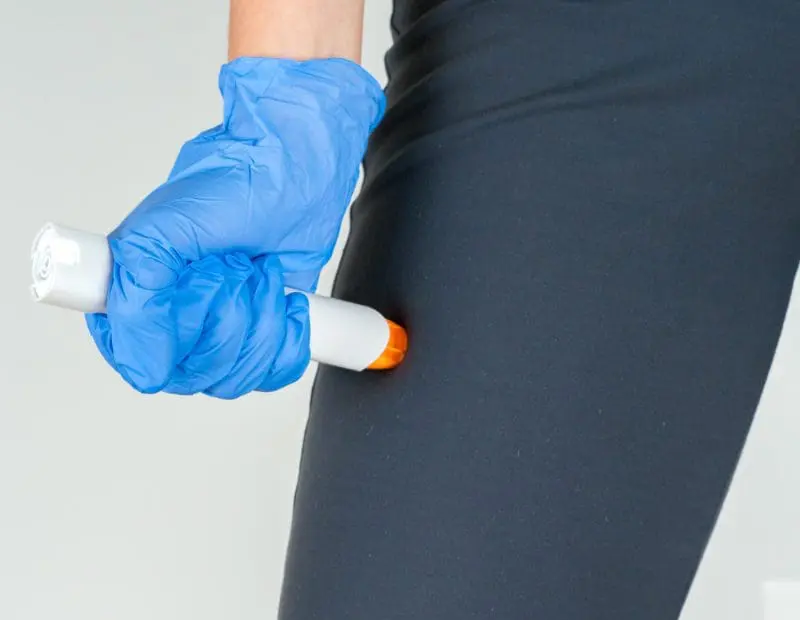
The first dose of adrenaline goes into the outer thigh. Firmly. The AAI has a small needle inside which automatically administers the drug into muscle.
AAIs are designed to be easy and quick to use. Watch our video on how to use one here.
Where should you give a second Epi-pen injection?
Administering a second dose: It is now recommended that the second dose should go into the other leg. This is because when the first dose goes in, the blood vessels collapse as this helps send the adrenaline through the body quicker, a bit like squeezing a garden hose to send water out faster. Because the vessels are partially collapsed, a second dose in the same leg may be less effective in spreading to the body. Research into this is currently ongoing.
Are all anaphylactic reactions the same?
Different anaphylactic reactions: It is important to note that not all patients will have all reactions, and an individual may experience a different set of symptoms during different episodes, even if the same trigger is involved. Some reactions come up as rashes and are treated with their AAI but also with other medications such as antihistamines. If you have a friend, colleague or family member who ha anaphylaxis, get to know their early signs and symptoms so you can have the confidence to help and reassure them.
Anaphylaxis is unpredictable: While a person may have a mild reaction one time, a serious or even life-threatening reaction can occur the next time. In addition, allergic reactions can begin with mild symptoms and then progress to a full anaphylactic episode.
Anaphylaxis in schools:
Schools and other educational settings: Schools can keep spare AAIs for children in their settings. They should always be checked that they are in date and that they are clearly labelled for that particular child. Read more about having spare AAIs in schools here.
How can I help someone with analphylaxis?
Find out more about anaphylaxis: If you have a family member, friend or colleague who needs to use an AAI, find out more about the illness, what their triggers are and get them to show you where they keep their AAIs and how to use them. The three main types of AAIs are slightly different in their practical use. People who have anaphylaxis reactions get training in the use of their AAIs and their prescription dosage and illness management is checked regularly. The AAIs also have a use by date and should all be replaced before this date.
The charity Anaphylaxis UK also has an excellent website with lots of information and resources.
Get confident – get some first aid training
We cover Anaphylaxis and other medical conditions in our First Aid courses. Our systematic approach to teaching first aid helps your learning and understanding of many illnesses and injuries. Practicing first aid techniques reinforces your learning too. Find our more about our full range of First Aid Courses here.
Every client on our courses receives a FREE Digital First Aid Manual relevant to the course they come on. You can also view and buy our manuals in our online shop. In addition, we have our own YouTube channel with over 40 practical first aid videos.