
Updated September, 2023.
When we run our first aid training courses we are often asked whether funding is available for defibrillators. On every first aid course run by the Co-operative, we cover doing ‘CPR’ for cardiac arrest and how to use an AED or defibrillator. The reason for this is the crucial part a defibrillator plays in saving lives.

(A quick jargon buster before you continue!…. AED = Automated External Defibrillator = Defibrillator. PAD = Publicly Accessible Defibrillator. CPR = Cardio Pulmonary Resuscitation = chest compressions and rescue breaths done after someone’s heart has stopped.)
Using a defibrillator alongside CPR can greatly increase the chance of survival as long as it arrives at the scene quickly.
A defibrillator needs, ideally, to be used within the first 5 minutes of collapse. This is why many places with a high footfall such as bus and railway stations, shopping centres, sports grounds and most supermarkets now have AEDs in situ. Larger businesses with large work sites should also consider purchasing an AED, particularly if they have older or ‘at risk’ employees or customers.
How do you use a defibrillator?
To see how an AED works (and how simple it is to use) watch our video here.
Where can I find funding for a defibrillator?
With a little research you will see that there currently appears to be a lot of potential funding sources. Most of this funding is for community, rural and / or public access AEDs, or those used by schools or charities. Funding is also available for businesses through some funding providers.
Before you apply for any funding, do some research on everything you will need.
What makes up a typical defibrillator station?
- A secure power supply on a building or connection to a building – this is for the box that keeps your defibrillator and all its equipment warm in winter. (This extends the battery life).
- Inside the box is the defibrillator battery unit, pads (often separate ones for adult and child), instructions and consumables such as scissors, towel, razor, gloves, face shields and instructions.
- A record sheet showing maintenance and local contacts is recommended.

How much does a defibrillator cost?
Defibrillators range in cost from approximately £500 – £2200 or more depending on the equipment, either with or without VAT. Defibrillators cost does not impact on their life saving capabilities but get the best one you can afford. You don’t want to get a ‘bargain’ only to find it breaks after a year and you have to fundraise all over again to replace it. Some funders stipulate the type or even brand of defibrillator that they will fund.
Installation is not usually included as a standard cost as it needs to be installed by an electrician – you can seek out someone who may do it as a community goodwill gesture or at a reduced price. Ensure the person installing it is qualified though!
Any other costs?
A budget will need to be set aside for maintenance and replacement parts and consumables. Consumables include gloves, towel, razor, face shields and will need replaced after every use of the defibrillator. The pads will need replacing regularly even if they’ve not been used as they have ‘use by’ date. The cost of pads will vary between £30-£100 a set. The battery will need replacing probably every 4 years at a cost of around £200 depending on the model of AED. Looking at the replacement costs of items is something to consider before you buy your defibrillator.
Another cost is the electricity for powering the defibrillator inside the cabinet. This will probably be around £5-£10 per year but can vary with the climate. Colder locations make the battery run down more and therefore need recharging more often. This is why heated boxes are available. ‘Colder climates’ may not just be about your location but whether your defibrillator is mounted on the north or south side of the building.
Maintaining the cleanliness and rustproofing of a metal defibrillator box is important for its longevity as well.
Where can I buy a defibrillator?
Defibrillators are available from many outlets. NEVER buy a second hand one though as it may have been stolen, you don’t really know if it will work when it needs to and there’s no technical back up for a second hand one. However, some reputable suppliers sell refurbished ones.
What are different options for funding your defibrillator:
There are many charities, organisations and suppliers that have funding available for defibrillators. Eligibility criteria vary depending on local need. Most, but not all, funders require that the defibrillator is accessible 24hrs a day with no locked box.
Although purchasing a complete package is the most beneficial, there are several ways fund your defibrillator purchase:
- Part funding. This is mainly done through charities who will fund a percentage (usually 25-50%) of the cost of the defibrillator. The community then needs to raise the rest of the amount plus pay the ongoing cost of electricity, consumables and future battery replacements. Criteria varies with different funders.
- Community sponsored events and other fundraising activities to cover the whole amount or in partnership with one of the schemes mentioned above. Once people realise the great benefit of having a defibrillator close to hand, they’re more likely to donate and even volunteer to be trained or be part of your community defibrillator team!
- Legacies and donations from wills and individuals.
- Sponsorship through a local company or organisation. Some suppliers have a corporate sponsorship scheme for local companies to sponsor and effectively donate a defibrillator to a community. The scheme runs over a number of years and typically costs between £1850 and £2400 + VAT depending on the package. Most packages cover all the costs of the defibrillator including consumables.
- Sector specific funding. Some sectors have funds that only specific types of businesses can access. For example, Butcher shops in Scotland have access to a fund which part funds defibrillator to be mounted outside their shop. The community then raises the rest of the funds. Dentists, optometrists and other medical practices often rent their machines with assistance from their professional associations although only some of these are accessible 24hrs per day.
- Rental packages are also available for communities and businesses where the cost is typically about £1 per day. This limits the initial financial outlay and gets the defibrillator in situ much quicker than fundraising. Some packages include replacement or ‘buy-back’ after a set number of years. Consumables may or may not be included in the package.
Who are the main funders?
As mentioned above there are now many charities and organisations that will help you with funding your defibrillator. We’ve listed the main ones below but this is not an exhaustive list.
AED Donate – They will help you set up a funding campaign, buy a defibrillator and maintain it. They can also offer up to £400 towards the cost of your defibrillator.
British Heart Foundation (BHF) They have an online application system for community defibrillators. The funding will part fund an AED and the group getting the public access defibrillator will still need to contribute to cover the whole cost. A successful application will also need to show that the defibrillator must be freely accessible to the public 24/7 and be placed externally in an unlocked and un-coded cabinet. There must be a clear need for the device (e.g. a location with high footfall or in a rural area) and there must be a commitment to train the local community in the use of the AED.
St Johns Scotland – Support for the purchase of AEDs and will work with community groups, businesses and individuals across the country to increase access to publicly available defibrillators. Note they also fund businesses who want to install a defibrillator.
Please remember to register your defibrillator.
A new partnership between UK ambulance services, British Heart Foundation and Microsoft aims to solve this, by creating a national map of all defibrillators in the UK, known as ‘The Circuit‘.
‘The Circuit’ provides locations of defibrillators to every Ambulance Service in the UK, so when a member of the public calls 999/112, they can be directed to the nearest defibrillator quickly. If you have a defibrillator, we encourage you to register it on ‘The Circuit’ network to help improve cardiac arrest survival rates in your area. This will become the definitive register of all defibrillators in the UK.
At present, the Circuit is an in-house register of defibrillators for use primarily by emergency services. Once a defibrillator is registered with them it automatically appears on the publicly accessible site defibfinder.uk
If you know of a local defibrillator, check to see if it is on defibfinder.uk. If not ask them to register it with the Circuit and encourage them to do so if they have not.
Is there training available for using a defibrillator?
If you would like a first aid course to learn how to do CPR and use an AED, contact our office at courses@firstaidtrainingcooperative.co.uk
Some funders may also add in the costs of training a number of people in your community or workplace so make sure you add this into your fundraising target. It is useful to speak to other communities or businesses who already have AEDs to find out about their experience and ongoing training needs.
It is worth noting that the use of an AED / defibrillator now forms an integral part of all CPR sessions for first aid, as recommended by the European Resuscitation Council Guidelines. These are the guidelines for all first aid courses. The advantage here is that you learn more than just how to use the defibrillator. A complete first aid course includes CPR, AEDs, heart attacks, choking, bleeding and all about first aid kits that you should have in your community or workplace facility. The certificate lasts for 3 years. A short AED only course (which also covers CPR as standard) has a certificate that only lasts one year.
Regular training should be part of your ongoing plan with the aim to get lots of people in the community or workplace competent and confident in using the defibrillator and administering first aid.
The work of First Aid Training Co-operative team in their communities
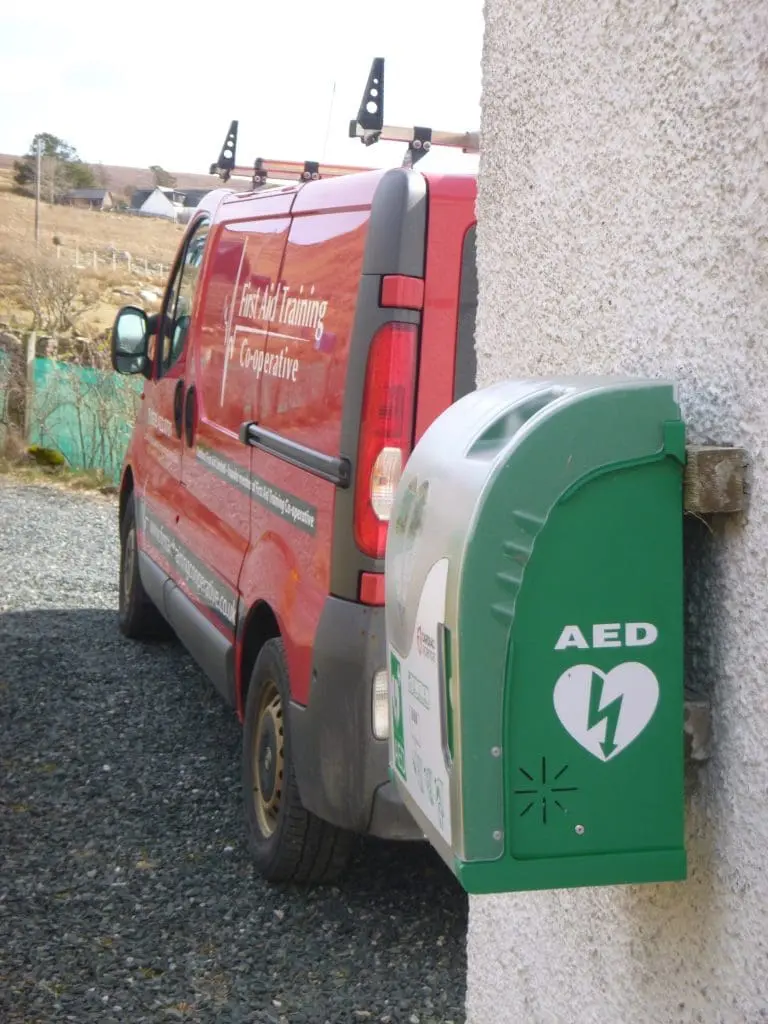
One of our Directors, Cory Jones, looks after the community AED in Melvaig, a remote village in north west Scotland where he lives. Cory said “If someone in our community has a cardiac arrest the nearest local ambulance may arrive within 20 minutes. That’s why we worked hard to get hold of a public access AED for our community. We have also been working over the last couple of years to train people in the community how to use the AED”
Other trainers within the first Aid Training co-operative are also Community First Responders, Mountain Rescue Volunteers and Community Defibrillator Team members.
The benefits of a Publicly Accessible Defibrillator are well worth the fundraising effort for your community but also for the visitors to your area.
Good luck with your campaign!