
Dentist Practices – Does a Dental Practice need an AED on site?
The quick answer to the question ‘Does a Dental Practice need an AED on site?’ is a simple YES.
This is not guidance from us, it comes from the UK Resuscitation Council. The Quality standards for cardiopulmonary resuscitation practice and training from the UK Resuscitation Council states – “All clinical areas should have immediate access to an automated external defibrillator (AED)”.
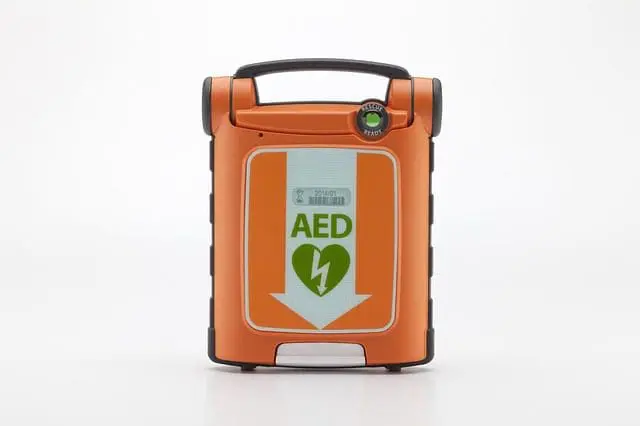 The rationale for this is twofold.
Firstly, there is a public expectation that dental practitioners and all other dental care professionals should be competent in treating cardiorespiratory arrest.
Secondly, that people who attend a dental practice cover a wide spectrum of individuals and families who may have underlying health care issues.
Figures show that any delay in CPR and defibrillation for a person who has suffered a cardiac arrest is very costly to their life chances.
Therefore, it is essential (and a requirement of licencing) that primary and general dental care providers / practitioners and all other dental healthcare professionals should undergo training in cardiopulmonary resuscitation (CPR), including basic airway management and the use of an AED. Note that if the practice also treats children, that training for child CPR should be carried out too.
Additionally, the dental staff’s knowledge and skills in resuscitation should be updated at least annually.
Watch our videos of ‘How to use and AED’ or ‘How to do child CPR’.
First Aid Training Co-operative run a Basic Life Support first aid course specifically designed for Dental Practices. This is a popular course which takes approximately 3 hours. All participants receive a Basic Life Support certificate that counts as CPD for the staff members and the practice. Click here for more course information.
The Basic Life Support course includes safety, initial ABC assessment, recovery position, CPR, compression only CPR, CPR for children and choking. Our trainers can add in bespoke content for those on request e.g. use of EpiPens for anaphylaxis. All our first aid courses fully meet the UK and European Resuscitation Council Guidelines 2015 and the HSE requirements for first aid training.