
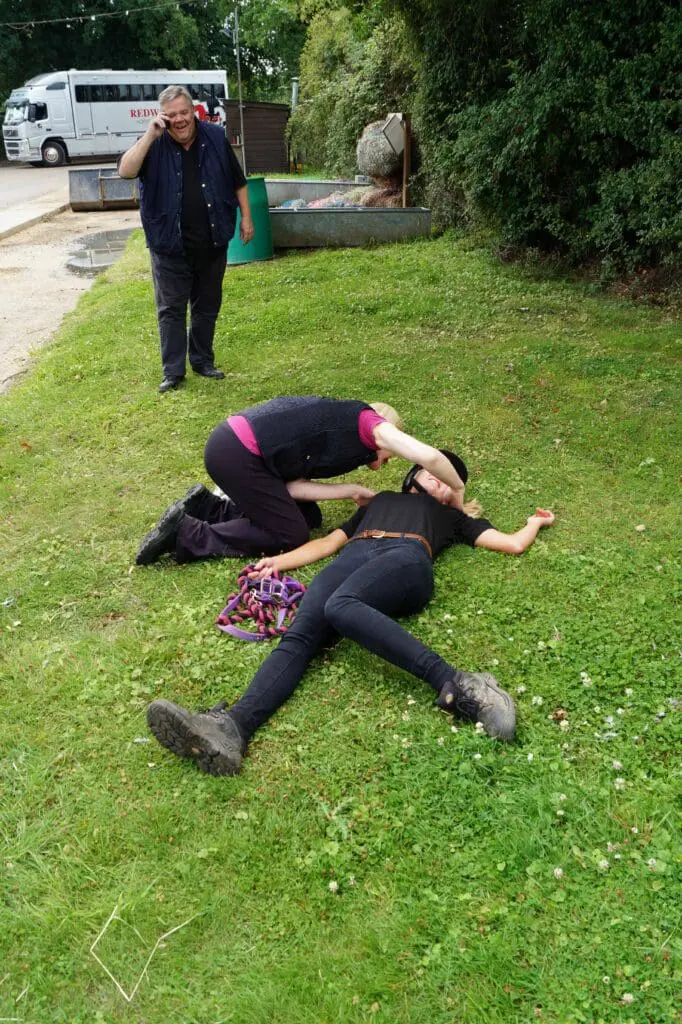
The ACVPU scale is a simple and rapid method of assessing a person’s level of consciousness or alertness in an emergency situation. The acronym stands for:
A = Alert
C = Confusion (new or worsening)
V = responsive to Voice
P = responsive to Pain
U = Unresponsive
AVPU becomes ACVPU
It is a refined version of the older AVPU scale (Alert, Voice, Pain, Unresponsive) with the addition of the “C” for new confusion. In their first aid guidelines published in October 2025, the European Resuscitation Council, followed shortly thereafter by the Resuscitation Council of the UK (RCUK) recommended that first aiders now use ACVPU in place of AVPU. Making this change aligns first aid training with the Remote Rescue Medical Technician (RRMT) protocols in Search and Rescue organisations, and the EMT and Paramedic protocols within Ambulance services across the UK.
The advantage of ACVPU is that it gives a very quick “snapshot” of the casualty’s Level of Consciousness / Alertness status – useful in first aid, triage or when a more detailed neurological scale (such as the Glasgow Coma Scale) would be too time-consuming.
How to assess alertness using ACVPU:

When you arrive at a casualty, after ensuring scene safety, you should check their level of alertness roughly in this order:
- A – Alert. Is the casualty awake and aware? Do they open their eyes without prompting, respond appropriately to questions, know who they are and what has happened? If yes → they are “Alert”.
- C – Confused. If they are awake but there’s new confusion, disorientation or an altered level of consciousness (for example, they are awake but don’t know where they are, show new agitation or disorientation), this warrants “C”. The point to recognise is a new or worsening confusion compared to their normal state.
- V – Voice. If the casualty is not fully alert or confused, you ask or say a command (e.g., “Open your eyes”, “Squeeze my hand”); if they respond to your voice (verbal stimulus) by opening eyes, movement or speech, then mark “V”.
- P – Pain. If they don’t respond to voice, apply a gentle but firm painful stimulus (for example a pinch of the trapezius muscle in the shoulder or nail-bed pressure. If they respond (e.g., move, grunt, withdraw) then record “P”.
- U – Unresponsive. If there is no response to voice and pain, then the casualty is “Unresponsive”. This is a very serious sign and requires urgent attention. Ensure you call 999/112 at this stage.
Monitoring and communicating a casualty’s alertness
Time – the result from ACVPU gives immediate information about how well the casualty’s brain is functioning -i.e., their level of consciousness – AT THAT TIME.
Any change down the scale (for example from Alert → Confusion → Voice → Pain → Unresponsive) signals possible deterioration and an altered level of consciousness. This could be a result of, for example, head injury (concussion), low blood sugar, hypoxia, shock, a sign of mental health distress or maybe intoxication. This may require urgent change in your communications with Emergency Services.
If a first aider has already phoned for help and reported the casualty as fully Alert, it would be appropriate to call again and report a change (a decline) in the level of alertness.
Communication – ACVPU is very useful for communicating with Mountain Rescue, Paramedics or receiving staff at a hospital that “patient is C on ACVPU” quickly conveys alert status. Everyone uses and recognises the language of the ACVPU scale.
Don’t delay other assessments – The scale should not delay other care: you assess rapidly, then continue with the rest of the primary and secondary survey.
Frequently asked questions
How do you assess confusion in a casualty?
Always compare with their normal baseline state. If a person has a long-standing cognitive impairment but is stable at that level, “C” should only be used if there’s a new or worse confusion.
How much pain should you apply to get a response?
Avoid causing unnecessary painful stimuli. A firm squeeze at the top of the shoulders is sufficient. Ensure you’re not causing pain to existing injuries in the process (e.g., injury to limbs, spine).
Is ACVPU the only thing I should monitor in a casualty?
Use ACVPU as one part of the assessment—not instead of airway-breathing-circulation and vital signs. Monitor them all regularly until help arrives.
What should I record about my casualty?
Document the level and re-assess periodically. Changes over time are important to note and record. Also reassess after any first aid applications you have made to ensure they’re working.
You can use our free downloadable casualty monitoring card from our website.
If a casualty is obviously alert, do I still need to monitor their alertness?
A casualty who appears alert but is acting noticeably confused or disoriented still warrants attention – that may indicate early deterioration.
Benefits of the ACVPU scale
The ACVPU scale is a quick, effective tool for assessing a casualty’s level of alertness and consciousness. By systematically checking Alert → Confusion → Voice → Pain → Unresponsive, a first aider can rapidly categorise alert status, detect deterioration and guide further action. In emergency care, speed and clarity matter: ACVPU helps deliver both.
Get First Aid confident – get trained!
Practicing first aid techniques reinforces your learning and doing this under the instruction of a skilled trainer is crucial. Knowing what to do and how to do it effectively and competently is the key to being a confident first aider. Our systematic approach to teaching first aid helps your learning and understanding of many illnesses and injuries. Find out more about our full range of First Aid Courses here.
Everyone on our courses receives a FREE Digital First Aid Manual relevant to the course they come on. You can also view and buy our manuals in our online shop.