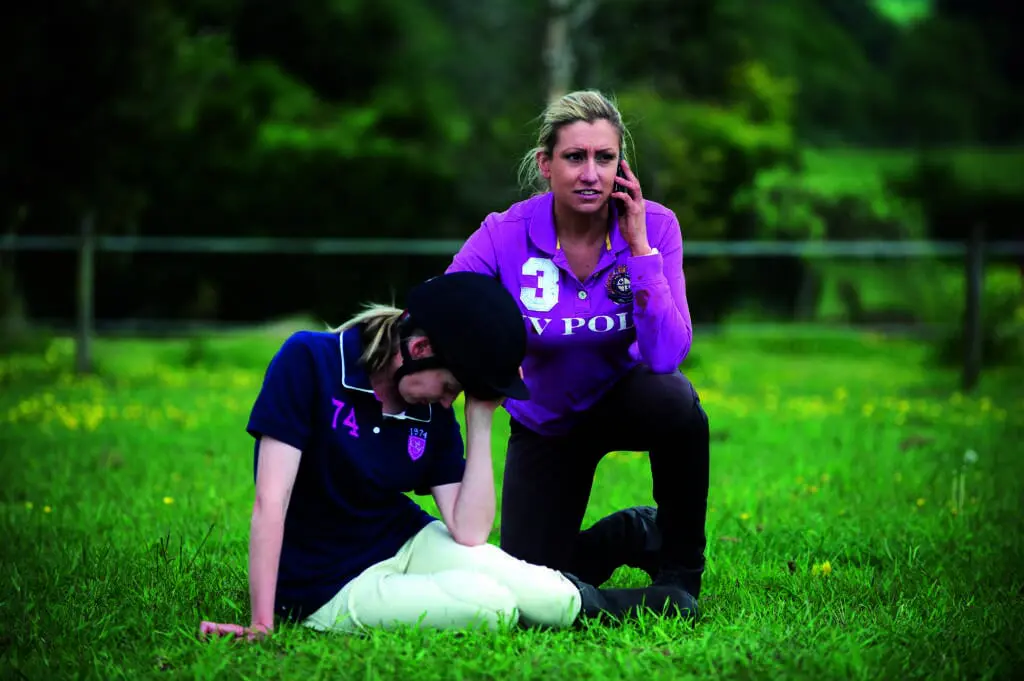
Horse riding is a high-risk sport and falls can happen at any time. A bang to the head from a fall from a horse can lead to a concussion but so can a slip or fall on to any hard surface such as stable doors, yard floors or jumps.
What Is Concussion?
Concussion is an injury to the brain as a result of a blow or the shaking of the brain inside the skull. The brains sits in cerebral fluid and is attached to the skull by a series of web like structures called meninges. There is limited movement but a blow to the head or a shake can cause the brain to ‘rattle’, causing a variety of symptoms. This injury may appear minor or temporary but can also lead to more serious injuries over time.
A concussion indicates that the brain is being adversely affected from an impact. The casualty does not have to have been knocked out to suffer from concussion. Concussion is serious and requires first aid because there is the chance of damage to the brain. It is vital that first aiders are aware of the symptoms of concussion because it can also lead to bruising of the brain tissues or bleeding within the skull which causes ‘compression’ which can be life threatening.
What are the Signs of Concussion?
Remember concussion is a temporary injury to the brain and it can last from a few days to a few weeks. Symptoms are a mixture of cognitive, physical and emotional. It is important to regularly check all 3 when assessing your casualty.
Here are our Top 10 signs and symptoms that should alert you to a possible concussion:
- Change in personality of the casualty, perhaps irritability;
- A change from normal alertness in the casualty – only 10% of cases lose consciousness – but they still have a concussion;
- Persistent headache since the incident;
- Nausea or vomiting since the incident;
- Memory loss about the incident or before the incident;
- Unusually sleepy or having sleep problems;
- Blurred vision or double vision;
- Suspicion of a skull fracture – always take the riding helmet to the hospital with the casualty;
- Any seizure since the accident;
- New deafness in one or more ears – or fluid coming out of the ears.
First Aid for Concussion – immediate and delayed symptoms
Immediate symptoms – Phone 999 – If you suspect concussion immediately after a blow to the head, or in the case of a severe head injury, you should get someone to dial 999 while you administer first aid.
Delayed symptoms – Get advice – If you suspect concussion at any point even a few hours after a blow to the head, you should get advice from 111 or visit your nearest A&E.
Other first aid points to consider:
- hold an ice pack (or a bag of frozen peas in a tea towel) to the area regularly for short periods in the first few days to bring down any swelling;
- rest and avoid stress – you or a child casualty do not need to stay awake if you’re tired;
- take painkillers such as paracetamol for headaches;
- make sure an adult stays with you or the child casualty for at least the first 24 hours.
Things NOT TO DO after a concussion:
- Don’t let the casualty stay alone for 48 hours after the incident;
- Don’t let them drink or drive until they’re fully recovered;
- Don’t continue to ride or play other sports or activities;
- Don’t take sleeping tablets without consulting a Doctor.
Would you like more information? Headway, the brain injury association in the UK have an excellent Factsheet on Concussion in Sport. You can view it here.
First Aid training for Horse Riders
Ensure that all your staff are appropriately trained in First Aid and that your kit is up to date. We regularly hold open/public courses across the UK – ideal when you are a small yard of two or three people.
We can also run private courses specifically for your yard. Private courses are best run with a mix of your staff. If you don’t quiet have enough staff to fill a course, why not club together with another yard or known riders in your area? For example, we occasionally train a mix of RDA volunteers, with staff from the riding school yard that ponies and arenas are rented from, along with any Liveries that wish to join on the same course.
To find out which first aid course is best for you check out our full range of courses here.
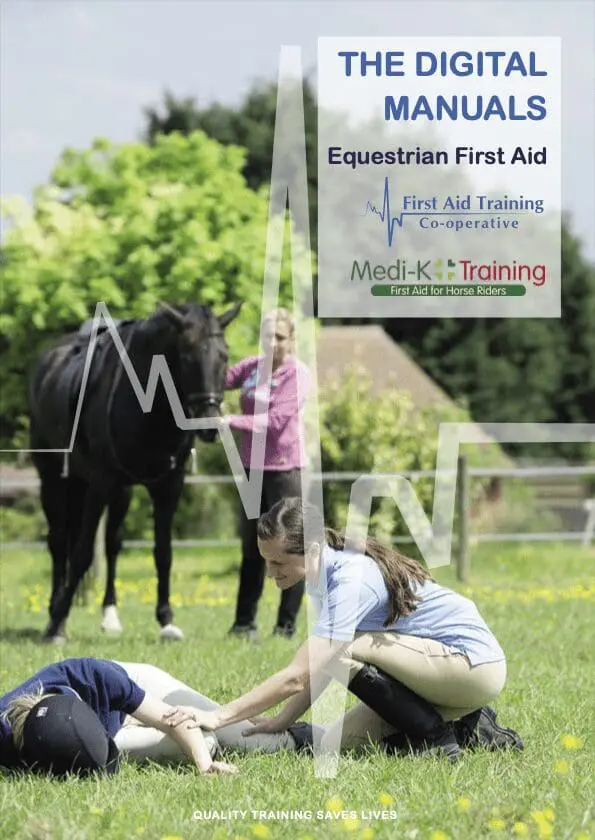
FREE Digital First Aid Manuals –
Everyone on our courses receives a FREE digital first aid manual. We have a range of manuals relevant to the courses we teach – Outdoor, Equestrian, First Aid at Work, Paediatric and Sports. They are a great resource that you can download onto your phone or other device and have all that first aid knowledge at your fingertips. You can view them and buy them for less than £5 here.

Out Equestrian specific Incident Report book
We have also produced an equestrian specific Accident Book for horse riding establishments. It includes more detailed information than a standard Accident Book including equestrian activities, safety equipment worn and symptoms. Each page is numbered so you can easily file and find your reports. You can view and buy the Equestrian Incident Report Book here.

Medi-K and First Aid Training Co-operative have come together to run specialist equestrian specific first aid courses.
For more information about our first aid courses please contact us using this link.