
Since the introduction of the UK Resuscitation Council Primary Care Standards (2020) it is mandatory for annual updates of CPR/AED skills to be undertaken by clinical staff. It is also recommended for non-clinical staff too.
Resuscitation Council Guidelines, 2025:
Guidelines are reviewed every 5 years and the latest review was published in October 2025 and guidelines came into effect in January 2026. These included some significant changes to the CPR for infants and the protocol for responding to emergencies amongst others. Following this, organisations including the GMC, RCGP, GDC and others then updated their standardisation requirements accordingly. We have already included these -and other changes – into all of our courses.
According to the Resuscitation Council UK guidelines, training must be in place to ensure that clinical staff can undertake cardiopulmonary resuscitation (CPR) and use a defibrillator. Training and facilities must ensure that, when cardiorespiratory arrest occurs, as a minimum all clinical staff can:
- recognise cardiorespiratory arrest;
- summon help;
- start CPR;
- attempt defibrillation with an automated external defibrillator (AED) with the minimum of delay, whenever possible within 3 minutes of collapse;
- CPR in children and infants as the resuscitation protocol is different.
Non-clinical staff generally should have annual updates also. However, a local risk assessment may be undertaken to assess the likelihood of them encountering a patient requiring resuscitation. For example, a driver for an out-of-hours doctor’s car may be required to assist at a cardiorespiratory arrest more frequently than a secretary in some daytime General Practices. Having a defibrillator on site and having non-clinical staff trained to use it is a win-win for Practices.
The General Dental Council ‘Scope of Practice’ also states that ‘A patient could collapse on any premises at any time, whether they have received treatment or not. It is therefore essential that ALL registrants are trained in dealing with medical emergencies, including resuscitation, and possess up to date evidence of capability’.
Why should Medical and Dental Practices have an Annual CPR update?
Although dealing with a cardiorespiratory arrest is a rare event, survival rates exceeding 50% have been reported when defibrillation is carried out promptly.
Many practises deal with ‘higher risk’ patients which may make cardiac arrest more frequent for those settings. Additionally, many GPs work in remote or rural areas where an ambulance arrival may not be very quick. ‘Time on the chest’ is a phrase often used to describe CPR as it buys the patient time whilst waiting for the ambulance to arrive.
Hands-on training using manikins and defibrillator trainers plus including assessment is essential for clinical staff. It is also essential that the training is compliant and is recorded, usually with a dated certificate which includes the content of the course.
Online courses do not meet the standards required as there is no practical assessment of their skills when a course is done online. A face to face assessment is an essential criteria for compliance.
Time is always a pressure in healthcare settings but all primary care providers should make provision for staff to have sufficient time to train in resuscitation skills as part of their employment.
Our training courses for Primary Care settings:
We can provide a range of courses for Primary Care settings that keep you compliant and updated in the essential skills listed above. We are currently delivering some of these during lunch hours and after hours to help with extra staffing and time challenges for practices. We also do courses during PLT sessions. All of our courses comply with the standards required for Care Standards. We also provide certification for these courses to meet the requirement of assessment and compliance.
Our course content:
Option 1 – Duration – 1 hour. Complies with the basic Rescuscitation Council requirements.
- Airway & Breathing checks
- Recovery Position – demonstration & practice
- CPR for Cardiac Arrest – demonstration & practice
- Use of a Defib – demonstration & practice
- Demonstration of child CPR
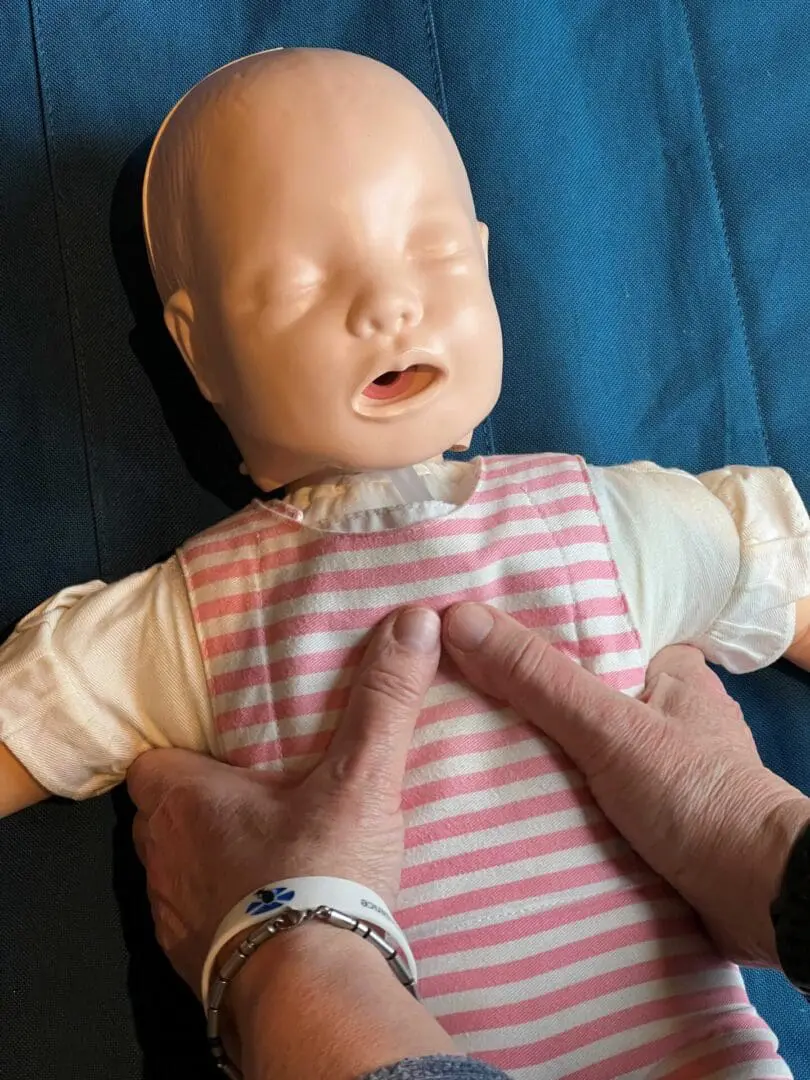
- Infant CPR – demonstration and practice
Option 2 – Duration – 2 hours:
- Airway & Breathing checks
- Recovery Positions – demonstration & practice (including techniques for larger casualties, awkward positions, pregnant women etc)
- CPR for Cardiac Arrest – demonstration & practice
- Use of a Defib – demonstration & practice
- Demonstration & practice of child CPR
- Infant CPR – demonstration and practice
- Choking – Adult, child and baby choking demonstration and practice
Option 3 – Duration 3 hours. Ideal for PLT sessions!
- As per above Option 2 with additional content and practical scenarios to build confidence and experience within your team of selected topics such as Asthma, Anaphylaxis, Seizures, Stroke etc.
To find out more about our courses for Healthcare Practices, contact ann@firstaidtrainingcooperative.co.uk or our office on courses@firstaidtrainingcooperative.co.uk
Get confident – get some first aid training
We cover CPR and AED use in every First Aid course we provide. Our systematic approach to teaching first aid helps your learning and understanding of many illnesses and injuries. Practicing first aid techniques reinforces your learning too. Find out more about our full range of First Aid Courses here.
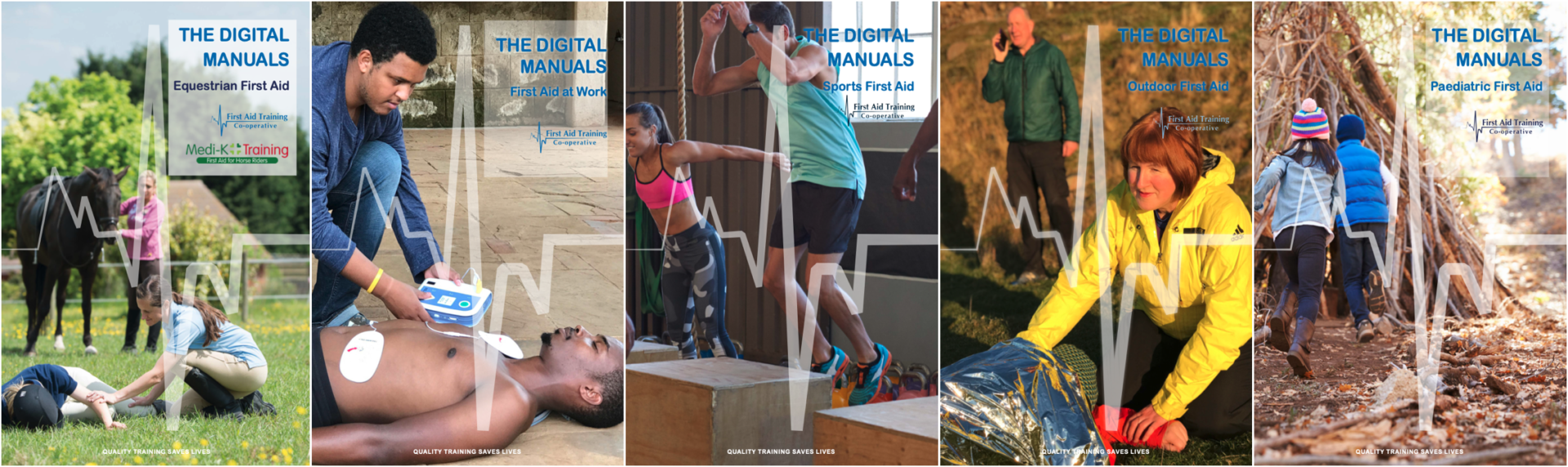
Every client on our courses receives a FREE Digital First Aid Manual relevant to the course they come on. Having the manual or your phone or other device means first aid is always at hand when you need it. You can view and buy our manuals for less than £5 in our online shop. In addition, we have our own YouTube channel with over 40 practical first aid videos.