Using ATMIST for Casualty Handover – useful lessons for first aiders.
One of the key acronyms used by Emergency Services personnel is ATMIST, a structured method for providing clear and concise casualty information. First Aiders can also use ATMIST at handover to get across the key information that the emergency services need to know when they arrive on scene.
Each letter stands for a specific piece of information that needs to be communicated during the handover process:
A: Age
T: Time of injury/incident
M: Mechanism of injury (how the injury occurred)
I: Injuries sustained
S: Signs and symptoms
T: Treatment provided
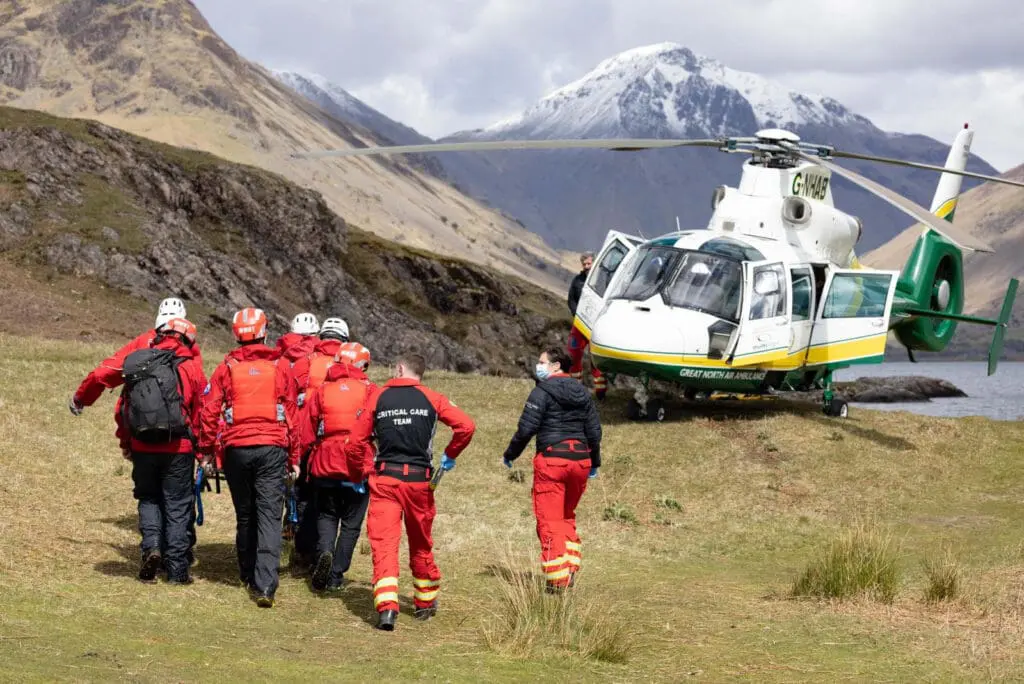
This method ensures that all essential details are covered, minimizing the chance of miscommunication and ensuring that the receiving team can make informed decisions quickly. Let’s look at them in detail with some real life examples taken from a mountain rescue incident.
A – Age.
The first critical piece of information is the age of the casualty. This helps the receiving team understand the potential for certain types of injuries or conditions. For example, a child may experience different types of trauma compared to an elderly individual due to differences in bone density, fragility and response to shock.
Example: “The casualty is 45 years old.”
T – Time of Injury/Incident.
Knowing the time of injury or incident is crucial for assessing the urgency of the situation. It provides the medical team some insight into how long the casualty has been suffering, which can affect treatment decisions, such as the administration of pain relief, the risk of complications, and whether certain treatments (like clot-busting drugs in the case of strokes or heart attacks) can be given. It also gives them an idea of whether the casualty is likely to be going in to shock.
Example: “The injury occurred approximately 30 minutes ago, at 14:30.”
M – Mechanism of Injury.
The mechanism of injury refers to how the injury occurred. This gives the medical team vital information about the forces involved, which can inform decisions about the severity of injuries. For example, in a motor vehicle accident, the speed of the crash, the position of the vehicle, and whether seatbelts were worn can all help determine the likelihood of head, neck, or spinal injuries. Any movements after the initial incident should also be noted.
Example: “The casualty slipped on wet grass and fell 3 metres, landing on hard rock. His friend pulled him off the rocks to do first aid”.
I – Injuries Sustained.
The injuries sustained are described next. The focus is on both visible injuries and any suspected internal damage. This includes fractures, bleeding, burns, or potential internal injuries. For example, identifying signs of internal bleeding, a collapsed lung or a traumatic brain injury early on can be lifesaving.
Example: “The casualty heard a loud crack when they fell onto their left leg, it was not in the correct anatomical position, and they banged their head when they fell.”
S – Signs and Symptoms.
The signs and symptoms of the casualty provide additional insight into their medical condition. This includes observable signs (such as the capillary refill on an injured limb or discolouration around an injury site, level of alertness or an accurate breathing rate) as well as symptoms reported by the casualty (such as pain). Symptoms can indicate the severity of the injuries and how the body is responding to the trauma.
Example: “The casualty is fully alert and has been at all times. They were breathing 22 times per minute and had a pain score of 9/ 10 in their lower left leg and a capillary refill of 4 seconds below the suspected fracture in their left leg.”
T – Treatment Provided
The final part of the handover involves the treatment that has already been administered. This might include immobilization of limbs, dressing of wounds, and any information about whether the casualty has taken any of their own pain relief. This information is vital as it helps prevent duplication of efforts and ensures that all interventions are properly documented.
Example: “The casualty self administered 2 x 500mg of paracetamol shortly after their fall at 14:30. After I arrived I assessed the scene and the casualty and I have immobilised their left leg by binding it to their good leg. They are laying down on some spare clothing with an emergency shelter over them to keep them warm. Their pain score reduced to 4/ 10 after I immobilised the leg and the capillary refill has now improved to 3 seconds on the injured leg.

Why ATMIST Matters
- Consistency: By following a standardised format, there is less room for error or omissions during the handover. Each team member knows exactly what information needs to be conveyed and received.
- Speed: In emergency situations, time is of the essence. The ATMIST structure ensures that key information is shared rapidly and efficiently, without the need for lengthy explanations. The clarity and brevity of the format help speed up decision-making processes and improve outcomes.
- Clear Prioritisation: By focusing on critical aspects of the patient’s condition, ATMIST ensures that the most important factors are discussed first. This allows healthcare professionals to focus on what’s essential: the immediate management of injuries and the stabilization of the patient.
- Improved Patient Outcomes: Effective handover through ATMIST helps reduce the likelihood of errors in diagnosis, delays in treatment, and unnecessary duplication of interventions, all of which ultimately contribute to better patient care and improved outcomes.
The ATMIST format is an invaluable tool for emergency services when handing over casualties and also enables first aiders calling for help to pass on the relevant information quickly and succinctly so that the appropriate level of emergency services response can be prioritised.
Write it down and add it to your first aid kit now!
While you’re doing that, make sure you have a casualty monitoring card in there too. You can download a FREE Casualty Monitoring Card and other first aid resources via the button below. Then you can write ATMIST on the other side of the paper as an aide memoir!
Handing over the casualty monitoring card with the ATMIST information will be very useful for the emergency services. Some first aiders do this and take a photo of the forms before handover for their own use or reference afterwards.
Get confident – get some first aid training
We cover casualty handover, calling for help – and much more – in our First Aid courses. Our systematic approach to teaching first aid helps your learning and understanding of many illnesses and injuries. Practicing first aid techniques reinforces your learning too. Find out more about our full range of First Aid Courses and why you should choose us on our website!
Every client on our courses receives a FREE Digital First Aid Manual relevant to the course they come on. You can also view and buy our manuals for less than £5 in our online shop. In addition, we have our own YouTube channel with over 40 practical first aid videos.