
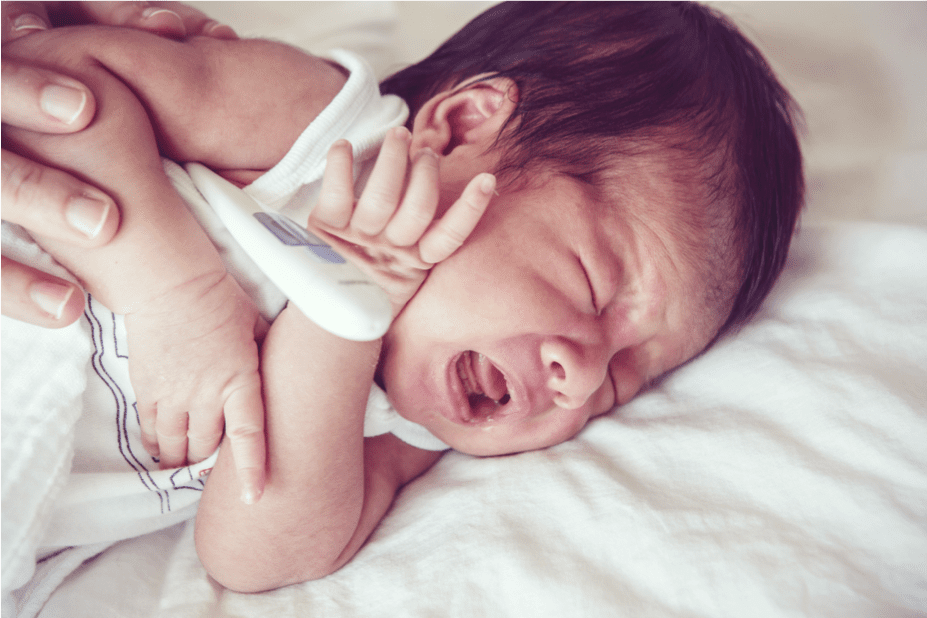
Febrile convulsions (seizures) occur when a child has a high temperature. The growing brains of small children are more sensitive to temperature (fever) than mature brains. When brain activity is upset, a convulsion can occur. Although convulsions are alarming, managing Febrile Convulsions is simple and they are rarely dangerous if dealt with properly.
Febrile convulsions are common in children between six month and six years of age. Febrile seizures can often be diagnosed from a description of what happened. It’s unlikely that a doctor will see the seizure, so it’s useful to note:
- How long the seizure lasted.
- What happened – such as body stiffening, twitching of the face, arms and legs, staring and loss of consciousness.
- Whether the child recovered within one hour.

The signs and treatment of febrile convulsions are not taught on an Emergency First Aid at Work course which is why we recommend that Childcare staff take a Paediatric First Aid course.
You can view our First Aid videos on the following links
How to perform CPR on an Infant
How to treat a choking child or infant?
Our Paediatric First Aid manual
Did you know you can purchase a digital Paediatric First Aid manual so you can see what to do in an first aid incident involving a child or infant on your phone or tablet? You can view our full range of first aid manual here.
Our Paediatric First Aid Campaign:
This week we are asking the Scottish government to change the law to make it compulsory for all Early Years and Childcare (ELC) Providers to have a member of staff on duty when children are present, or on visits, with a 12-hour Paediatric First Aid qualification.
What Can You Do?
We need your support to make this campaign a success and bring Scotland at least into line with the rest of the UK. Please share the campaign content around your friends, family and colleagues.
You can also Sign our 38 degrees petition asking Maree Todd to change the law