

Updated June, 2025
What is Giant Hogweed?
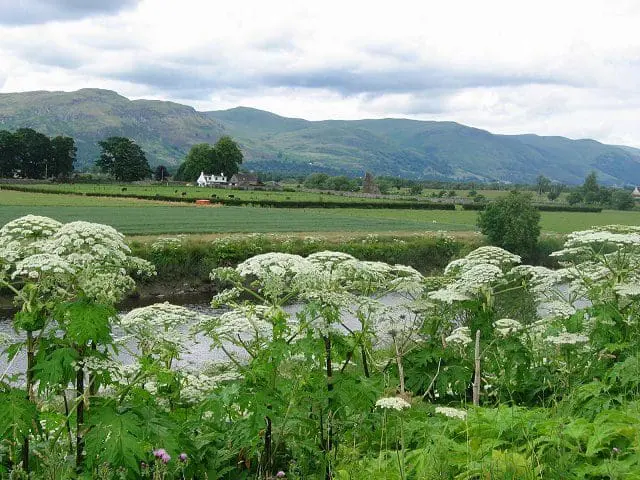
Giant hogweed (Heracleum mantegazzianum) is a plant in the same family as carrot and parsnip. Its growth pattern is similar but it is definitely not edible and can cause serious injury if you come into contact with it. Giant hogweed is found across the UK and mainly spreads along riverbanks and field edges. It is not dissimilar in appearance to our native wildflower, Cow Parsley (Anthriscus sylvestris). The way I usually describe Giant Hogweed however is “Cow Parsley on steroids!” We also have a native Hogweed plant which could be confused with giant hogweed.
Cow Parsley and our native Hogweed are different to Giant Hogweed – the obvious difference being their size. All these plants are umbellifers – meaning their flower heads look a bit like umbrellas when in full flower.
The small umbrella like stalks of Cow Parsley are very thick and bulging and flowers in May-June, grows up to 1.5m high and is one of the earliest flowering umbellifers. It is also one of the most common roadside and hedgerow plants. Our native Hogweed (Heracleum sphondylium) plant is similar in size to cow parsley. Apart from size, a distinctive difference between hogweed and giant hogweed is the leaves. On the Giant Hogweed they are very pointed with deep divides between them, while the leaves of the Common Hogweed are much more rounded.
What does Giant Hogweed look like? – try this useful ID guide from the Woodland Trust:
Giant Hogweed, when fully grown, can reach heights between 1.5m to 5m and have a ground spread between 1 and 2m so it definitely lives up to its name. It forms a rosette of large jagged, lobed leaves in the first year before sending up a flower spike in the second year and then setting seed. In horticulture, it is also known as cartwheel-flower, giant cow parsley, giant cow parsnip, or hogsbane.
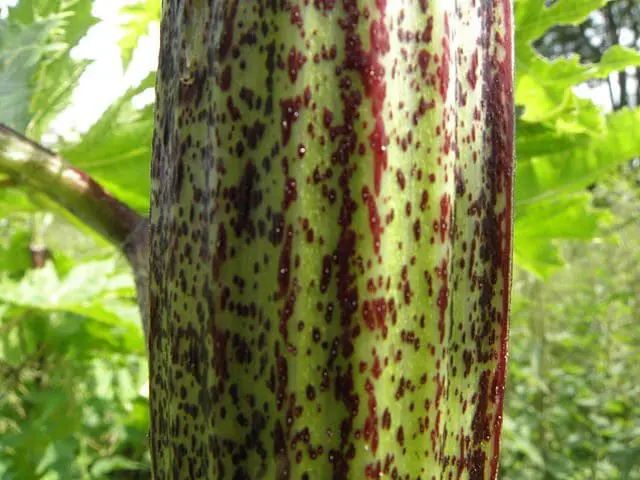
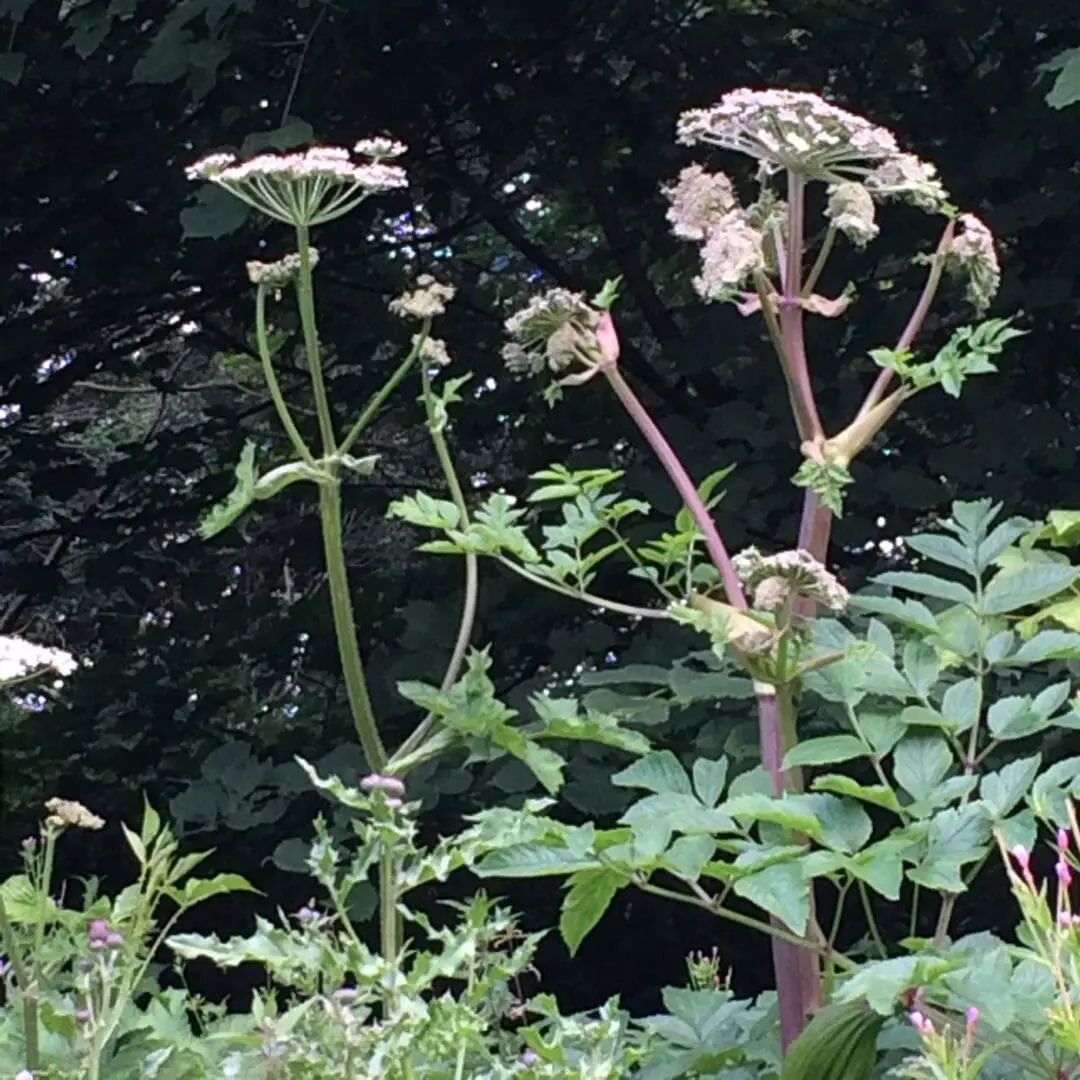
Stems are green with purple blotches and stiff, white hairs. Stems are hollow with ridges and have a thick circle of hairs at base of each leaf stalk.
Leaves are huge,and can be between 1.5m wide and 3m long and is deeply divided into smaller leaflets and is hairy underneath. It looks a bit like a rhubarb leaf, with irregular and very sharp or jagged edges.
Flowers appear in June and July. They are small and white (or slightly pink) and are clustered on umbrella-like heads (known as umbels) that can reach a diameter of 60cm. All the flowers on the umbel face upwards.
Seeds: dry, flattened, and oval. Almost 1cm long with tan with brown lines extending 3/4 of the seed length.
Why is Giant Hogweed dangerous?
The dangerous part of Giant Hogweed is its sap which can come from its leaves, stem or flower head structures. The sap is clear and watery and can get onto your skin through touching any part of the plant.
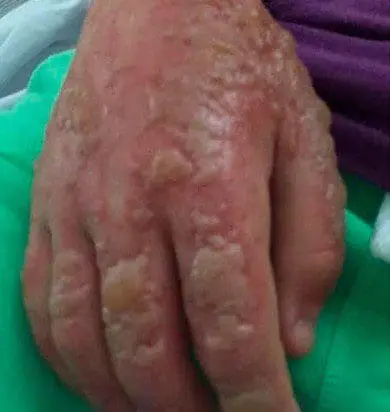
The sap is phototoxic meaning it reacts to light. Contact with the plant sap prevents the skin from being able to protect itself from sunlight, which leads to phytophotodermatitis, a serious skin inflammation. A reaction can begin as soon as 15 minutes after contact with the sap. Sensitivity to light peaks between 30 minutes and two hours after contact but can last for several days.
On a summers day, this can lead to burning, inflammation and blisters can be very severe, and lead to scarring. The scarring can last for months and will return when you go out into the sun again.
Any contact with the eyes can be very damaging, and potentially lead to blindness in some cases.
In short, the plant causes a chemical burn on any part of your body that comes into contact with it.
First Aid treatment for Giant Hogweed burns:
Prevention is best so don’t touch it! Educate your children to identify it stay away as well.
If you do come into contact with Giant Hogweed:
- Immediately wash the area with copious amounts of soap and cool water;
- Stay out of any sunlight for at least 48 hours;
- Don’t burst any blisters – seek medical help if they are extensive – a pharmacist or your GP initially;
- Monitor for any delayed reaction;
- Flushing the eyes with copious fresh water as a precautionary measure is also advisable;
- Thoroughly and quickly wash the clothes you were wearing when you came into contact with the plant.
It is worth noting that for some people, Cow Parsley can also be an irritant, although usually with much milder effects.
As always, if in doubt, contact a medical professional and tell them the situation. See your local pharmacist, GP or go to A&E if symptoms are blistering, painful or not improving.
Giant Hogweed is also a ‘notifiable plant’ that should be reported.
Giant hogweed should be reported to your local council. This is best done through their website as you then get a reply from the correct department. Make a note of the exact location of the plants using a grid reference or What3Words.
It is an offence to allow non-native plants to spread into the wild , e.g. by allowing it spread from your land or garden through not dealing with it, releasing seeds, dumping garden waste into the wild or by moving contaminated soil.
You can find out more about non-native species and action to report and remove them on the Scottish Invasive Species Initiative website or the Non Native Species Secretariat (NNSS) for GB wide information and reporting.
Get confident – get trained!
Knowing what to do BEFORE something happens is essential and attending a first aid course will give you the knowledge and the confidence to deal with many first aid incidents. Our courses are structured to give you confidence in dealing with an incident as well as the competence to do good quality first aid. Find out more about our range of First Aid courses here.
Everyone on our courses receives a FREE digital first aid manual. We have a range of manuals relevant to the courses we teach – Outdoor, First Aid at Work, Paediatric, Equestrian and Sports. They are a great resource that you can download onto your phone or other device and have all that first aid knowledge at your fingertips. You can view them and buy them for less than £5 here.