A chest injury is any form of physical injury to the chest including the ribs, heart and lungs. It can affect breathing, circulation and cause structural damage to the ribs, breastbone or internal organs. One of the best ways to identify a chest injury is by the mechanism of injury. Typically chest injuries are caused by blunt mechanisms such as motor vehicle collisions, falling off a bike or by penetrating mechanisms such as stabbings or gunshots.
If you’ve been hit hard enough in the chest to make you think you may have broken a rib or two, always seek medical advice. Phone 111 for advice on your best treatment pathway.
In this blog we’ll look at broken ribs, sucking chest wounds and flail chest injuries.
Broken Ribs
How to Recognise a broken or cracked rib:
Extreme pain when taking a breath;
Tenderness to the chest or back over an area of ribs;
A “crunchy” feeling under the skin called ‘Crepitus’;
Severe shortness of breath and pain when breathing.
How to Treat a broken rib:
It will heal on its own and probably not develop any additional problems. The bad news is it hurts a lot and there is really very little you can do for it. Rest and taking painkillers will help. Avoid Ibuprofen in the first 48 hours as this may slow down healing. Broken ribs may take a couple of weeks or months to heal properly.
Other tips to help the healing process and reduce pain:
Initially, an ice pack will help reduce any swelling;
Breathe normally and cough if you need to as this helps clear any mucus from your lungs;
Hold a pillow or cushion next to your chest if you feel the need to cough a this helps reduce the pain of the coughing action;
Walk around moving your arms and shoulders – this also helps clear mucus from your lungs;
Sleep in a more upright position for the first few nights.
Things to avoid whilst your ribs are healing:
Don’t play sport or exercise when it hurst your chest;
Don’t lift any heavy objects;
Don’t lie down or stay still for a long time;
Don’t smoke.
If your symptoms don’t improve or if they get worse, seek medical advice. Sometimes a mucus build up or chest infection can follow a broken rib.
A special note for asthmatic casualties – ensure they can breathe effectively and get them to check their peak flow regularly. Continuous shallow breathing as a response to the injury may bring on asthmatic symptoms and reduce their peak flow. If in doubt, get an asthmatic casualty checked out where an x-ray will help reassure the casualty and check for any other issues.
Penetrating (sucking) chest wound
How to Recognise a sucking chest wound:
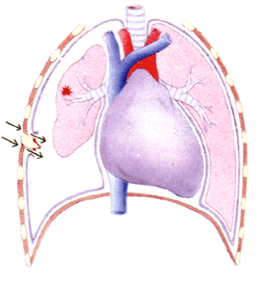
A sucking chest wound is a hole in the chest. When the chest cavity is expanded in order to inhale, air not only goes into the mouth and nose like normal, it also goes into the hole in the chest;
It can be difficult to identify when a penetrating wound is sucking air or not. They don’t always make a noise. It’s best to assume any penetrating wound to the chest is a sucking chest wound;
If they do make a noise, it sounds like Darth Vader! – a kind of raspy rattly noise.
Sucking chest wounds are dangerous because they lead to pneumothorax (collapsed lungs) as well as infections.
How to treat a sucking chest wound:
Seal the sucking chest wound….
Put something plastic (preferably sterile) over the hole and tape it down on all four sides;
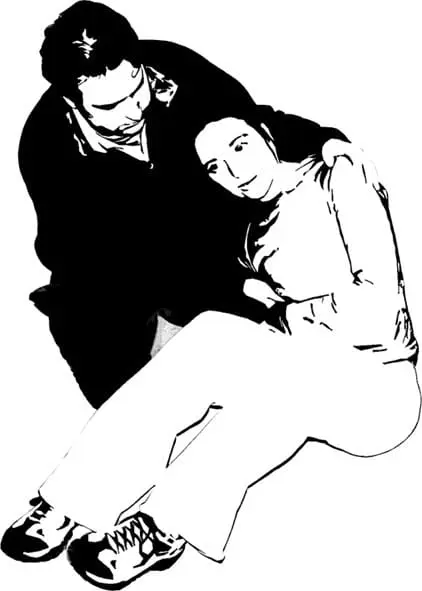
Sit the conscious casualty down leaning towards the injured side;
Phone 999. They will also give you advice on the ongoing management of your casualty;
Monitor the casualty until help arrives or until you deliver them to hospital;
Unconscious casualties should be put into the recovery position and rolled onto the injury;
This injury requires emergency medical treatment.
Position for a casualty with a chest injury – sit them down and lean them towards the injured side.
Flail Chest
How to recognise a ‘flail chest’:
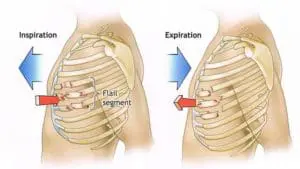
One or more broken ribs that are broken in more than one place;
Instead of rigidly holding the normal shape of the chest, flail chest results in a segment of the chest wall flailing back and forth in the opposite direction of the rest of the chest wall – this is called paradoxical breathing;
When you are doing your casualty checks and you (Circulation or Damage checks), you will notice a difference in the springiness or flexibility of the rib cage;
If not treated promptly, flail chest can lead to serious complications.
How to treat a flail chest injury:
Stabilize the flail chest….
Use a hard pad to put pressure on the flail segment. Holding the flail segment in place keeps it from moving in an opposite direction as the surrounding muscle and bone. Carefully tape the pad down over the flail area – a folded up triangular bandage or similar is useful for this;
Sit the conscious casualty down leaning towards the injured side.
Unconscious casualties should be put into the recovery position and rolled onto the injury.
This injury requires emergency medical treatment.
Ongoing monitoring of chest injuries:
Recognising the specifics of internal chest injuries is difficult and the most important step is getting professional emergency medical help. Careful observation is important.
Signs to monitor and watch out for include:
Severe shortness of breath
Unequal chest (one side looks bigger than the other)
Everyone on our courses receives a FREE digital first aid manual. We have a range of manuals relevant to the courses we teach – Outdoor, Equestrian, First Aid at Work, Paediatric and Sports. They are a great resource that you can download onto your phone or other device and have all that first aid knowledge at your fingertips. You can view them and buy them for less than £5 here.
Tom has over 10 years of experience as a first aid trainer / assessor and over 20 years experience of outdoor sports instruction and coaching internationally.
Prior to becoming a founder of the First Aid Training Co-operative, Tom grew a successful business delivering predominantly outdoor / remote first aid courses across Scotland, using his experience to help others in the outdoor industry improve their skills.
Tom is a graduate of the Rural Leadership Programme. He is a full time Alpine mountain bike guide during the summer, and also runs a mountain bike trail design consultancy. He continues to work internationally, dividing his time between Scotland and the Italian Alps.
A trauma injury is a term that refers to physical injuries of sudden onset and severity that require immediate medical attention, for example extensive bleeding…
The Health and Safety (First-Aid) Regulations 1981 states that you must provide adequate and appropriate first aid coverage. The numbers of trained first aiders you…
To provide the best experiences, we use technologies like cookies to store and/or access device information. Consenting to these technologies will allow us to process data such as browsing behaviour or unique IDs on this site. Not consenting or withdrawing consent, may adversely affect certain features and functions.
Functional
Always active
The technical storage or access is strictly necessary for the legitimate purpose of enabling the use of a specific service explicitly requested by the subscriber or user, or for the sole purpose of carrying out the transmission of a communication over an electronic communications network.
Preferences
The technical storage or access is necessary for the legitimate purpose of storing preferences that are not requested by the subscriber or user.
Statistics
The technical storage or access that is used exclusively for statistical purposes.The technical storage or access that is used exclusively for anonymous statistical purposes. Without a subpoena, voluntary compliance on the part of your Internet Service Provider, or additional records from a third party, information stored or retrieved for this purpose alone cannot usually be used to identify you.
Marketing
The technical storage or access is required to create user profiles to send advertising, or to track the user on a website or across several websites for similar marketing purposes.