
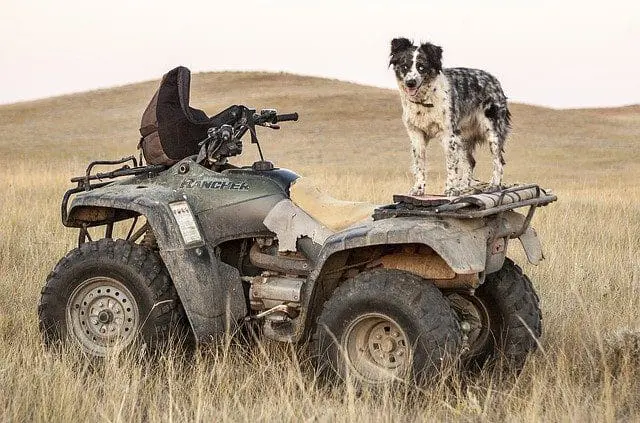
All-terrain vehicles (ATVs) are used in a variety of work and leisure settings. There are various types of ATVs, the main ones being ‘sit astride’, ‘sit-in’ and ‘skid steer’ the latter being either wheeled or tracked vehicles. They are primarily used off road and they are fun to use!
However, they are potentially very dangerous and result in numerous deaths per year in the UK and are the cause of numerous life-changing head, skeletal and muscular injuries.
ATV accidents – common injuries and what to do:
The main injury types associated with ATVs are:
- Head injuries
- Crush injuries
- Falls and related impact injuries
Head Injuries from ATV accidents.
These are potentially the most serious of injuries and are the cause of most of the fatalities on ATVs. Head, neck and spinal injuries can be as a result of the fall from an ATV, impacting an object, structure or building or even an impact with the ATV itself.
A helmet is your first line of defence whilst driving an ATV.
A fall from an ATV can lead to head injuries such as concussion, compression or skull fractures. Below we have listed some of the factors that would be a cause for concern for someone who has banged their head.
Head injuries can get worse overtime. Monitor the casualty after an accident and look for any of the following signs and symptoms. If any of these symptoms appear, call 999/112 immediately. If in doubt, get them checked out at A&E.
Assessing a bang to the head:
Assessing a bang to the head – what are we looking for?
- History or witnessing of an impact to the head
- Change in personality of the casualty, perhaps increased irritability
- A change from normal alertness in the casualty
- Persistent headache since the incident
- Nausea or vomiting since the incident
- Memory loss about the incident or before the incident
- Unusually sleepy
- Any seizure since the accident
- Suspicion of a skull fracture
- Black eye with no associated damage around the eyes
- Clear fluid coming out of the ears or nose
- Bleeding from one or more ears, new deafness in one or more ears
- Bruising behind one or more ears
- Blurred vision or double vision
Dealing with a head injury:
Lie the casualty down and slightly raise their head and shoulders. Monitor their consciousness and give them lots of reassurance. If they pass out, put them in the recovery position.
Find out more about head injury assessment here
Crush injuries from ATV accidents:
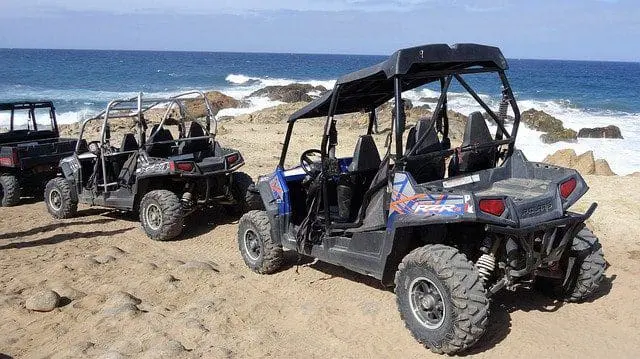
ATVs used on uneven ground, slopes or that are driven too fast – or by an inexperienced driver – can very rapidly become unstable and topple over often pinning the driver underneath the vehicle. Other crush injuries occur when folk are pinned against an animal, building, gate or fence.
There is a ‘15 minute rule’ when dealing with any crush injury. Crushing injury treatment needs quick action. 15 minutes can pass in the blink of an eye when a situation is stressful. If the vehicle or object can be moved, do it quickly. After 15 mins, toxins build up in the crushed area of the body and releasing them without medical intervention can be potentially fatal to the casualty.
Dealing with a Crush Injury in an Urban area / or where you can expect an ambulance to arrive within 30 minutes:
Where the casualty has been pinned down / crushed for under 15 minutes:
- Release the vehicle or object as quickly as you can. Improvise a lever system, get others to help
- Control any bleeding and assess for other injuries
- Dial 999/112
- Treat for shock
- Monitor and reassure until medical help arrives
Where the casualty has been pinned down / crushed for more then 15 minutes:
- DO NOT release the vehicle or object
- Dial 999/112
- Monitor and reassure the casualty until medical help arrives
Dealing with a casualty in a remote setting / or where you expect an ambulance to take more than 30 minutes to get to you:
- If emergency services are not immediately available, consider removal of the crushing object, BUT apply a tourniquet above the injury site prior to lifting the object. This will help to prevent the sudden release of toxins into the circulatory system. It will also help you to assess and monitor the casualty and manage the situation more easily.
- Dial 999/112 as soon as possible
- Monitor and reassure the casualty until medical help arrives
‘Crush syndrome’
Prolonged crushing over time can cause further damage to the casualty’s muscles, organs and metabolic functions and may lead to Crush Syndrome. This is a potentially life-threatening condition. In this condition, toxins produced by the breakdown of cells in the body are trapped by the compressive pressure. (This is where the circulation has been cut off by a crushing vehicle or object.) Removing the pressure can cause the sudden release of toxins into the circulatory system and can potentially overwhelm the kidneys.
In addition, releasing the compressing pressure can cause fluid to leak into the injured area, resulting in Hypovolaemic Shock. This makes it difficult for the heart to pump enough blood to your body and can lead to organ failure and death.
This is why the ’15 minute rule’ is important to adhere to in first aid. Find out more about first aid for crush injuries here

Falls and related impacts from ATV accidents
Falling off of (or out of) an ATV at any speed can cause serious injury. Running into other people, trees, animals, gates & fences, buildings, other vehicles or the road can cause multiple injuries or casualties. The impact of the fall can cause internal as well as external injuries and the casualty must be assessed carefully and methodically. Any protective clothing or equipment may need to be removed to do this.
Be extra alert to the potential for internal bleeding. This where the impact may have damaged an internal organ such as the kidney, spleen or bowel. If an internal organ is damaged it could be bleeding and leaking into the body’s cavity. Signs of internal bleeding may be bruising and tenderness or a hardening felt underneath the skin. The casualty may have no external signs of injury but take care not to press too hard whilst investigating for any internal injuries.
Always be prepared to treat for shock. The signs of shock are anxiety, pale, cold, clammy, nausea, dizziness, fast & shallow breathing and a fast weak pulse. If they are still conscious, lay them down on their back, raise their legs if they are comfortable with doing so and reassure them. Phone 999/112 immediately. If they begin to lose consciousness, put them in the recovery position and place a blanket over them to keep them warm and get emergency help as soon as possible.
Remember your priorities as a first aider!
As with all accidents, the ‘big’ injuries may distract you – and the casualty. There is a higher than normal risk of multiple injuries in ATV accidents. Always carry out a full head to toe (Secondary Survey) to check for other injuries. Always monitor and reassure your casualty until medical help arrives. And always remember that maintaining their airway is the priority. Other injuries can be dealt with in hospital afterwards.
Why are there so many accidents with ATVs?
- Instability and inexperience. ATVs are not always stable when driven on uneven, sloping or slippery ground and driver inexperience does not help in challenging conditions.
- Work pressures, rushing through the job at hand and going faster than the terrain dictates, watching animals instead of the ground before you, tolerating a machine not fully maintained or using a machine not fit for the task at hand all add to the risks.
- Loads and trailers make the stability of the ATV a lot more challenging to handle. It is essential to get training and understand the dynamics of loads when towing a laden trailer with an ATV. Many accidents occur when the trailer weight is heavier than the ATV weight and an odd surface bump or sloping terrain quite easily topples the trailer, the ATV and its driver.
- Holiday excursions should be led by an experienced instructor but participants are often inexperienced riders wanting a buzz and not sure what their limits are. They also don’t often have appropriate clothing for the activity and sometimes are not issued with a helmet or any other PPE.
- They’re just a kids’ toy – or a big kids’ toy! Although brightly coloured and fun to use, they ARE a motor vehicle. Whether they are petrol or electric, big or small, they still demand skills, knowledge and a lot of respect in order to drive them safely.
Preventing ATV accidents and injuries:
Get an ATV to match your needs and ensure it’s maintained by a qualified person. Consider fitting a roll bar as this may avoid crushes and other severe injuries.
Get trained in driving your ATV in the appropriate conditions where you work or play including learning about the legal requirements of PPE, road use and licencing. Wear seat belts if they are fitted.
Get kitted out with safety gear. The most important is a properly fitted and British Standard approved helmet. Also consider a face shield / goggles, gloves, boots, non-snag clothing and a hi-viz jacket.
Know what your ATV is built for. For example, don’t carry a passenger or drive on the road unless the ATV is designed for this. If you work in a remote setting (more than 30mins from an medical help) have an emergency plan in place. It can help you and your colleagues / family react more positively in an emergency. You can download a sample one here: https://ukfisa.com/Safety/Safety-Guides/fisa-802
Get a first aid kit for your ATV
Get some first aid knowledge and skills – Book a first aid course!