
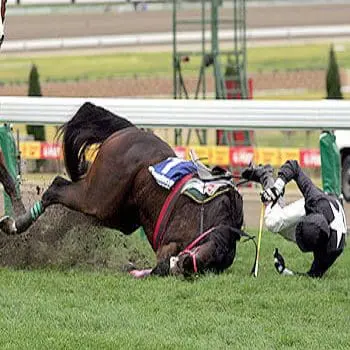
Trips in the yard, awkward dismounts and jerks on the reins or lead rope can all result in a sprained joint. In this blog, we look at what you can do to assess the injury, alleviate pain and promote recovery.
What are the different types of joint injuries?
Soft tissue – Soft tissue refers to all muscles, ligaments, tendons, skin and internal organs. Injuries include blisters, cuts, sprains and strains.
Sprain – A joint sprain is tearing or overstretching of the ligaments. A ligament connects two bones together at a joint. One of the commonest sprains is the ankle. It is common for sprains to show bruising.
Strain – A joint strain is tearing or overstretching of the muscles and tendons. Tendons connect muscles to bones. It is common for strains to be associated with muscle spasms in the affected muscle.
Hard tissue – Hard tissue generally refers to bone and teeth. We would often think of a fracture or chipped bone as a hard tissue injury or a break.
Always consider the ‘mechanism of injury’
Are there other injuries? Although your casualty may be complaining of an injured wrist, foot or elbow, always check for rother injuries. How did the fall? What did they land on? Did they bump their head or other part of their body as well? Casualties will often focus on the site of pain without realising there are other injuries that require treatment.
Joints are complicated! It is always important to remember that there are many bones inside the foot, elbow or hands and some may chip off and not be evident in a first aid assessment. Joints are complicated structures! – if in doubt, get them checked out at A&E.
Recovery through care. Because the joints are complicated structures and we rely on them for our daily activities, it always seems to take a long time to recover fully. It’s important to ensure that extra care is taken during the recovery period to avoid further damage or even prolong the recovery period. Ongoing treatment, medication and physiotherapy will help with a speedier recovery but it will never be instant!
Treatment for soft tissue injuries:

We use the acronym R.I.C.E. to treat sprains and strains:
R – Rest the injury – the more pressure and movement on the injury site the worse it will get
I – Ice the injury. This really means cool it! Don’t put ice directly next to the skin – wrap it in a cloth or triangular bandage. Cooling the injury site will help prevent further swelling and reduce the pain.
C – Comfortable compression on the injury site. This is usually done with an elasticated bandage. Vet wrap is good for this! Comfortable compression – not too tight – helps reduce swelling. Remember that the bandage should not be too tight.
E – Elevate the injury. Again this will help reduce swelling. Raising the injured limb will reduce the amount of blood rushing to the injury site. If this becomes uncomfortable for your casualty, let them lower it.
If you are cooling the injury site, particularly with ice, ensure that you limit the cooling period to cycles of 10 minutes, on and off. Cooling is effective in preventing swelling and reducing pain but we need some blood to get to the injury site as the blood also contains the repair kits for the injured area.
When NOT to ICE a sprained ankle or wrist:
- Don’t put ice over an open wound or fracture
- If icing causes numbness or lack of sensation at the end of the injured limb, remove the ice
- If icing causes more pain, remove it.
If the injury is not serious – do a progressive function test:
You may find that if an injury is not too serious, and doesn’t swell, then a period of rest will allow activity to recommence. In this case ensure that the casualty returns to activity slowly and carefully, use the progressive function testing and a graduated return to walking, mounting, dismounting then riding to ensure that the casualty is fully capable.
Doing a Progressive Function Test on a joint such as the foot or hand can help in assessing the extent of the injury. this involves moving the join in different directions. Watch our video on Assessing an Injury in Sports context which includes the Progressive Function Test.
If in doubt, sit them out!
Boot on or boot off?
It would be very good to have a look at what is happening inside the casualty’s boot or shoe. In an urban situation you may not do this as if the injury is serious, we would be calling the paramedics and they may arrive within 30 minutes.
In the outdoors we may not get professional help so quickly therefore it would be good for us to take a look. Therefore, in a remote setting where we are more than 30 minutes from medical help – boots off! People have lost feet due to their circulation being severely compromised because of the injury. If this severity of injury is missed, the foot will be turning blue or grey within the boot so it’s better to see what is happening over time with your casualty’s feet. Doing a capillary refill test on both feet to compare the circulation between the two is useful as is checking their colour, sensation and movement in both feet. By comparing and contrasting in regular intervals will help you monitor the condition of the injured foot.
Get the casualty to take their boot off or help them to do it. Scissors may be needed if swelling has started. Yes, boots are expensive but so are feet, recovery time off work and income lost as a result!

Prevent worsening – protect the injury – rest is essential
Note some first aid books use PRICE. The P stands for Protect i.e. Protect the injury site from further damage.
Treatment of soft tissue injuries is all about ‘Preventing Worsening’, one of the 3 Priorities of First Aid. A true soft tissue injury cannot be ‘walked off’ – further use will only aggravate the injury and make it worse, so ensure you rest the casualty. Swelling can also cause further damage so we want to avoid too much swelling from happening by using cooling, comfortable compression and elevation.
Prevent injuries when horse riding – 5 top tips

- Get lessons on how to ride safely – The BHS Ride Safe Award is a good start to your horse riding life and can be delivered by lots of providers.
- Tackle failures are the cause of many injuries. Always check girths, halters, lead ropes, reins and saddles before you set off.
- Keep yourself and your mount healthy – a healthy rider and mount are more resilient to injury – and recover more quickly
- Be alert to distractions for you and your horse – accidents happen to us all. Get to know your horse’s behaviours in different settings
- Always do a warm up before saddling up! Cold muscles and joints are more likely to get damaged in a fall, jerk or trip.
Get first aid confident – get trained!
We cover soft tissue and other injuries on our Equestrian and other first aid courses. Our systematic approach to teaching first aid helps your learning and understanding of many illnesses and injuries. Practicing first aid techniques reinforces your learning too. Find our more about our Equestrian First Aid courses here.
Every client on our courses receives a FREE Digital First Aid Manual relevant to the course they come on. You can also view and buy our manuals in our online shop. In addition, we have our own YouTube channel with over 40 practical first aid videos as a quick reference and refresher tool.
We have also produced an equestrian specific Accident Book for horse riding establishments. You can view and buy it here.