
Many different things can cause problems for the eyes, which are a particularly sensitive part of the body. In this post we’ll break down the different types of issues and explain the best treatment for each. We’ll also look at what the eyes can tell us in a casualty.
What can damage the eyes?
Many different things can damage the eyes. These are broadly described below:
How Should We Treat Eye Injuries?
Treatment for eye injuries is thankfully quite straight forward. The first two categories, Foreign Bodies and Chemicals should be irrigated with copies amounts of clean water. Any water that is clean enough to drink will suffice, so if no fresh water is available a water bottle can be used to improvise.
Treating Eyes Affected by Foreign Bodies or Chemicals
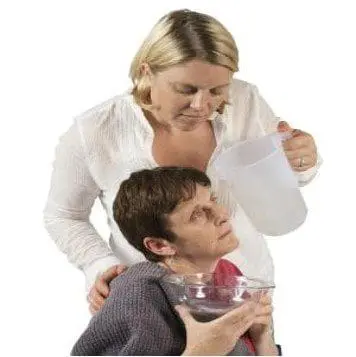
To irrigate the damaged eye, take the following steps:
Treatment for Impaled Objects in Eyes
Again in this case we are going to irrigate the damaged eye as above. If the impaled object does not come out of its own accord, do not attempt to pull it out.
Instead, provide a dressing to both cover the eye, and support the impaled object if appropriate. Importantly however, we must apply a dressing to both eyes rather than just the damaged eye. This is because both eyes move together in unison and there is a risk that even if we bandage one eye, it will continue to move as the unaffected eye looks around.
Seek medical help, this might be at the hospital, or minor injuries clinic. It can also be worth contacting an optician if one is close by, as they may be able to provide specialist help more quickly than a busy hospital, especially for more minor injuries.
Treatment for Eyes Damaged by Bright Light
Damage caused by bright UV light from the sun, or reflected off another surface can build up slowly, such that it is not immediately noticed by the casualty. Often it is not until later in the day, when the brightness has receded that the effects are felt. Weld flash, or flash burn however tends to happen much quicker due to the intensity of the UV light.
The easiest way to describe the effects of UV light are that the surface of the eye is sunburned, and the symptoms are much the same. Casualties describe a feeling of tightness and scratchy soreness when blinking – “like having sandpaper behind the eyelids”. Another common symptom is a loss of contrast such as a difficulty reading the newspaper, or blurry vision.
To treat a casualty suffering from damage caused by bright light:
Prevention is Better Than Cure
Remember that most injuries to eyes can be prevented simply by wearing appropriate eyewear. If you are squinting in the brightness, there is a reason for this and it is your body’s way of indicating that you need to put sunglasses on. Ensure that your sunglasses glasses carry the “CE” Mark and British Standard BS EN 1836:2005, which indicates that the sunglasses offer a safe level of UV protection.
Similarly, if participating in activities where there is a likelihood of airborne particles of dust, grit or flying insects, appropriate eyewear can go a long way to reducing problems before they occur.
Cleanliness and hygiene also helps as many infections are carried to the eye by the hands or fingers. Regularly washing your hands keeps bacteria, grit and other potential eye hazards at bay.
What can the eyes tell us about a casualty?

In first aid we often check a casualty’s eyes. This is because they are in the ‘core’ of the casualty and will often reflect the impact of a head injury or a change in their alertness level. Here are a few examples of what the eyes can reveal about a casualty:
The colour of the eye socket – This is often used to check circulation in a casualty. The normal colour in a healthy casualty would be pink. Any other colours – or a change in colour whilst a casualty is being monitored – is a cause for concern.
P.E.A.R.L. – means “Pupils are Equal and Reactive to Light”. The pupils are the dark part of your eye. In the dark, or with the eyes closed, the pupils are large. When the eyes are opened, the pupils reduce in size – in a healthy person, they should reduce in size at the same rate and to the same size. If there is different pressures behind the yes as a result of a brain or head injury, they may change at a different rate. They may also appear differently such as one being a good circle and the other presenting as an ink splat type of shape. Read more about PEARL here.
Tiny burst blood vessels around the eyes – this may be a sign of a diabetic retinopathy. This is due to too much sugar in the blood which effectively blocks off the blood vessels to the retina. Early signs of diabetic retinopathy are pots or strings in your vision and blurred or fluctuating vision. In more advanced cases, the vessels then try to make new ones which can leak causing the spider like bruising around the eyes.
Burst blood vessels in the eye – these are usually minor injuries and can occur as a result of scratching, blunt trauma, infection, high blood pressure, crying or vomiting. However, they can be signs of more serious injuries so they should be checked out if they do not recover. People on blood thinners such as warfarin or aspirin or using treatments such a s St John’s Wort or gingko may also be more prone to this. It can also show if the eye is infected with conjunctivitis.
Black eyes or bruised eye sockets due to impact – This is usually as a result of a trauma from fighting or impact in an accident. It can also be transferred from other injuries such as broken noses. First aid for black eyes is to hold a cold compress or ice pack (wrapped in cloth) over the eye for 10-20 minutes several times a day for 1-2 days. If it doesn’t clear, seek medical help. Watch out for blood in the eye as this may be a sign of more serious damage.
Panda eyes or Racoon eyes – are a sign of a skull fracture or bleeding on the brain due to head injury. Pressure builds up in the skull and blood moves to areas of lower pressure such as around the eye sockets. It may also appear behind the ears in what appears to be bruising, known as Battle’s signs. These are serious injuries and urgent medical attention should be sought. Do not let the casualty blow their nose or cough as this may allow more leakage of blood from the brain. Read more about assessing head injuries in our blog here.
Eyes are sensitive and vulnerable – if doubt – get them checked out!
Get confident – get trained!
We cover eye injuries, monitoring a casualty using the yes and how to interpret them on many of our First Aid courses. You can find out more about our courses here.
Everyone on our courses receives a FREE digital first aid manual. We have a range of manuals relevant to the courses we teach – Outdoor, Equestrian, First Aid at Work, Paediatric and Sports. They are a great resource that you can download onto your phone or other device and have all that first aid knowledge at your fingertips. You can view them and buy them for less than £4 here.