Roving knife or gun attacks are fast, brutal, and terrifying. They are designed to create chaos—and in crowded public spaces like shopping centres, stadiums, or music venues, the damage can be devastating.
That’s why the new Martyn’s Law (Terrorism (Protection of Premises) Act 2025) places a legal duty on venues to prepare for such incidents. This includes everything from lockdown and evacuation planning to trauma first aid training—and yes, even how to use shutters or barriers to contain an attacker and protect casualties.
What Is a Roving Knife or Gun Attack?
This type of attack involves one or more attackers moving through a space with the intent to harm as many people as possible. They may use:
- Knives or machetes
- Firearms or shotguns
- Improvised weapons
These attacks are often over within minutes—but in that time, multiple people may be injured or killed. The speed and unpredictability make them especially hard to respond to—unless your team has a plan.

Stay Safe: What to Do in a Roving Attack
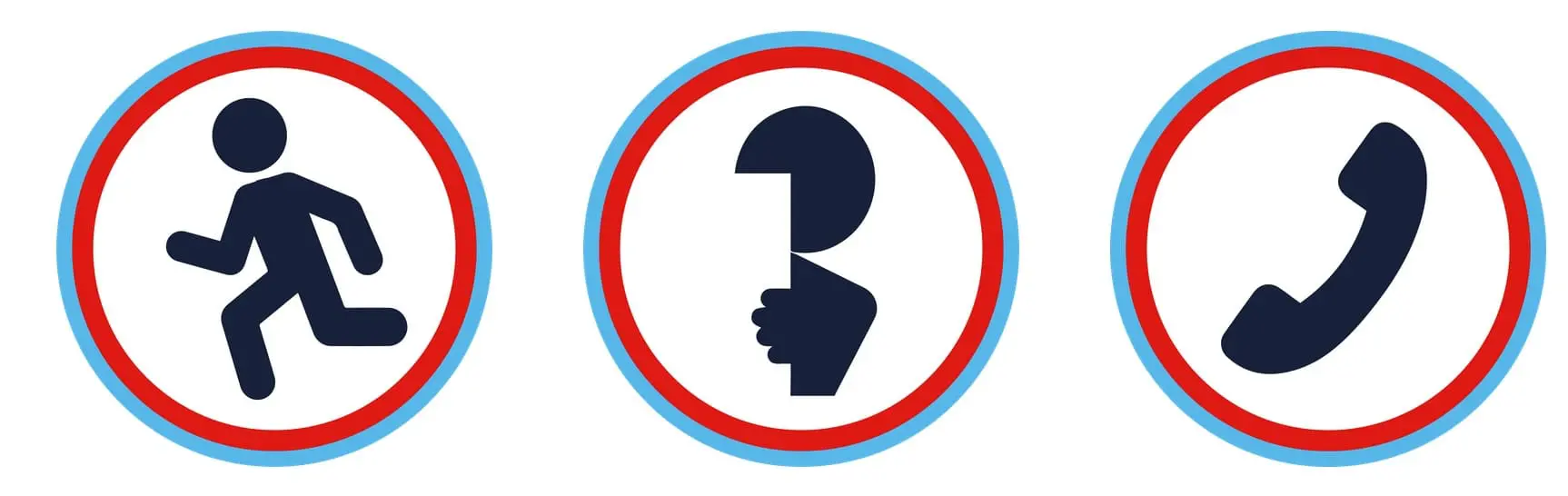
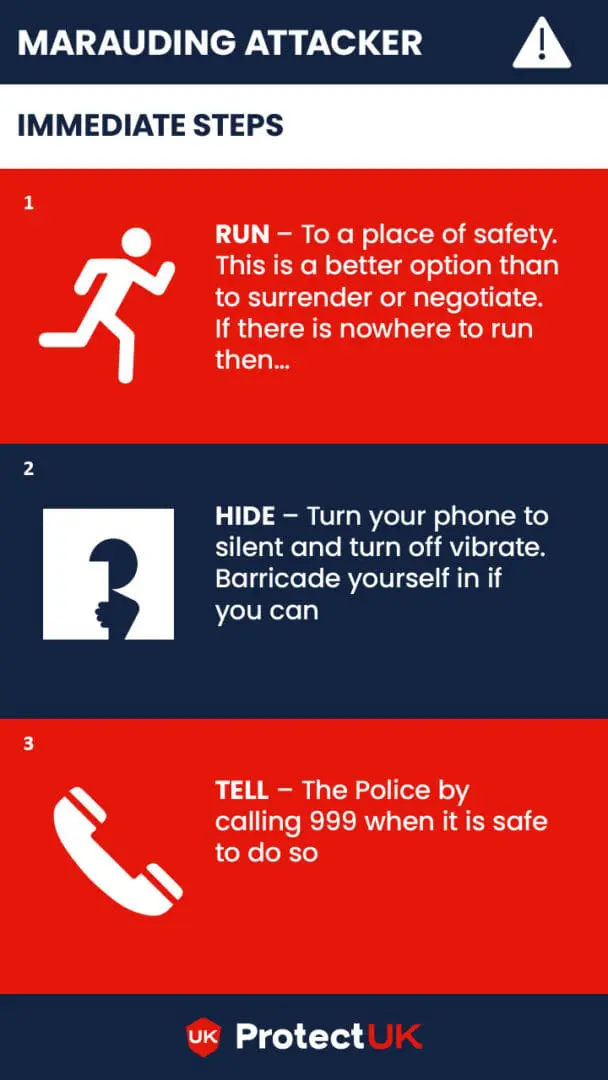
Following official guidance from ProtectUK, your immediate actions should be:
1. RUN
If it’s safe to do so, evacuate the area immediately. Don’t wait for others. Leave belongings behind.
2. HIDE
If escape isn’t possible, find cover. Lock or barricade yourself in a secure room, turn off lights, and remain quiet.
3. TELL
As soon as it is safe, call 999 and give them clear details of:
- The location of the attacker(s)
- What weapons are involved
- How many people are injured
Use the Action Cards from ProtectUK The ProtectUK Action Cards are a fantastic free resource. These printable guides offer clear instructions for different terror-related incidents, including roving attacks.
These cards should be:
- Carried by security and duty managers
- Posted in staff-only areas
- Used in training scenarios and staff briefings
In Shopping Centres: Use Shutters to Save Lives
Shopping centres often have physical barriers and automated shutters designed for security or fire control—but they can also be lifesaving tools during a roving attack.
Venue managers and security staff should:
- Know where shutters and barriers are located
- Be trained in how and when to lower shutters to contain attackers and create safe zones
- Use shutters to shield casualties or block escape routes from the attacker’s view
This tactic can buy time for emergency services to respond and help protect injured people from further harm.
First Aid in a Knife or Gun Attack
Victims of a knife or gun attack may suffer from:
- Severe bleeding
- Penetrating wounds to the chest or abdomen
- Collapsed lungs
- Multiple casualties in a small area
Check out our other blogs to find out more about triage or managing catastrophic blood loss.
Martyn’s Law: A Legal Requirement to Prepare
Martyn’s Law was introduced in memory of Martyn Hett, one of the 22 victims of the Manchester Arena bombing. It requires venues with over 200 people to take steps to prepare for terrorist attacks—including those involving roving assailants.
Standard Tier (200–799 people)
- Must complete basic risk assessments
- Must train staff in emergency responses such as evacuation and lockdown
Enhanced Tier (800+ people)
- Must produce a detailed terrorism response plan
- Must designate a senior responsible person
- Must train staff in trauma first aid, triage, communications, and lockdown protocols
Whether you operate a shopping centre, stadium, nightclub, or events space—this law applies to you.
In Shopping Centres: Use Shutters to Save Lives
Shopping centres often have physical barriers and automated shutters designed for security or fire control—but they can also be lifesaving tools during a roving attack.
Venue managers and security staff should:
- Know where shutters and barriers are located
- Be trained in how and when to lower shutters to contain attackers and create safe zones
- Use shutters to shield casualties or block escape routes from the attacker’s view
This tactic can buy time for emergency services to respond and help protect injured people from further harm.
Venues must now consider specialist training that reflects real threats.
Our Major Incident Management (MIM) course is built for teams at public venues. It goes far beyond FAW and prepares your staff to:
- React confidently to knife or gun attacks
- Perform trauma care under pressure
- Use tourniquets, trauma dressings, and foil blankets
- Plan and practise evacuations and lockdowns
- Use shutters, barriers, and safe zones effectively
Most importantly—it includes simulated scenarios that test your team’s response in real time.
Final Thoughts – Prepare to Protect
Roving knife or gun attacks happen fast. When they do, your staff don’t need theory—they need muscle memory. That comes from realistic training, detailed planning, and a culture of preparedness.