
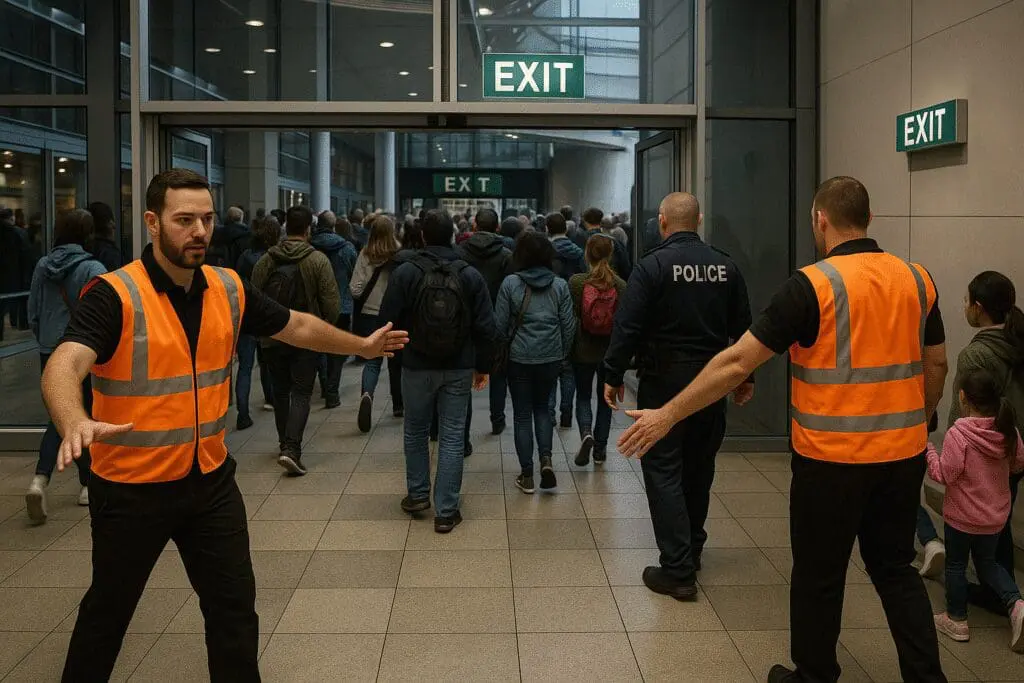
Under Martyn’s Law (Terrorism (Protection of Premises) Act 2025), public venues across the UK with a capacity of 200 or more people are now legally required to plan for terrorist incidents—and that includes having a clear, rehearsed evacuation plan.
In the chaos of an attack—whether it’s a bomb threat, acid assault, or a roving knife attacker—evacuation can save lives. But only if your staff know what to do, and your plan has been properly written, tested, and shared.
Why Your Venue Needs an Evacuation Plan
Evacuations can reduce harm by quickly removing people from danger. But poorly managed evacuations can create confusion, panic, bottlenecks, and even secondary casualties.
Martyn’s Law makes it clear: if you operate a Standard Tier (200–799 people) or Enhanced Tier (800+ people) venue, you must:
- Identify terrorism risks – write a terrorism risk assessment
- Train staff to respond
- Prepare for lockdown and/or evacuation
- Practise procedures
Venues without clear evacuation plans are failing their duty to protect the public.

What to Include in Your Evacuation Plan
A good evacuation plan isn’t just a fire drill checklist. It must be tailored to your venue and the types of incidents you might face.
1. Site Map with Routes and Exits
- Show all primary and secondary exits
- Include emergency escape routes
- Identify any bottlenecks (e.g. stairs, narrow corridors)
- Show external assembly points
2. Roles and Responsibilities
- Who decides if an evacuation takes place?
- Who is responsible for unlocking gates, lowering shutters, or guiding the public?
- Who communicates with emergency services?
Assign these roles before an incident, not during one.
3. Evacuation Triggers
- What situations would prompt an evacuation?
- Bomb threat? Unattended package? Confirmed attacker?
- Include a decision-making framework (e.g. the HOT protocol: Hidden, Obvious, Typical).
4. Communication Procedures
- How will you alert staff to start an evacuation?
- PA system, handheld radios, text alerts?
- How will you communicate with the public clearly, calmly, and without panic?
5. Evacuation Procedures for Vulnerable People
- Do you have customers or staff with mobility issues, sensory impairments, or medical needs?
- Do you have refuge points, wheelchairs, or buddy systems?
Your plan must reflect inclusivity and real-world use.
6. Coordination with Emergency Services
- Include contact numbers and reporting lines
- Show where you will meet emergency crews on arrival
- Know your site’s layout and hazards in case of a search or lockdown
7. Practice and Review
- The plan is not a one-off document.
- You should test it at least annually
- Update it whenever your site changes layout or capacity
- Include in new staff inductions and seasonal briefings
At First Aid Training Co-operative we have produced a generic Evacuation Plan template you can use for your venue or business.
Evacuation Is Only One Option
Under Martyn’s Law, venues must plan for three potential protective actions:
- Evacuation – move people away from the threat
- Invacuation – move people to a safer area inside the venue
- Lockdown – secure doors and windows, stop access and movement
Not all attacks require evacuation.
In some cases, leaving may put people in greater danger. Your evacuation plan must sit alongside lockdown and invacuation options.
Special Considerations for Different Venues
Shopping Centres
- Use zonal lockdowns and shutters to contain attackers or protect casualties
- Evacuate section by section, not all at once
- Coordinate with retail units and security staff
Places of Worship
- Consider weekend or festival capacity spikes
- Provide guidance in multiple languages if needed
- Identify vulnerable groups (elderly, children, mobility impaired)
Theatres and Stadiums
- Address high crowd density
- Use stewards and signage to avoid panic
- Practice evacuation from seated areas
Higher Education
- Train both staff and students in procedures
- Use internal alert systems
- Consider mixed-use buildings with public access
At the First Aid Training Co-operative,we can provide you with a custom evacuation plan template.
Final Thoughts – Plan It. Practise It. Protect People.
Having an evacuation plan is not just about ticking a compliance box—it’s about saving lives. The calm, coordinated actions of your team during those first few minutes can make all the difference.
Start today:
- Map your exits
- Assign clear roles
- Practice drills
- Train your staff
Need help building your evacuation plan or training your team to use it?
Our Major Incident Management (MIM) training fills that gap. Your team will learn:
- How to lead evacuations
- How to apply trauma first aid
- How to use Public Access Trauma (PAcT) kits
- How to keep people safe and calm
We also offer Mental Health First Aid to help teams recover after an incident.