

Acid attacks – once considered rare – are now recognised as a real threat to public safety in crowded spaces. With the passing of Martyn’s Law (Terrorism (Protection of Premises) Act 2025), it is more important than ever that venue staff are trained not only to respond to major incidents like bomb blasts or mass stabbings, but also to the growing risk of chemical attacks, including acid.
What Is an Acid Attack?
An acid attack (also known as a corrosive substance attack) is the intentional use of a corrosive liquid – such as sulphuric acid or ammonia – to harm or disfigure someone. These attacks are usually targeted at the face or upper body, and can cause:
- Severe burns
- Permanent blindness
- Scarring and disfigurement
- Psychological trauma
Acid attacks can happen suddenly and silently – with little or no warning. They are often used in crowded environments where the attacker can disappear quickly, such as:
- Shopping centres
- Music venues
- Nightclubs and bars
- Sporting events
- Transport hubs
What to Do in an Acid Attack ?
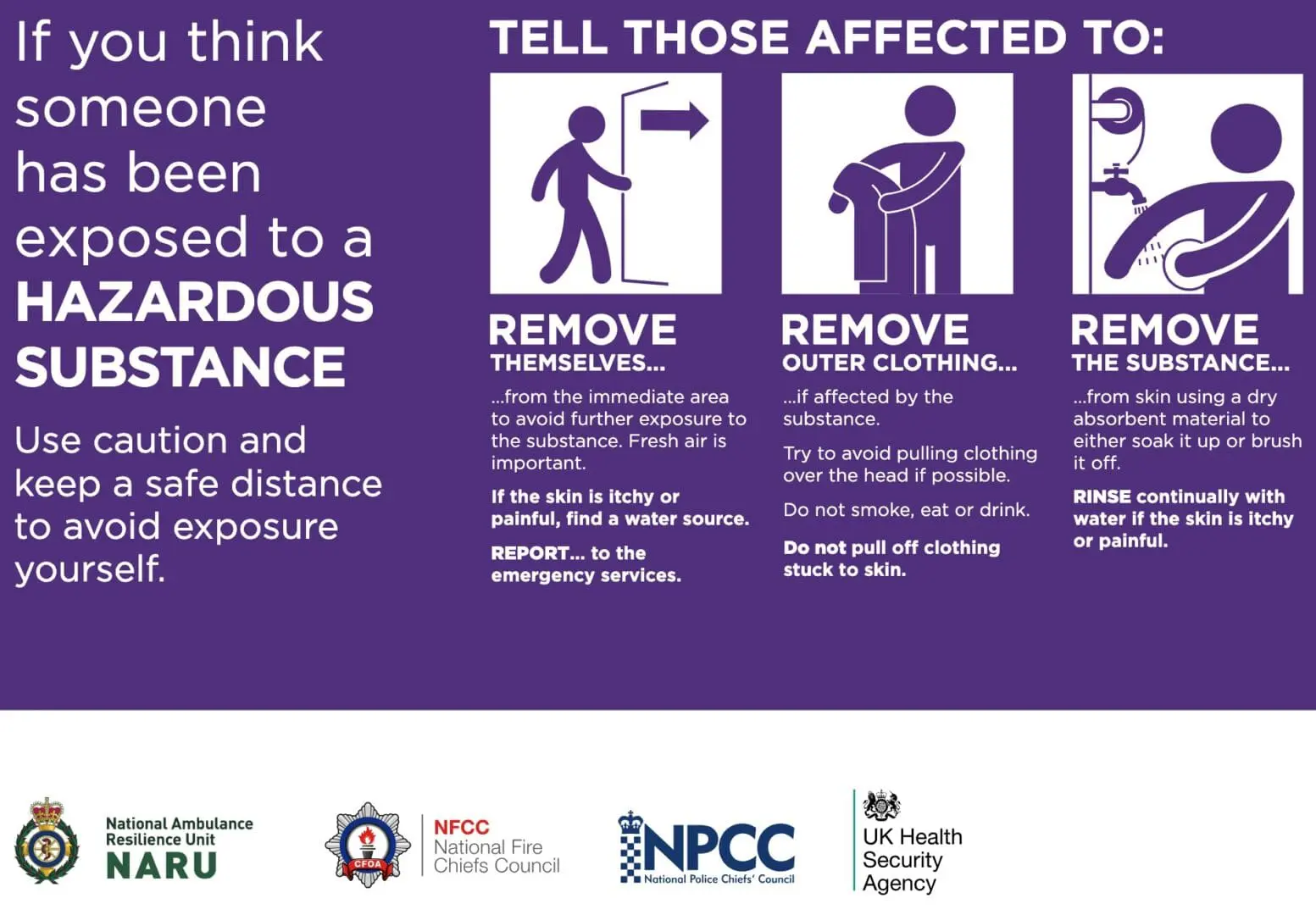
Security personnel and other staff may be the first responders to an incident where someone has been exposed to a hazardous substance. The REMOVE. REMOVE. REMOVE. advice is closely aligned to guidance for the emergency services and provides simple, consistent advice.
The REMOVE. REMOVE. REMOVE. advice can be implemented without specialist protective equipment and is relevant for any potential hazardous substance incident.
In the first few seconds after an acid attack, your response matters.
Here are the key first aid steps in an acid attack:
1. Get to safety
Move yourself and the casualty away from the attacker and out of harm’s way.
2. Call 999
Tell the emergency operator there has been an acid attack so the correct emergency teams are sent.
3. Remove contaminated clothing
Carefully cut away any affected clothing – do not pull it over the head. Use gloves if available.
4. Rinse the skin immediately
Use copious amounts of water to rinse the affected area. Do not use creams or neutralising agents.
5. Flush eyes thoroughly
If the acid has entered the eyes, rinse with water for at least 10 minutes. Try to keep the casualty calm and still.
6. Stay with the casualty
Continue to reassure them and monitor their breathing and response while waiting for emergency services.

We havea blog specifically looking at the first aid required for acid attacks. ProtectUK has created a series of Action Cards – clear, printable guidance sheets for staff to follow in a range of terror-related incidents, including chemical attacks.
These cards can be:
- Displayed in staff areas
- Included in event briefing packs
- Carried in duty manager clipboards
- Used during live scenario training
In the event of an acid attack or terrorist incident, poor preparation leads to chaos, delayed help, and in the worst cases – preventable deaths. Acid attacks and other terrorist threats are real. Your first aid procedures and team training need to match that reality.
First Aid Training Co-operative delivers a range of first aid courses for buisnesses including our Major Incident Management (MIM) course which is for businesses who want advanced training for major incidents.