
Keep your Christmas activities memorable for all the right reasons!
Many accidents happen at this time of year due to changes in our travel and home arrangements plus more risks with fires, burns, trips and falls, heart problems plus the stress of it all. Being aware of the risks is the first step to preventing them! Also, having an appropriate and up to date first aid kit at home is also essential – check it now before you need to use it.
Here’s our top 5 Christmas first aid tips – just in case!
1. Stress and mental health

It’s normal to feel frustrated and stressed at this time of year but being aware of the potential for stress and mental health issues is key to looking after yourself and your loved ones. Key tips are to plan ahead so you have some control over the days and can look forward to them, keep in touch with people, share the workload, share your feelings and have some time out. Remember everyone has a different and sometimes more challenging time at Christmas so look after yourself – and each other.
Most importantly, get some support if you need it or feel someone you care about needs it. You can call the Scottish Association for Mental Health on 0344 800 0550 or the Samaritans on 116 123. NHS24 can also help with mental health issues, call them on 111. There’s a whole list of support services specifically for mental health help on our website – via the link here.
If you want to become more informed about how to respond to a mental health crisis and what the most common mental health problems are, join one of our Mental Health first Aid courses. There’s more information on these courses here.
2. Burns

With the table all set, hot plates and dishes, fat spillages and even flames from brandy lit over a pudding are all extra risks at Christmas. There’s also the risk of fires from all those sparkly lights on the tree and around the fireplace and the rest of the house.
Burns are generally classed as minor or major but both require quick and effective first aid and many require hospital treatment. Minor burns are where the skin is reddened and sore from the contact or spillage. Major burns are where the skin is broken revealing fat tissue, muscle and even bone.
Treating a burn:
- Preventing infection of any burn is crucial. Removing jewellery is also important as swelling will occur.
- Put the affected burn under running tepid water for 20 minutes. This takes the heat away from the burn and stops the flesh from ‘cooking’. It also minimises scarring.
- If a minor burn area is more than 5 times the size of your palm, go to hospital;
- If there’s any broken skin ( and therefore a major burn), apply sheet of cling film over the wound as this will prevent infection. (Don’t wrap the cling film around the limb) Cool it with tepid running water. Cut away any clothing around a burn – but leave any stuck clothing attached. Put a dressing over it and go to hospital;
Preventing burns is all about taking time and care over hot food and fluids plus checking those lights before they go up. Don’t leave lights on overnight or when the house is empty.
READ MORE about treating burns here
3. Choking

Christmas is a time for talking, eating and having a few laughs. Over-eating, being tired when eating and talking or laughing when you’re eating can all lead to choking where food gets stuck in your windpipe. Children are also at more risk of choking if they put objects in their mouth such as lego, marbles or button batteries for their new toys.
Choking effectively blocks your airway and stops you breathing and is a critical first aid incident.
First aid for choking is in 3 stages:
- Stage 1 – Can they cough or speak? If they can cough or speak, get them to persist in coughing to try and eject the object themselves. If it doesn’t clear….
- Stage 2 – Do back slaps. Get them to lean forward, put their hands on their knees, support them across the top of their chest with your arm so they don’t fall forward. After each back slap, check to see if the object has cleared . Perform 5 firm back slaps between the shoulder blades, checking after each one to see if the blockage has cleared. If it doesn’t clear after 5 back slaps…..
- Stage 3 – Perform Abdominal Thrusts. Stand next to the casualty with their back to your hip. Reach around to their front with both hands clasped together. Form a fist with one hand, place it just above their belly button area and pull ‘in and up’. Do this 5 times, checking to see if the object has cleared after each abdominal thrust.
- Repeat 5 back slaps and 5 abdominal thrusts until the object clears.
If the object doesn’t clear, be prepared for the person to collapse and help them on to the floor. Support them as they collapse and put them on their back and check that they are breathing. If not you will need to perform CPR – Phone 999/112 immediately and start CPR. Watch a video on how to do CPR on a child here. There are videos for infant and adult CPR on the same channel.
Any casualty who has had abdominal thrusts should be taken to hospital for checks as there is a risk to internal damage from the strength of the thrusts.
READ MORE in detail about choking in children and adults here
WATCH A VIDEO on how to help a child or infant who is choking here
4. Slips, trips and falls
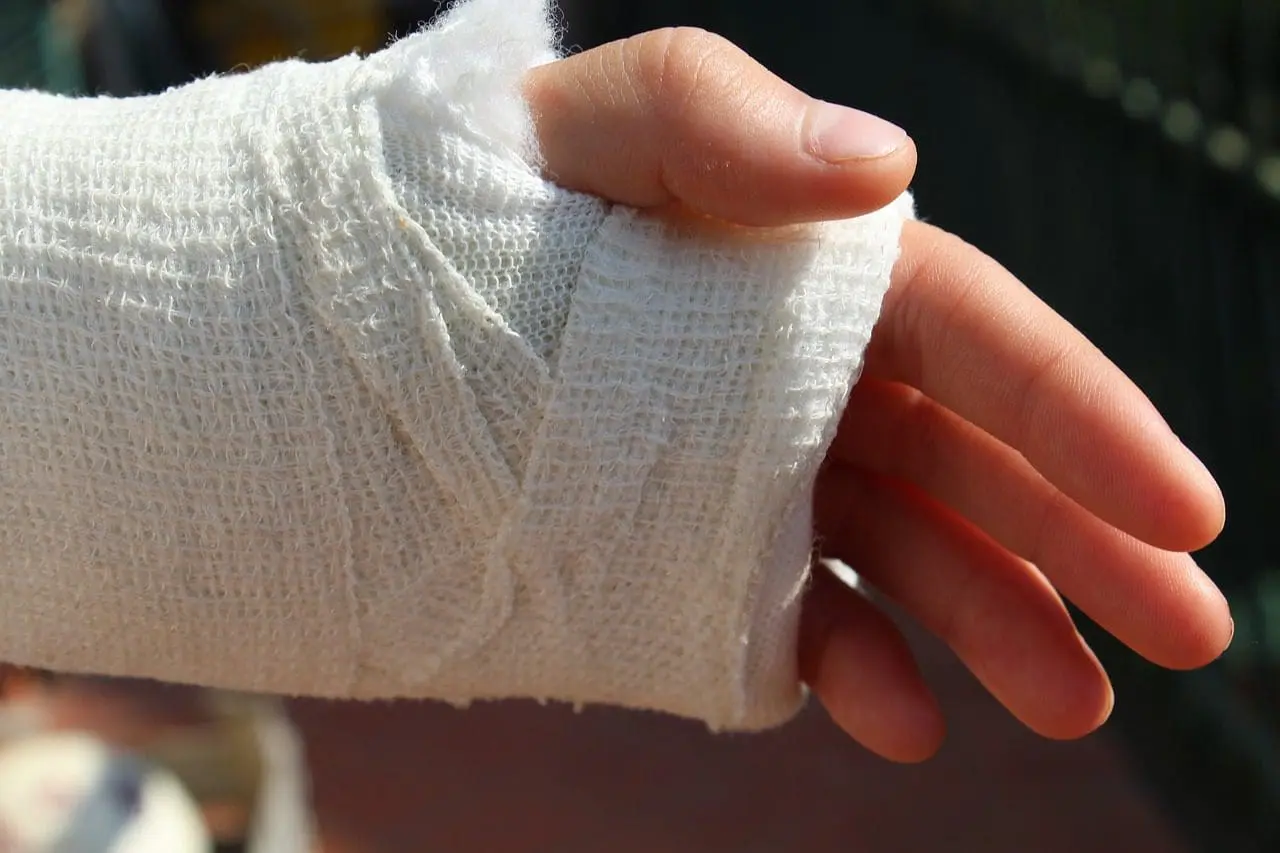
Getting Christmas kit out of the loft, extra electrical leads and all those presents all over the floor are a real recipe for trips and falls! There’s also that first ride of that new bike, slipping on the ice or snow and falling over after a few drinks. Most trips and falls are minor but check for injury even if the person insists they are ok. No-one wants to be the killjoy at Christmas who ends up in A&E.
When checking an injured area, always bear in mind there may be other injuries that are not demanding the attention of the casualty. Always do a full check of their body for other injuries.
Checking injuries after a fall
Assess an injured area by checking that it’s in the correct anatomical position, has good colour, sensation and full movement. Look for any swelling or bruising and feel for any heat in the limb. Compare and contrast with the other limb to see if there are any differences over time.
Head injuries are especially deceiving as they may get worse over time. Check for any lumps, bumps, soft boggy depressions, changes in behaviour, alertness, sensitivity to light or noise, signs of bruising around the eyes, bleeding from the ears or nose. For bumps on the head, a small ice pack will help reduce the swelling but do this for a few minutes on then 5 minutes off. If in doubt, sit them out or get them checked out by a professional.
For sprains or strains, get them to rest the injured limb, apply cool water or ice then apply a comfortable compression (stretchy) bandage to support it. Then elevate the limb. Ice and compression reduce the pain as well as the swelling. Keep this up until the limb is fully recovered which may take over 24 hrs in some cases. Don’t leave the compression bandage on overnight. If in doubt, go to A&E.
If you suspect a broken bone or dislocated joint, immobilise the limb and apply a sling or improvise a sling using a scarf or similar supportive material. The casualty will present their injured limb in the most comfortable and painless position. Leave it in this position and immobilise it to prevent worsening or further pain. Take them to A&E or phone 999/112 for an ambulance.
5. Heart Attacks
The stress of the holiday season coupled with little exercise, excessive eating, smoking and/or drinking puts a lot of pressure on your heart.
The highest incidence of heart attacks in a day occurs on December 25th, 26th ,31st or 1st January. You are 37% more likely to suffer a heart attack during the Christmas holiday period than any other time of year.
What are the signs and symptoms of a heart attack?
- Tightness in the chest, sometimes moving down the neck or arms
- Tingling in one or both arms
- Pale, cold and clammy skin
- A ‘sense of impending doom’ or feeling of extreme anxiety
- Dizziness or shortness of breath
What should you do if you suspect a heart attack?
- Phone 999/112 immediately;
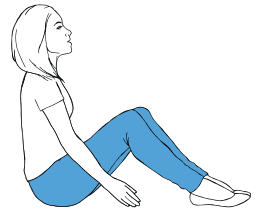
- Reassure the casualty and put them in the ‘Lazy W’ position – sitting on the floor against a wall and raise their knees. This takes some of the pressure off the heart;
- Offer them Aspirin if they are not allergic to it. Get them to chew it slowly and put it under their tongue. (This helps it go into their system quicker);
- Give them lots of reassurance whilst waiting for the ambulance;
- Be prepared to do CPR if they collapse and stop breathing.
Not all chest pains are heart attacks but it’s better to get them checked out. Read our full blog on chest pains and heart attacks here.
Be First Aid Ready – phones and first aid kits
Download a first aid manual onto your phone
We have a series of digital first aid manuals on our website that you can download on to your phone, tablet or PC. They are available to buy for less than £5 and have these and other vital first aid techniques plus links to our series of first aid videos and blogs. You can view the full range of digital manuals here
Check your first aid kits.
Don’t forget to check your First Aid kits – any out of date bandages or plasters should be removed. Check everything is clean and in a logical order inside the kit. You don’t want to be faffing about trying to find things under pressure at this time of the year. Read more about what to have in your first aid kits here.