
On the night of 22 May 2017, 22 people—many of them children—lost their lives in a terrorist bombing at the Manchester Arena, following an Ariana Grande concert. Over 1,000 more were physically or psychologically injured. It was one of the deadliest terrorist attacks in the UK since the 2005 London bombings.
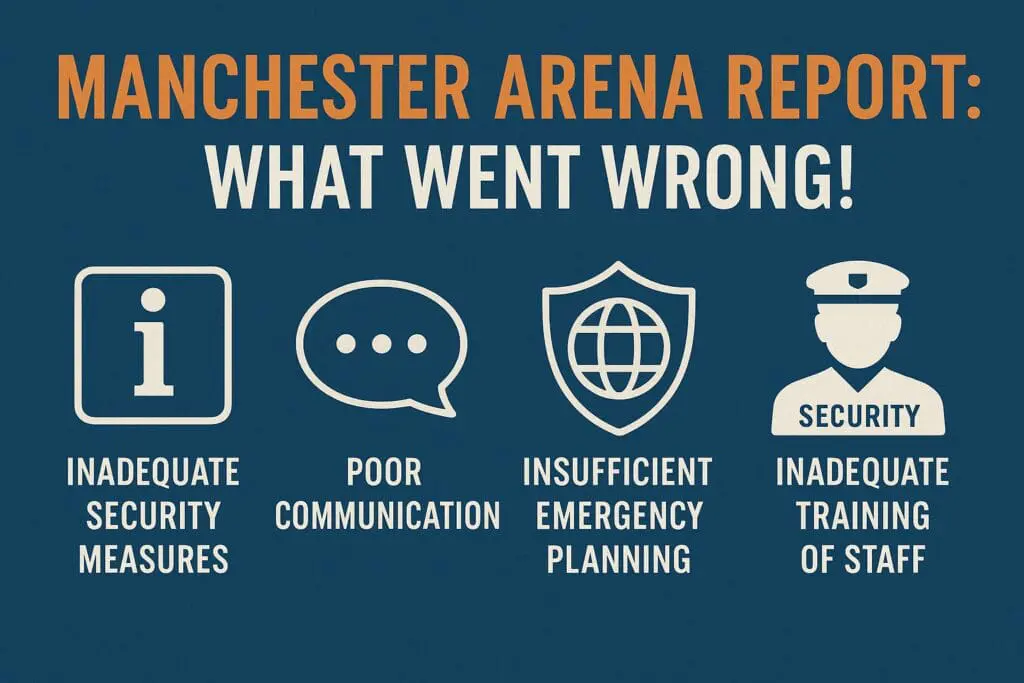
But beyond the heartbreak and horror, the independent inquiry into the Manchester Arena attack exposed a series of failures in venue security, emergency response, and preparedness. These failings were not isolated or unforeseeable—they were avoidable.
In this blog, we explore:
- What went wrong at Manchester Arena
- The key findings of the public inquiry
- How these failures led to Martyn’s Law (Terrorism (Protection of Premises) Act 2025)
- What venues need to do now to avoid repeating those mistakes
Who Was Martyn Hett?
Martyn Hett was a 29-year-old PR manager from Stockport, known for his humour, love of Coronation Street and social media presence. He was one of the 22 victims killed in the explosion.
What Went Wrong at Manchester Arena?
The Manchester Arena Inquiry, led by Sir John Saunders, identified systemic failures in the way the venue and its partners prepared for and responded to the attack. Some of the key failures included:
1. Inadequate Risk Assessments
- The Arena’s operators, SMG (now ASM Global), had not adequately assessed the risk of terrorism.
- They did not identify key vulnerabilities such as the foyer (City Room) where the attack occurred—an area that was crowded, unmonitored, and known to be publicly accessible.
2. Security Blind Spots
- No bag searches or visible deterrents were in place in the foyer area.
- A suspicious individual (the attacker) was seen by members of the public more than 20 minutes before the attack. Multiple people raised concerns.
- Security staff failed to act on these warnings—largely due to poor training and confusion over protocols.
3. Lack of Emergency Preparedness
- There was no multi-agency emergency drill for such a major incident.
- Many venue staff were not trained in how to respond to a mass casualty event.
- First aid provision was not sufficient to manage traumatic injuries like shrapnel wounds or catastrophic bleeding.
4. Communication Failures
- Security teams lacked coordination between venue operators, Showsec (contracted security), and BTP (British Transport Police).
- Delays in information sharing meant the attacker remained unnoticed and unchallenged in the area for a prolonged period.
5. Casualty Care Delays
- There were significant delays in triage and treatment for victims.
- Venue staff did not have trauma kits or the training to manage catastrophic bleeding—leading to potentially preventable deaths.
The Case for Martyn’s Law (Terrorism (Protection of Premises) Act 2025)
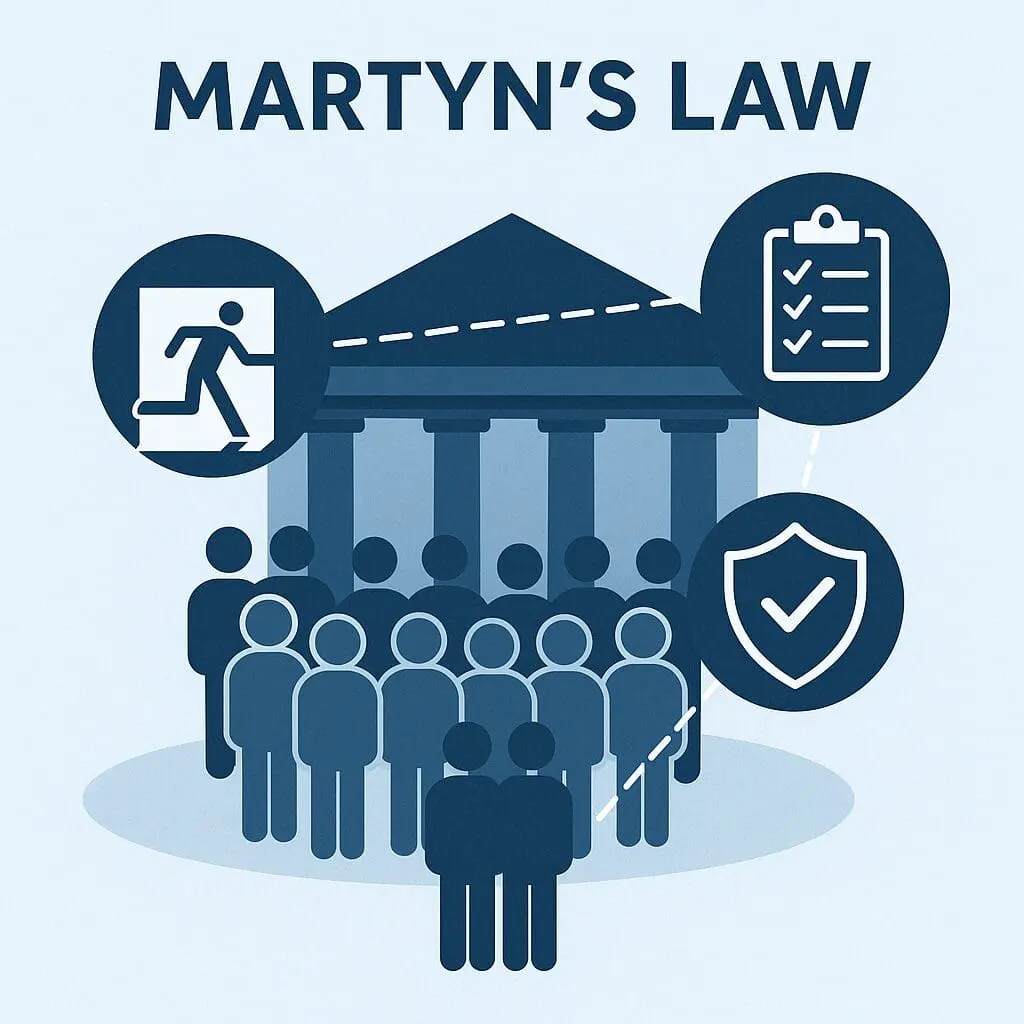
Following these revelations, it became clear that voluntary guidance was not enough. Public venues—especially large ones—needed a legal obligation to:
- Assess terrorism risks
- Train staff
- Develop and practise emergency plans
- Have the right equipment available
This became the foundation of Martyn’s Law, which applies to any publicly accessible venue with a capacity of 200 people or more.
What Martyn’s Law Requires
Martyn’s Law is now split into two tiers:
Standard Tier (200–799 people)
- Conduct a basic terrorism risk assessment
- Train staff in evacuation and emergency procedures
- Ensure staff are briefed on responding to attacks
Enhanced Tier (800+ people)
- Develop a detailed security plan
- Assign a senior responsible person
- Conduct regular training and exercises
- Equip staff to handle trauma care, triage, and communication
Whether you’re a concert hall, theatre, stadium, shopping centre, or place of worship—the law applies to you.
First aid and trauma response are key. One of the starkest lessons from Manchester was how unprepared staff were to handle the physical aftermath. Most had basic first aid training, if any. Few were equipped or confident in:
- Using tourniquets or haemostatic dressings
- Performing triage on multiple casualties
- Coordinating with paramedics and emergency services
- Keeping casualties alive until help arrived
How We Help You Get Ready
At the First Aid Training Co-operative, we offer Major Incident Management (MIM) training that prepares your staff for the very scenarios Martyn’s Law was designed to address.
Our training includes:
- Realistic simulations of knife, bomb, and acid attacks
- Use of Public Access Trauma (PAcT) Kits
- Hands-on trauma care: bleeding control, triage, airway management
- Scenario-based drills based on ProtectUK Action Cards
- Support for building your risk assessment and evacuation plans
We also offer Mental Health First Aid Training Aid to support staff and communities affected by such incidents.
Final Thoughts – Never Again
The failures at Manchester Arena cost 22 innocent lives. Those lives can never be brought back—but we can honour them by ensuring no venue is ever so unprepared again. Martyn’s Law exists because the lessons were written in blood.
Your venue now has the tools, the training and the legal obligation to protect the public. Don’t wait until it’s too late.
Need help becoming Martyn’s Law compliant? Book your Major Incident Management training with us today.